In a nutshell
- Spring is Europe’s smartest travel window: 15-22°C across the south, flights 20-40% cheaper than summer, up to 14 hours of daylight by May – plus natural phenomena unique to the season: tulip fields, peak waterfalls, orange blossom, wildflower blooms.
- March is the insider’s month: Seville in orange blossom season with Semana Santa; the Algarve’s empty western cliffs and surf breaks; Puglia in almond blossom with excellent street food.
- April is the peak: Albanian Riviera (turquoise water, near-zero crowds, UNESCO Butrint — what Greece felt like 30 years ago); Kotor Bay before the cruise ships; Athens and the Ionian islands; Madeira during its Flower Festival.
- May opens up the north: Keukenhof and the Dutch tulip fields by bike; Plitvice Lakes at maximum waterfall volume; the Scottish Highlands before the midges; Istanbul in tulip season with long, cool evenings.
The scent of orange blossom in Seville hits you before you even see the trees. In Albania, you’ll step off a ferry onto a beach so turquoise it looks like the world’s saturation has been turned up to the max. At Plitvice Lakes in May, the waterfalls are so swollen from snowmelt that you can feel the mist from the trails. Spring in Europe offers a unique window when the light is perfect, prices haven’t yet spiked, and the continent’s premier spots are still genuinely yours to enjoy. That window is narrowing, but here is how to make the most of it.
Why spring is the smartest time to travel in Europe
Let’s get specific. Across southern Europe in March and April, daytime temperatures sit between 15 and 22°C. It is warm enough for al fresco dinners, yet cool enough to explore cities without wilting. Flights and accommodation are typically 20 to 40% cheaper than in July and August. Daylight stretches to 13 or 14 hours by May. And a handful of natural phenomena exist only in spring: wildflower blooms, waterfalls at peak volume, almond and cherry blossom, tulip fields so vivid they look fake.
Here’s the key thing to understand: spring is not one season. March, April, and May offer three entirely different experiences:
- March: quiet and crisp. The south is waking up while the north is still shaking off winter.
- April: the peak of the season. Lush and beautiful, though popular spots begin to see more foot traffic.
- May: the north finally blooms, and southern coasts offer a legitimate summer preview.
One honest note: spring is no longer the secret it once was. Amsterdam at tulip time and Seville at Easter are genuinely crowded. The destinations worth travelling to in spring are the ones where the crowds haven’t caught up yet. There are more of those than most people think, and most of them are in this list.
March: the south wakes up first
While most of northern Europe is still in heavy coats, the south is already there. March is “the insider’s month”. Lower prices, smaller crowds, and the specific pleasure of having some of Europe’s most beautiful places largely to yourself.
Seville, Spain
You’ll smell it before you see it. Late March in Seville means orange blossom season, and the city’s streets are lined with Seville orange trees that release their blossom in a wave that lasts two or three weeks. The scent is sweet and slightly bitter at the same time, and it makes the whole city feel slightly unreal. Temperatures reach 18 to 22°C by late March. The Alcázar gardens are extraordinary right now. The light in the Barrio de Santa Cruz at dawn, before anyone else is moving, is the kind of thing you’ll talk about for months.
Semana Santa, the Holy Week procession, falls between late March and mid-April depending on the year. It’s one of the most visceral cultural experiences in Europe: candlelight, incense, floats carried by hundreds of people moving in complete silence through narrow streets. Worth the extra visitors it brings. For food, skip the restaurants immediately around the cathedral. The Mercado de Triana and the Alameda de Hércules neighbourhood after 9pm are where Seville actually eats.
If Seville is on your list and Semana Santa is happening during your visit, stay in the Alameda de Hércules neighbourhood rather than near the cathedral. You’ll be far enough from the tourist centre to avoid the worst congestion, close enough to walk to every procession route, and in the part of the city where locals actually spend their evenings. Book your accommodation at least 8–10 weeks in advance — Seville fills up fast during Holy Week, and anything near the processional routes goes first.
The Algarve, Portugal
March on the Algarve coast has a specific quality that disappears once summer arrives. The clifftop paths between Sagres and Aljezur are lined with wild flowers. The beaches are nearly empty. Prices are genuinely low. The western Algarve, the Costa Vicentina stretch from Sagres up toward Aljezur, is more dramatic and considerably less visited than the eastern section around Albufeira, and in March it feels like it belongs entirely to the people walking it.
Sea temperature sits around 16 to 17°C, which is cold but very swimmable if you’re the type who doesn’t mind a sharp entry. The surfing is excellent along this coast in March, when the Atlantic swells are still strong. Faro airport is well connected from across Europe year-round, which makes this one of the easiest spring destinations to reach without planning months in advance.
Puglia, Italy
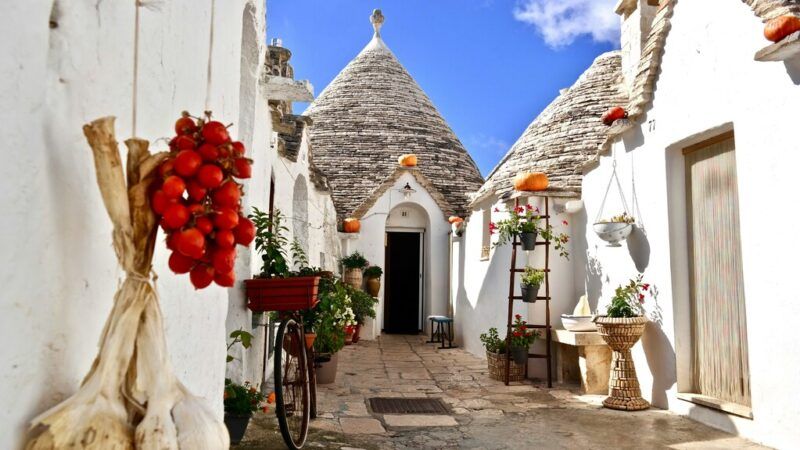
Almond blossom peaks in February and early March across the Valle d’Itria, turning the countryside around the trulli into a landscape that feels like it belongs to another century. By March, wild asparagus is in season and the first artichokes are appearing on menus. The dry-stone wall country between Bari and Lecce is at its most walkable before the summer heat makes it exhausting.
Alberobello is worth visiting, but Locorotondo and Cisternino are quieter and more genuinely alive as towns. Temperatures sit around 14 to 18°C. The street food you need to eat immediately: panzerotto, the fried dough pocket stuffed with tomato and mozzarella that you’ll find at every market; frisella, the twice-baked bread soaked in water and topped with ripe tomatoes; and sgagliozze, fried polenta squares sold from carts in Bari’s old city.
March is one of those months that rewards the people who actually show up. For a full breakdown of where to go, our article on the best places to visit in March covers the complete picture. And if you want to travel with a group, WeRoad’s March trips are a good place to start.
April: the peak of European spring
April is the month everyone pictures when they think of spring travel. Warm but not hot, long days, everything open. The trick is knowing which destinations hit their best in April without tipping into overwhelming, and which ones are worth the crowds regardless.
The Albanian Riviera
This is the insider pick on this list. Most people who’ve been will tell you the same thing: Albania in April is what the Greek islands felt like twenty or thirty years ago. The water at Ksamil, a small village at the southern tip of the riviera, is turquoise in a way that seems implausible until you’re standing in it. Three small islands sit just offshore, reachable by kayak. The sea temperature is already around 18 to 20°C. The beaches are near-empty. Prices are low enough to feel like a different economy.
Four kilometres from Ksamil, Butrint National Park contains one of the most undervisited archaeological sites in the Mediterranean. The site spans Greek, Roman, Byzantine, Venetian and Ottoman periods across 29 hectares of forested peninsula, and was inscribed as a UNESCO World Heritage Site in 1992. In April it’s vivid green, almost theatrical. The Ottoman hilltop city of Gjirokastra, another UNESCO site (2005), sits 90 minutes inland and is worth a full day.
Getting there: fly to Corfu and take the ferry to Saranda. Finikas Lines and Ionian Cruises both run the crossing, which takes 35 to 45 minutes and costs around 19 to 25 euros one way. Multiple crossings daily throughout spring. From Saranda, Ksamil is 15 minutes by taxi. Or fly direct to Tirana and travel south by bus or furgon, the shared minibuses that connect Albanian cities, in around 5 to 6 hours. The road south passes through the Gjirokastra valley, and the scenery alone justifies the time.
Kotor Bay, Montenegro
In April, the medieval city of Kotor sits at the foot of a mountain that’s still dusted with snow above 1,500 metres, encircled by walls that climb almost vertically up the rock face behind it. The bay is calm and reflective. The cruise ships that fill it from June onwards haven’t arrived yet, and the old town feels like it belongs to the people who live there.
The drive along the bay from Herceg Novi to Kotor passes small fishing villages, Byzantine churches and the occasional Roman ruin, and it’s one of the most beautiful routes in the Balkans. Wildflowers are in full bloom on the Lovćen mountain trails above the bay throughout April. Fly into Tivat, which has direct connections from multiple European cities in shoulder season, or into Dubrovnik and cross the border by road.
Athens and the quieter Greek islands
April in Athens is the city at its most approachable. Temperatures sit around 20 to 22°C. The Acropolis is open without the hour-long queues that appear in summer. The National Garden is in full bloom. The neighbourhood of Monastiraki and Psirri is full of Athenians eating outside for the first time since autumn, and you can feel the city exhale after winter.
For the Greek islands, skip Santorini and Mykonos in April. They’re either half-closed or already expensive and filling up fast. The Ionian islands are a much better choice. Kefalonia has dramatic scenery, genuinely good beaches and barely registers on the tourist radar in April. Lefkada is connected to the mainland by a causeway, which makes it the most accessible island in Greece and, in April, one of the quietest.
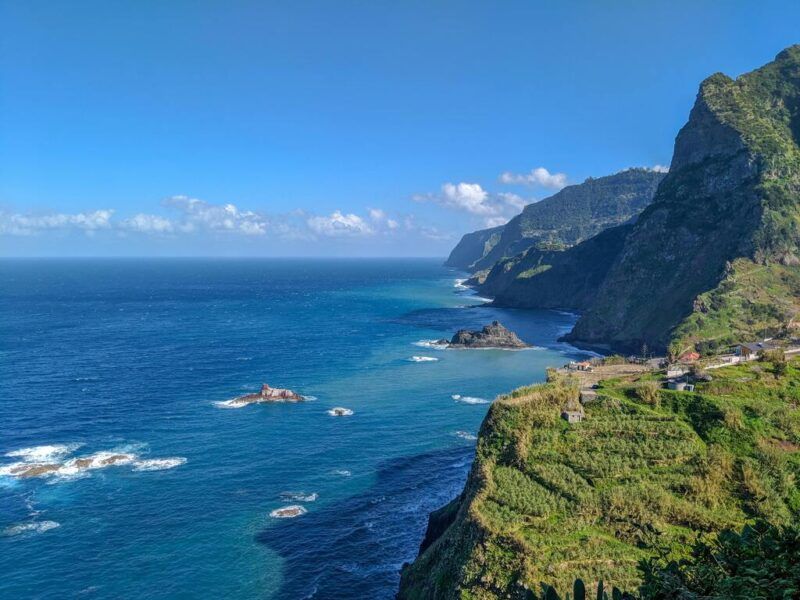
Madeira, Portugal
April is arguably Madeira at its peak. The Festa da Flor, the annual Flower Festival, typically takes place in late April or early May, filling Funchal with elaborate flower carpets and street processions. The levada walks, the island’s network of ancient irrigation channels turned into hiking paths, are lush and full of running water in spring. The climate is reliably mild at 19 to 22°C year-round, with more sun in spring than you’ll find on the north coast in winter.
Direct flights from most major European cities run year-round, making Madeira one of the easiest destinations on this list to reach from anywhere. The eastern levadas toward Pico do Areeiro offer the best combination of dramatic scenery and accessibility for people who want a serious walk without a multi-day hike.
April has more going for it than most travellers realise. For the full breakdown of where to go, the best places to visit in April goes deeper on each destination. And WeRoad’s April trips are worth a look if you want to travel with a group.
May: when northern Europe finally delivers
By May, the whole continent is in play. Southern Europe is warming up fast, some spots already tipping into early summer mode, but the north is hitting its stride. Long days, wildflowers, and the specific pleasure of being somewhere beautiful without winter keeping you indoors.
The Netherlands in bloom
Keukenhof opens from mid-March to mid-May and peaks in late April and early May. Seven million flowers, 800 varieties of tulips, across 32 hectares between Amsterdam and The Hague. It’s one of the few tourist attractions in Europe that genuinely lives up to its reputation. Buy your tickets in advance and go on a weekday morning if you can. Weekend afternoons in late April are very busy.
For a more immersive experience, spend a morning cycling through the bulb fields (the bollenstreek) around Lisse. The fields are freely accessible, the scale is extraordinary when you’re inside them rather than viewing them from a path, and on a clear May morning with the North Sea visible on the horizon, it’s the kind of thing that doesn’t photograph particularly well but stays with you.
Plitvice Lakes, Croatia
May is the best month for Plitvice Lakes, and it’s not close. The waterfalls are at maximum volume from snowmelt. You can hear them from the path before you see them, and the spray reaches you from several metres away. The forest is a specific shade of vivid green that only exists for a few weeks a year. This is Plitvice as it’s meant to be experienced. The site was inscribed as a UNESCO World Heritage Site in 1979 and receives over a million visitors a year, but May keeps the crowds manageable before the June peak.
You can reach it by bus from Zagreb in about 2.5 hours or from Split in around 3 hours. One practical tip that makes a genuine difference: enter via Entrance 2, not Entrance 1. Most visitors go through Entrance 1 and head straight for the lower lakes. Start with the upper lakes via Entrance 2 and you’ll have the most dramatic section largely to yourself for the first hour of the day.
The Scottish Highlands
May in the Highlands is a specific reward for anyone willing to go far enough north. The light lasts until nearly 10pm. Ancient oak forests are carpeted in bluebells. The midges, the tiny biting insects that make the Highlands genuinely uncomfortable from June onwards, are not yet a serious problem. The roads are quiet. It feels like the country belongs to you.
Fly into Inverness and head west toward Ullapool and the northwest coast. This route is less visited than the famous North Coast 500 and equally dramatic: Loch Maree, the Torridon mountains, the Applecross Peninsula. Rent a car. Public transport doesn’t reach most of what makes the Highlands worth the journey, and driving these roads in May, with the light this long and the landscape this empty, is something that belongs on the list.
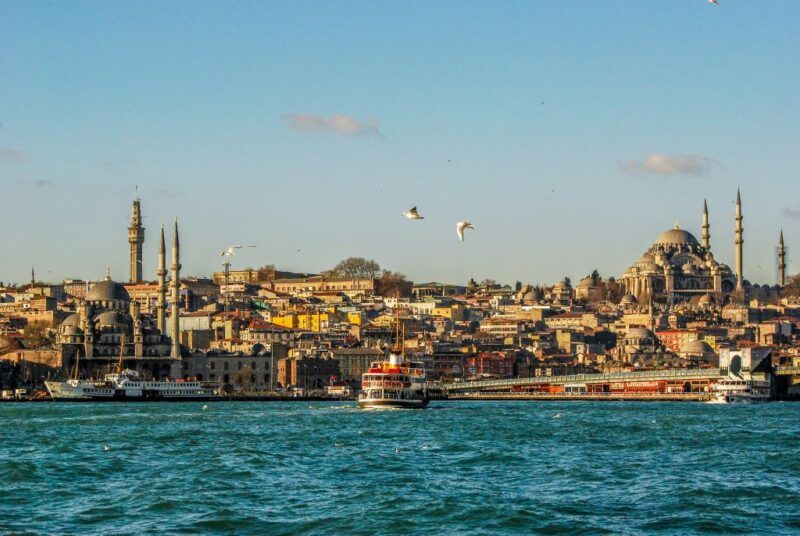
Istanbul, Turkey
May in Istanbul before the summer heat arrives: 20 to 24°C, the Bosphorus reflecting a sky that stays light until nearly 9pm, and tulip season in full effect. Istanbul’s connection to the tulip predates the Netherlands by centuries, and in April and May the city’s parks and Ottoman gardens are planted with millions of them in varieties you won’t find anywhere else.
Cross to the Asian side of the city on the ferry from Eminonü. Kadıköy and Moda give you an Istanbul that’s almost entirely local: neighbourhood restaurants, fish markets, people sitting outside in the warm evenings. The Balat neighbourhood on the European side, with its Ottoman wooden houses painted in fading colours and its Byzantine churches tucked into side streets, is the most atmospheric part of the city. Direct flights from across Europe run year-round.
Before you go: what actually makes a difference
Spring travel in Europe rewards a small amount of preparation. Here’s what actually matters:
- Book 6 to 8 weeks out, not months. Unlike summer, spring flights and accommodation in most destinations don’t require six-month lead times. The exception is Easter weekend, when domestic European travel peaks at the same time as international demand. Avoid the overlap, or lean into it for the cultural experience.
- Always pack a layer. Even in southern Spain, the temperature gap between midday and midnight in March and April can be 10 to 12°C. A light jacket you can carry in your bag is the difference between a good evening and an early one.
- Rent a car for the coastal routes. The Algarve’s western cliffs, the Albanian Riviera, the Bay of Kotor, the Scottish Highlands: none of these are destinations you reach well on public transport. A rental car in April or May opens a tier of spring Europe that most visitors never get to.
- The crowds have shifted. Post-pandemic travel patterns have made April busier in European cities than it used to be. September is now what April once was for many travellers: warm, quiet, cheaper. Worth knowing if your dates are flexible.
- Easter dates change every year. Easter Sunday falls anywhere between late March and late April. If Seville’s Semana Santa is on your list, and it should be at least once, check the dates for your year before booking anything else around them.
Spring doesn’t wait. Neither should you
Here’s the thing about the best spring destinations in Europe: they’re great precisely because most people talk about them and then don’t actually go. Albania is “next year.” Plitvice in May is “one day.” The Algarve in March is “too early.” And so the window stays open a little longer for everyone who actually shows up.
These destinations also hit differently when you’re travelling with people who are equally willing to take the ferry to Albania, wake up early for the upper lakes at Plitvice, or stay a night longer in Seville because no one wants to leave. That’s a different trip. Not better organised, just better shared.
If that’s the kind of spring you’re after, take a look at WeRoad’s spring group trips. Europe in April is waiting. So is Albania. So is that ferry from Corfu.
FAQ: Your questions about spring travel in Europe
- Is spring genuinely cheaper than summer in Europe?
-
Yes — typically 20 to 40% cheaper for flights and accommodation across southern Europe in March and April. The exception is Easter weekend, when domestic European travel peaks alongside international demand. If your dates are flexible, avoiding Easter and travelling the week after can get you the same destinations at shoulder-season prices.
- Which spring month is best for European travel — March, April or May?
-
They offer three genuinely different experiences. March is quiet and south-focused: Seville, the Algarve, Puglia. April is the peak of spring across central and eastern Europe: Albania, Montenegro, Greece, Madeira. May opens up northern Europe properly: Netherlands, Croatia, Scotland, Istanbul. The best month depends entirely on where you want to go.
- Is the Albanian Riviera worth the effort to reach?
-
Very much so. The easiest route is flying to Corfu and taking the 35–45 minute ferry to Saranda — multiple crossings daily, around €19–25 each way. From Saranda, Ksamil is 15 minutes by taxi. In April, the water is already 18–20°C, the beaches are nearly empty, and the combined experience of Ksamil, Butrint National Park and Gjirokastra makes it one of the most complete spring destinations in Europe.
- When exactly is Keukenhof and how should I visit it?
-
Keukenhof opens mid-March to mid-May, peaking in late April to early May. Book tickets in advance and go on a weekday morning to avoid the weekend crowds. For the most memorable experience, spend the morning cycling through the bulb fields around Lisse rather than just visiting the park — the scale of the open fields is something you don’t fully grasp from a path.
- Why do you say to enter Plitvice Lakes via Entrance 2?
-
Most visitors enter via Entrance 1 and head straight for the lower lakes, creating congestion there from the first hour. Entering via Entrance 2 and starting with the upper lakes puts you in the most dramatic section of the park while the crowds are still building at the other end. By the time you reach the lower lakes, you’ve had the best of it in relative peace.