In a nutshell
- Ksamil is a small village on the Albanian Riviera, 4 km south of Saranda, with water so turquoise it looks digitally enhanced – and prices 40–60% lower than comparable spots in Greece or Croatia.
- Three offshore islands reachable by kayak or short boat shuttle, a string of uncrowded beaches, and UNESCO-listed Butrint National Park (one of the Mediterranean’s most significant archaeological sites) right on the doorstep.
- Best months: June for the ideal balance of warm sea, manageable crowds and moderate prices; September for near-empty beaches with the sea still above 23°C.
- Not a polished resort – roads can be rough, accommodation quality varies, and July/August gets genuinely busy. Arrive with the right expectations and it consistently over-delivers.
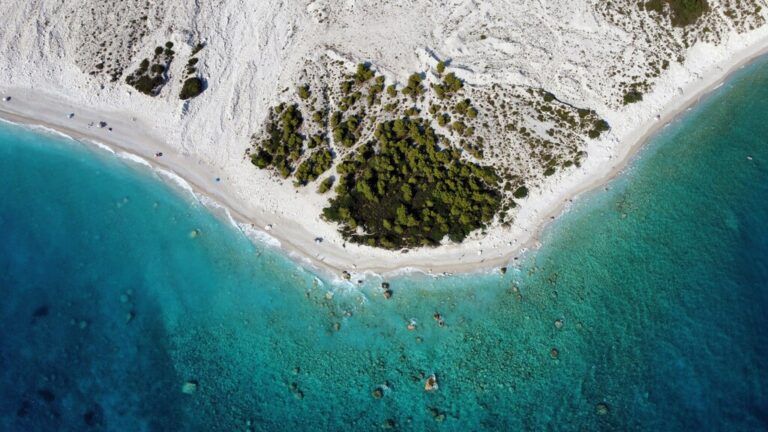
There’s a stretch of coastline in southern Albania where the sea is a shade of turquoise that looks digitally enhanced until you’re actually standing in it. That place is Ksamil – a small village on the Albanian Riviera, roughly 4 kilometres south of Saranda and visible from the Greek island of Corfu on a clear day. It sits at the edge of Butrint National Park, a UNESCO World Heritage Site, and offers a combination of extraordinary beaches, ancient ruins and affordable travel that’s increasingly rare in the Mediterranean. This guide covers everything you need to plan your trip: where to stay, what to see, how to get there, and what no one tells you before you go.
What is Ksamil and where exactly is it?
Ksamil is a small coastal village in southern Albania, part of the Himara municipality in Vlorë County. Locals pronounce it “ksam-eel” – you’ll hear it often enough once you arrive. It sits on the Ionian coast of the Albanian Riviera, about 230 kilometres south of Tirana and just 4 kilometres below Saranda, the main town in the area.
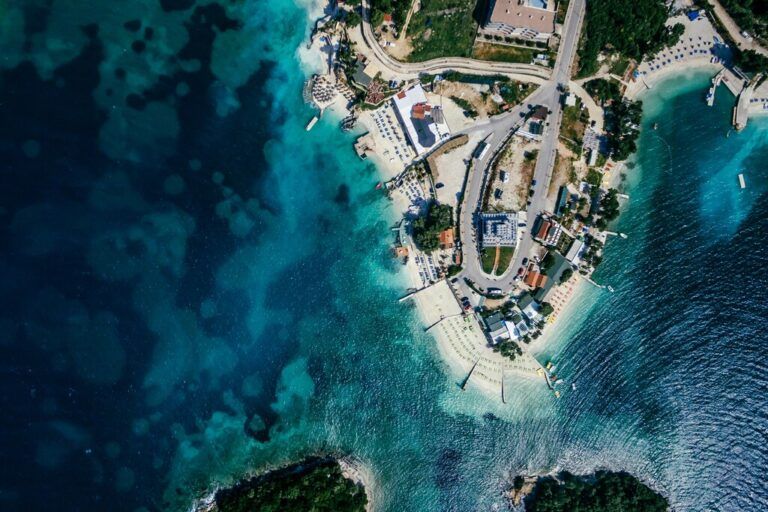
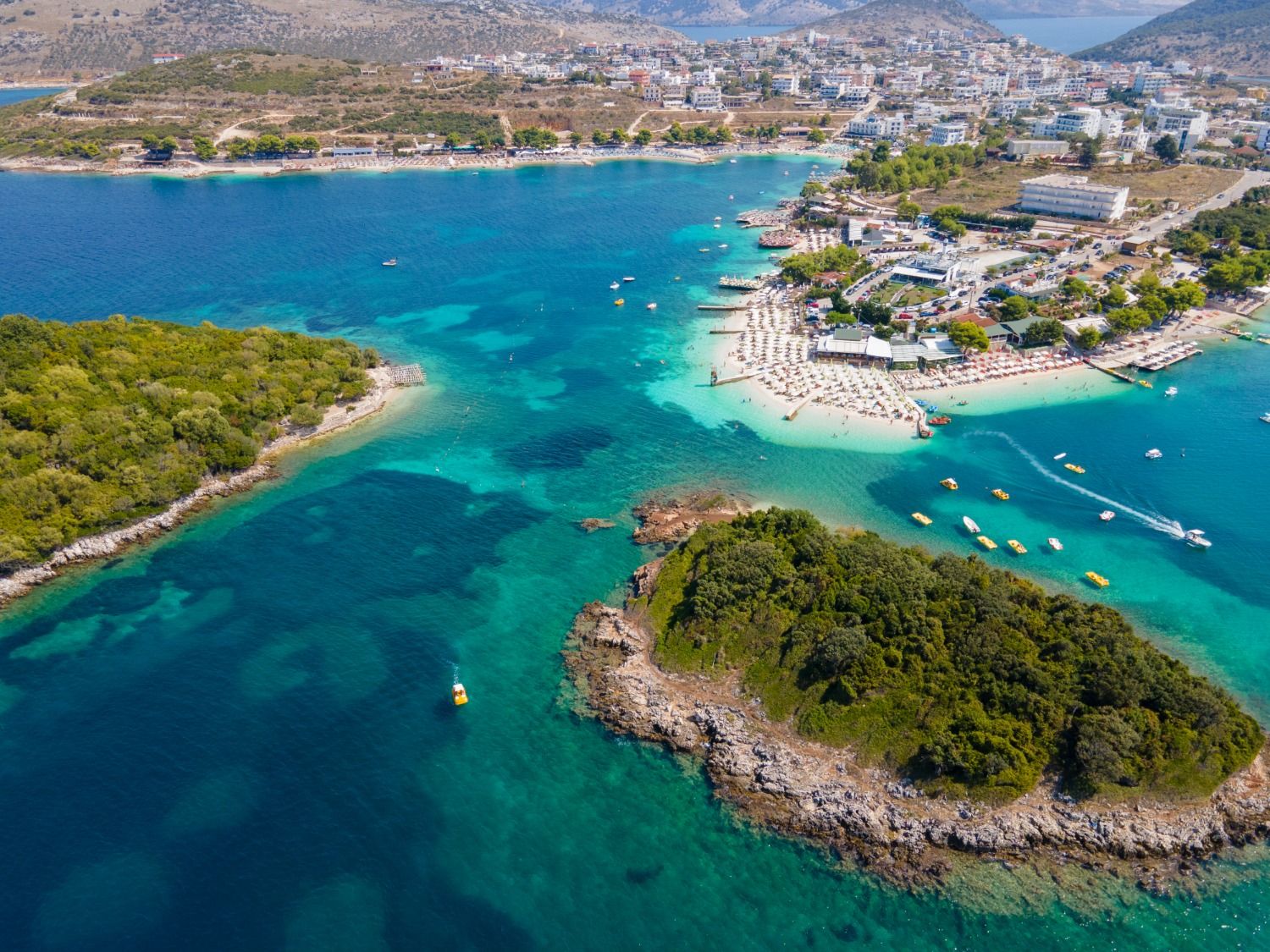
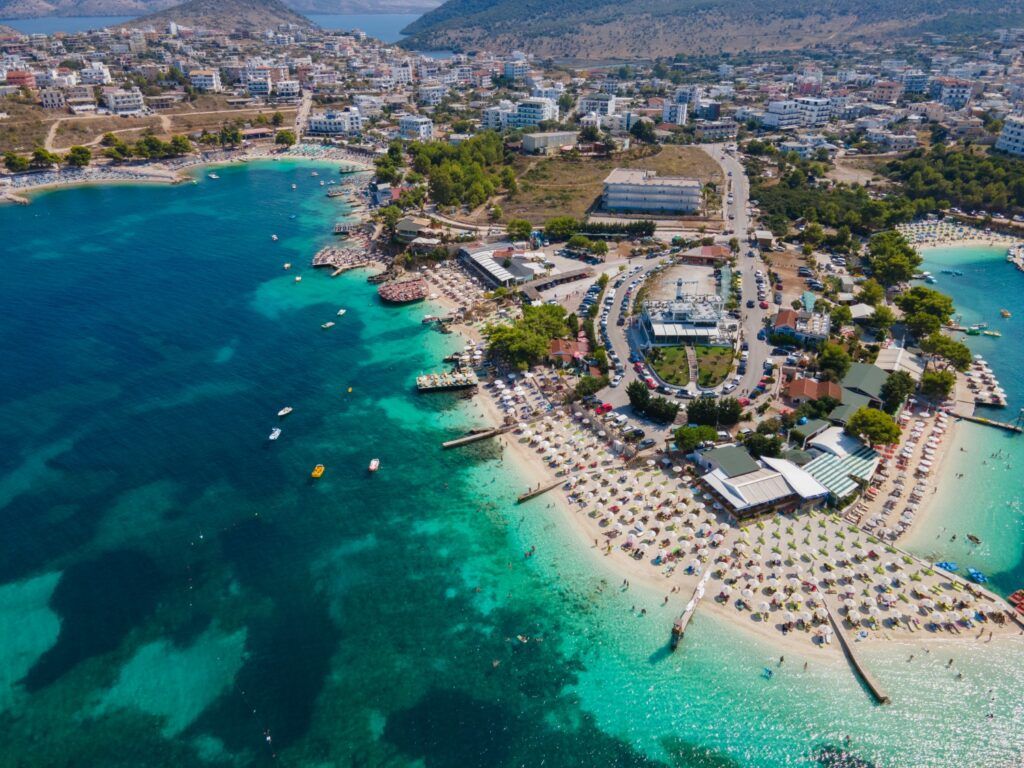
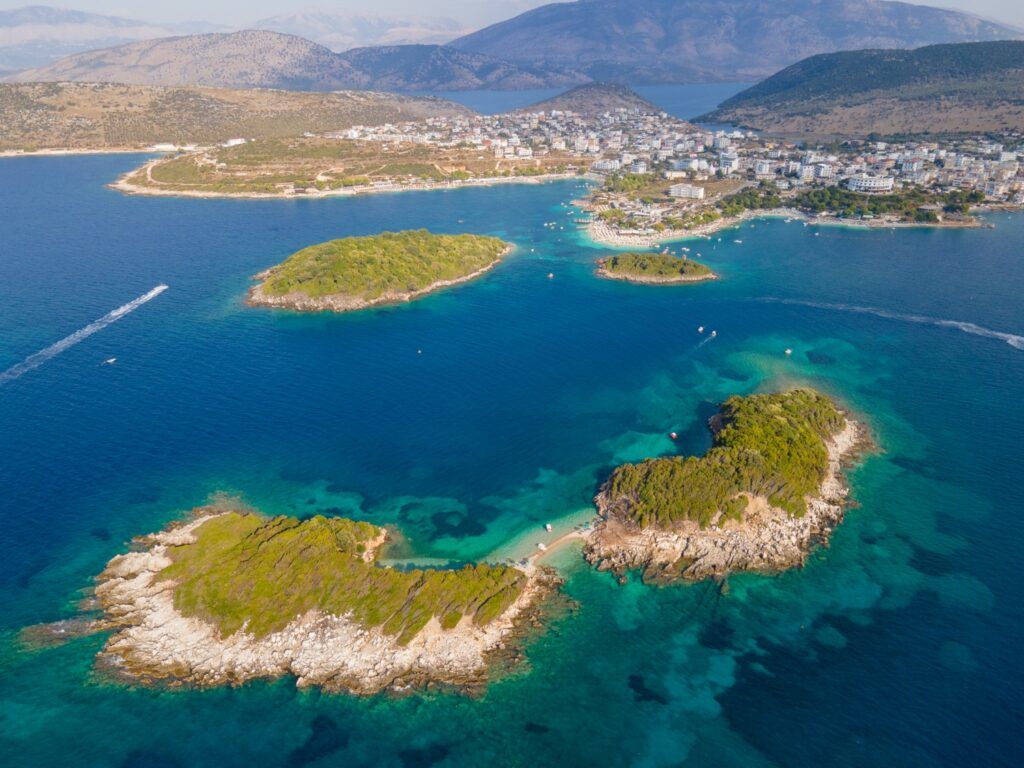
The village has a permanent population of roughly 2,000 residents, which expands dramatically in summer when it becomes one of the most visited beach destinations in the country. Its coastline is characterised by three small offshore islands – Ishulli i Ksamilit, Ishulli i Mesët and Ishulli i Madh – and a series of sandy and pebble beaches with exceptionally clear, shallow water fed by the Ionian Sea.
Administratively, Ksamil belongs to the Bashkia Himara and is part of the broader area known as the Albanian Riviera (Riviera Shqiptare), which stretches from Vlorë in the north to Saranda in the south. The proximity to Butrint National Park – a UNESCO World Heritage Site inscribed in 1992 – gives Ksamil a dual identity: beach destination and gateway to one of the most significant archaeological sites in the Balkans.
For Butrint, hire a licensed local guide for the 90-minute tour (€15–25) rather than walking the site alone. The ruins span Greek, Roman, Byzantine, Venetian and Ottoman layers across 29 hectares — without context, it’s easy to miss what you’re actually looking at, including the world-class Early Christian baptistery mosaic. Go mid-week and arrive at opening (8am) to have the site largely to yourself before the day-trip groups from Saranda and Corfu arrive.
Is Ksamil worth visiting? What travellers should know before they go
Is Ksamil worth visiting? Yes – just don’t arrive expecting a fully polished Mediterranean resort.
Ksamil consistently ranks among the top beach destinations in the western Balkans, and for good reason. The water here is strikingly clear – on calm days you can see the seabed several metres below you. The offshore islands are accessible by small boat, and confident swimmers or kayakers can reach them independently. A full day on the beach – sunbeds, lunch and drinks – usually costs 40–60% less than a comparable setup in Greece or Croatia.
What Ksamil is not: a polished resort. Roads can be rough, accommodation quality is uneven, and in July and August the central beach gets packed. There’s no real nightlife – a few beach bars, a quiet waterfront, and that’s about it. If you’re after Mykonos energy, this isn’t it.
If you want extraordinary natural beauty, strong seafood, lower prices and a place that still feels slightly ahead of the mass-tourism curve, late May, June and September are ideal. The sea temperature sits above 22°C, prices are noticeably lower than peak, and finding a sunbed doesn’t require military-level planning.
The beaches of Ksamil: a practical guide to what’s where
You can walk the entire coastline in 20 minutes. But the experience changes significantly depending on where you set up for the day.
The central village beach
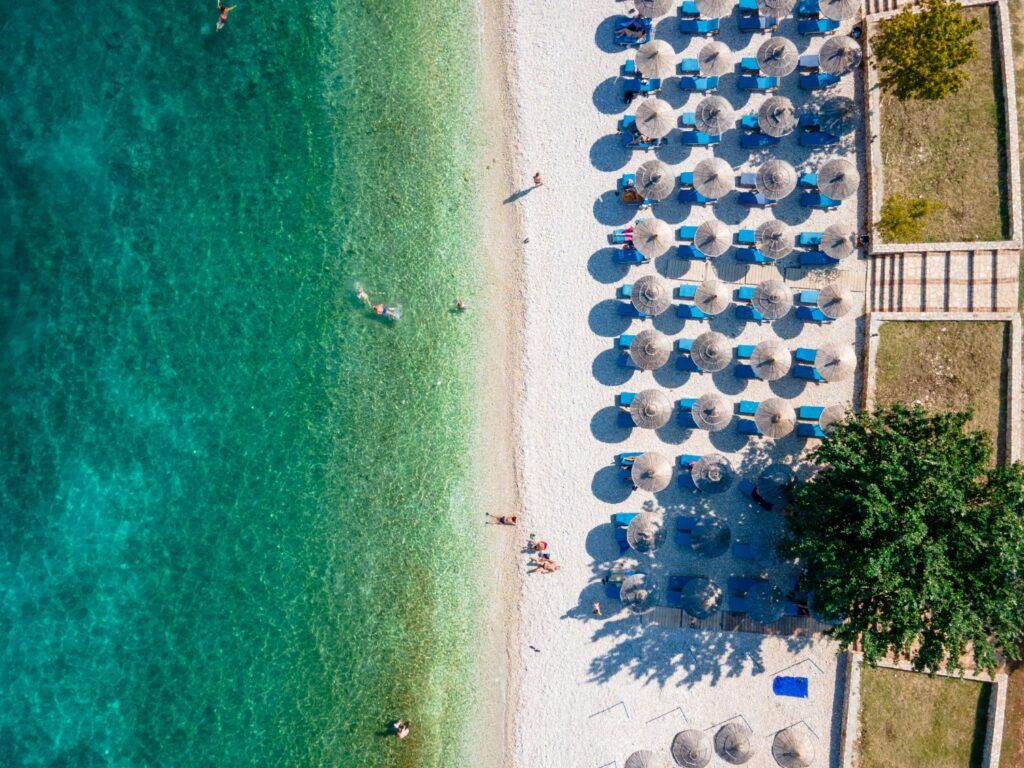
The main beach in front of the village is the most organised and most visited. Sunbed hire typically costs €5–10 per set per day. Beach bars serve food and drinks from around 9am. The water is shallow and calm, with a sandy bottom that deepens gradually – good for families and less confident swimmers. The beach faces south-west, so afternoon light and sunsets are particularly good. In July and August, arrive before 9am to secure a spot without pre-booking.
The northern beaches
Walking north from the village along the coastal path takes you to a series of smaller, quieter beaches backed by low Mediterranean scrub. These are less organised – fewer sunbeds, fewer bars – but the water quality is identical and the atmosphere noticeably more relaxed. Locals tend to favour these stretches, which is usually a reliable indicator. Some sections are accessed via short footpaths through vegetation.
The three islands: Ksamil’s defining feature
The three small islands just off the coast – Ishulli i Ksamilit, Ishulli i Mesët, and Ishulli i Madh – are the feature most visitors cite as the highlight of their trip. Getting there is simple. By mid-morning, kayaks line the main beach and typically cost around €10–15 per hour. Small boats shuttle visitors back and forth for approximately €5 return per person, taking about 10 minutes each way.
The water between the islands and the shore is clear enough for snorkelling. With a basic mask, you’ll spot sea urchins, small fish and the occasional octopus among the rocks. The best visibility is usually on the seaward side of the islands, away from boat traffic. Early mornings tend to offer calmer conditions.
Things to do in Ksamil beyond the beach
Butrint National Park and archaeological site
Butrint National Park (Parku Kombëtar i Butrintit) lies 4 kilometres south of Ksamil and is the most significant cultural site in the immediate area. The archaeological site within the park was inscribed as a UNESCO World Heritage Site in 1992 and expanded in 1999, recognising it as one of the most important ancient sites in the Mediterranean basin.
The site covers approximately 29 hectares and contains stratified remains from Greek, Roman, Byzantine, Venetian and Ottoman periods. Key structures include a well-preserved 3rd-century BC Greek theatre with seating for around 2,500 spectators; a 6th-century AD Early Christian baptistery with one of the largest and most complete floor mosaics in the world; the Lion Gate, dating to the 4th century BC; and a Venetian castle and tower complex offering panoramic views over the Vivari Channel and Lake Butrint.
Entry costs around €8–10 for adults, children under 6 typically enter free. Opening hours are generally 8am to 8pm in summer (April to October) and 8am to 4pm in winter, though these vary seasonally. Hiring a licensed local guide (€15–25 for approximately 90 minutes) makes a significant difference. Without context, the site’s layers can feel overwhelming. Allow at least 2–3 hours.
Kayaking and water sports
Beyond the islands, the coastline around Ksamil offers good conditions for kayaking: calm inshore water, clear visibility, and a varied coastline including small coves and rock formations. Paddling south toward the Vivari Channel takes 45–60 minutes and passes olive groves, low hills and reed beds. Single and double kayaks are widely available along the main beach. Stand-up paddleboards are also common.
Day trips from Ksamil
Ksamil works well as a base for exploring southern Albania.
Saranda (4 km, 15–20 minutes by bus or taxi): the main town of the area, with a seafront promenade, restaurants, bars and better transport connections. The local bus runs regularly and costs under €1 each way. Worth visiting for an evening meal and a walk along the waterfront.
Gjirokastra (90 km, approximately 90 minutes by car or bus): a UNESCO-listed Ottoman-era hill town with a castle, a well-preserved old bazaar and one of the most atmospheric historic centres in the Balkans. Gjirokastra was inscribed on the UNESCO World Heritage List in 2005. Day trips are manageable but long – an early start is recommended.
Syri i Kaltër (Blue Eye) (28 km from Ksamil, approximately 40 minutes by car): a natural hydrological phenomenon where an underground river emerges as a circular pool of intensely blue water at a constant temperature of 10°C year-round. The site is managed as a natural monument and charges a small entry fee (indicatively around €2, verify before visiting). Organised tours depart from Saranda; independent visitors can reach it by taxi or rental vehicle. Visit before 10am to avoid tour groups.
Lekursi Castle (8 km from Ksamil, above Saranda): a 16th-century Ottoman castle with a restaurant and panoramic views over Saranda, the Ionian Sea and Corfu. Accessible by taxi from Saranda (around €5 one way); the sunset views are among the best in the region.
Eating in Ksamil: what to order and where
Ksamil’s food scene is built around local seafood, and it’s one of the most compelling reasons to spend more than a day here. The lagoon at Butrint supports mussel and oyster farming, and the catch arrives in village restaurants within hours. Standard dishes to look for:
- Midhi (mussels): farmed in the Butrint lagoon and typically served steamed with garlic, white wine and lemon. The local version is smaller and more intensely flavoured than farmed mussels elsewhere in the Mediterranean. A portion for two costs €5–8.
- Grilled fish: typically sea bream (koce), sea bass (levrek) or mullet (goca deti), priced by weight – ask the price per kilogram before ordering. A whole fish for one person costs €10–15 at most village restaurants.
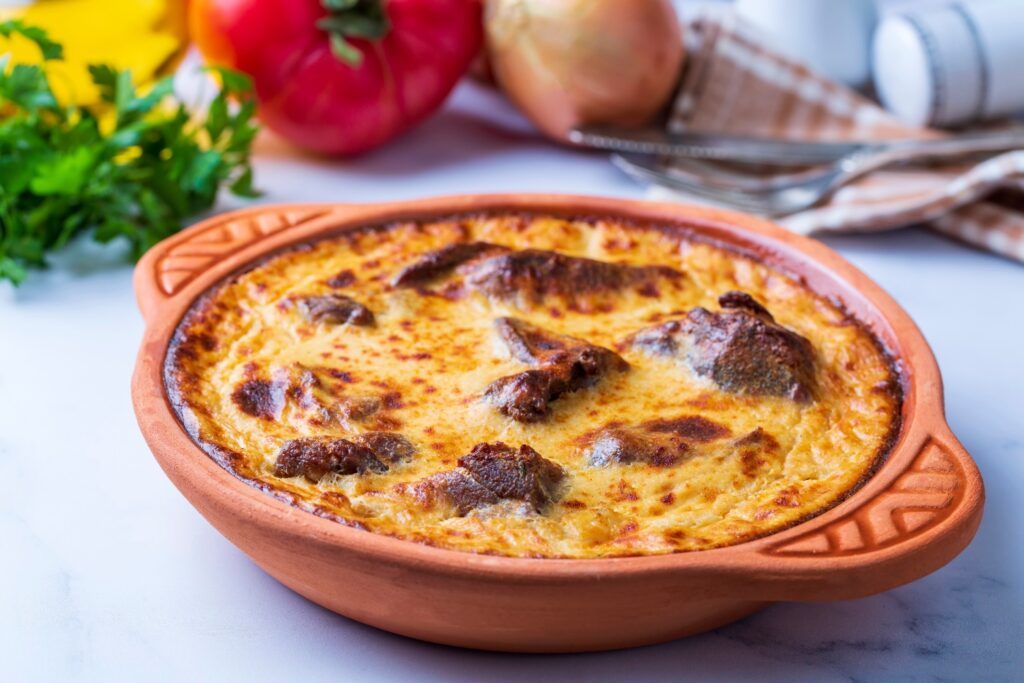
- Tavë kosi: a traditional Albanian baked dish of lamb and rice in a yoghurt and egg sauce – less common in coastal restaurants but available at inland spots near Butrint.
Restaurants set slightly back from the waterfront often offer better value than the first row facing the beach. Dinner for two with wine generally ranges between €30 and €45.
How to get to Ksamil: routes and practicalities
Ksamil has no direct international transport connections – the nearest airports are in Tirana and Corfu, and all routes require at least one transfer. The right route depends on where you’re travelling from and when.
Via Corfu (recommended for most Western European travellers in summer)
Corfu International Airport (CFU) is served by direct flights from across the UK, Italy, Germany, the Netherlands, Scandinavia and other European countries throughout the summer season (typically April to October). From Corfu port, ferries to Saranda are operated by Finikas Lines and Ionian Cruises, with multiple daily crossings in summer. The crossing takes 35–45 minutes and costs approximately €19–25 one way for a foot passenger; booking in advance is advisable in July and August. From Saranda port, Ksamil is reachable by local bus (line Saranda–Ksamil, under €1, journey 15–20 minutes) or by taxi (€10–15 for the vehicle).
Via Tirana
Tirana International Airport Nënë Tereza (TIA) operates year-round with connections to more European cities than Corfu. From Tirana, buses and furgons (shared minibuses) run to Saranda via Gjirokastra; the journey takes approximately 5–6 hours and costs €10–15. The Tirana–Saranda road passes through mountainous terrain and the Gjirokastra valley – the scenery is significant. Furgons depart from the main bus station in Tirana; frequency is higher in the morning. From Saranda, the connection to Ksamil is as above.
Getting around once in Ksamil
Ksamil village is small enough to navigate entirely on foot. For day trips to Butrint (4 km), the Blue Eye (28 km) or Gjirokastra (90 km), options include:
- Local bus: the Saranda–Ksamil line is reliable and cheap (under €1). Buses to Gjirokastra depart from Saranda bus station.
- Taxi: widely available; always agree the price before getting in. Saranda to Ksamil approximately €10–15; Ksamil to Butrint approximately €5–8.
- Scooter or bicycle hire: available in Saranda and increasingly in Ksamil itself; €20–30/day for a scooter. Most practical for independent exploration of the coastline and Butrint.
- Car hire: available from Saranda; international driving licence required. Useful for multi-day exploration of southern Albania but not necessary for a Ksamil-only trip.
Where to stay in Ksamil: accommodation by budget
Ksamil’s accommodation is dominated by family-run guesthouses and small independent hotels. There are no major international chain hotels in the village at the time of writing. Quality varies significantly within each price bracket – reading recent reviews carefully (filter for reviews from the previous 12 months) is essential.
Budget: €20–50 per night
Family-run guesthouses (bujtina) make up most of the budget category. Many include breakfast; some offer kitchen access. Standards vary widely, but the best offer excellent value – clean rooms, helpful hosts, and local knowledge that no hotel concierge can match. Book at least 2–3 months in advance for July and August. Platforms: Booking.com has the widest selection; Airbnb has some options but fewer than in larger cities.
Mid-range: €50–120 per night
A growing number of small hotels and apartment complexes have opened in the past five years, many with pools and sea-view terraces. Properties in this range typically offer air conditioning, private bathrooms, and in-house or nearby restaurants. Prices in this category rise by 30–50% between June and August; the same property that costs €60 in late May will often exceed €100 in peak season. Booking 3–4 months ahead is advisable for July.
Ksamil or Saranda: which is the better base?
This is the question most first-time visitors to the Albanian Riviera ask, and the answer is genuinely dependent on travel style.
- Choose Ksamil if: your priority is beach access and a slow pace. The village puts you within 5 minutes’ walk of the water, 10 minutes from the islands by kayak, and 15 minutes from Butrint by taxi. It’s quieter, more contained, and better suited to people who want to decompress rather than explore.
- Choose Saranda if: you want more variety in restaurants and nightlife, easier access to transport connections, or a base for exploring the wider region including Gjirokastra and the Blue Eye. Saranda has a proper promenade (bulevard), a wider range of shops and services, and a livelier evening atmosphere.
- The split approach: many visitors spend 3–4 nights in Ksamil for the beach and Butrint, then 2 nights in Saranda for a change of pace. The bus between the two runs regularly and takes 15–20 minutes. This is the approach that consistently gets the best reviews from experienced travellers in the area.
Is Ksamil safe? An honest assessment
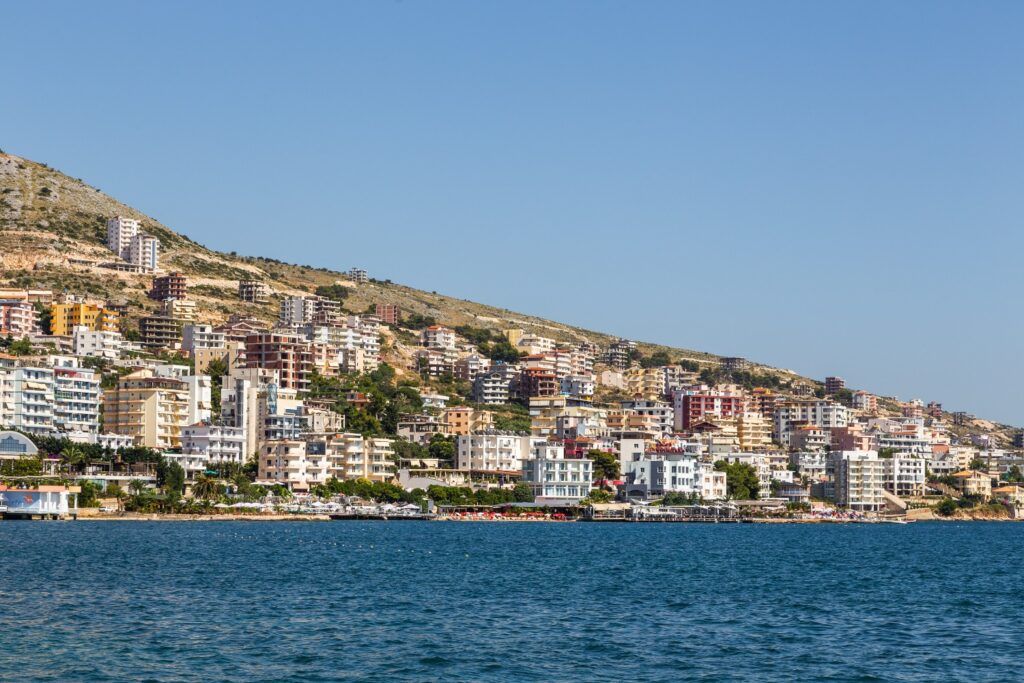
Ksamil and the Albanian Riviera are generally safe for tourists. The Albanian concept of besa – a traditional code of honour that includes the obligation to protect and care for guests – is culturally significant and practically observable in the warmth with which visitors are received. Violent crime against tourists is rare; the Foreign and Commonwealth Development Office (FCDO) and the US State Department both classify Albania as a low-risk destination for travel, with standard precautions recommended.
Practical precautions worth taking:
- Don’t leave valuables unattended on busy beaches in July and August;
- Use established taxi services and agree the price before travelling;
- Be aware that road conditions outside main tourist areas can be significantly worse than expected;
- The E90 coastal road between Saranda and Ksamil is in reasonable condition, some secondary roads are not.
One area where Ksamil has room to improve: jellyfish (Portuguese man o’ war and moon jellyfish) occasionally appear in the Ionian waters in late summer, particularly in August and September following strong southerly winds. Conditions change daily; ask locally or check the beach before swimming.
Practical information for planning your trip
Entry requirements and visa
Citizens of EU member states, the United Kingdom, the United States, Canada, Australia and many other countries do not require a visa to enter Albania for stays of up to 90 days within a 180-day period. Your passport must be valid for at least 3 months beyond your intended departure date.
Albania is not a member of the Schengen Area – entry to Albania does not count against your Schengen 90-day allowance, but verify this with your country’s foreign ministry before travelling, as rules can change.
Currency and costs
The local currency is the Albanian lek (ALL). Cash remains widely used in Ksamil – many smaller restaurants and guesthouses do not accept cards. ATMs are available in Saranda; withdraw lek there rather than at border crossings, where exchange rates are consistently unfavourable. Credit card acceptance is improving but not yet reliable outside mid-range and above hotels. Check the current exchange rate before travelling.
Indicative costs:
- coffee €1–2;
- beer €2–3;
- lunch for two €15–25;
- dinner for two with wine €30–45;
- sunbed €5–10;
- kayak €10–15 per hour.
Language
Albanian (Gjuha shqipe) is the official language. English is spoken well by most people working in tourism in Ksamil and Saranda, particularly those under 40. Italian is understood by many older Albanians. Greek is spoken by some residents in the Saranda area due to the proximity to Greece and historical ties. A few words of Albanian are genuinely appreciated: faleminderit (thank you), mirëdita (good day), ju lutem (please).
Connectivity
Mobile coverage in Ksamil is good in the village and along the main beaches; coverage can be patchy in more remote areas and on some hiking paths. The main Albanian operators are Vodafone Albania, ONE Telecommunications and ALBtelecom. Local SIM cards with data packages are available in Saranda for approximately €5–10 and are the most economical option for stays of more than a few days. EU roaming applies for EU citizens using EU operator SIMs, subject to your operator’s fair use policy.
Best time to visit Ksamil: month by month
April–May: mild temperatures (18–22°C air), sea too cool for most swimmers (15–18°C), but Butrint and the landscape are beautiful and tourist facilities begin reopening. Low prices.
June: the best month for most visitors. Air temperature 25–28°C, sea temperature 22–24°C, crowds manageable, prices moderate. Most facilities open and running.
July–August: peak season. Air temperature 30–35°C, sea temperature 24–26°C. Busy, expensive, noisy in the evenings. Book everything in advance. Still worth it if that’s when you can travel.
September: arguably the best month overall. Sea temperature remains above 23°C, crowds thin significantly after the first week, prices drop. Jellyfish can be present after southerly winds.
October: quieter still; sea temperature 20–22°C (swimmable on warm days). Many restaurants and some accommodation begin closing from mid-October.
November–March: most tourist facilities closed. Ksamil is a working village in winter and has a quiet, local character. Butrint is accessible and often completely deserted.
Ksamil is still ahead of the curve – but the window is narrowing
The Albanian Riviera is developing faster than almost any other coastal destination in the Mediterranean. New hotels are opening in Ksamil and Saranda every season; the road infrastructure is improving; and the word is spreading in a way it wasn’t five years ago. None of that has yet erased what makes Ksamil worth the journey – the water quality, the ruins, the food, the price-to-experience ratio – but it’s changing the character of the place, slowly and visibly.
The travellers who get the most out of Ksamil are those who arrive with a genuine curiosity about Albania, not just its coastline. The country has a history and a culture that reward attention: from the besa tradition of hospitality to the layered centuries at Butrint, from the Ottoman architecture of Gjirokastra to the surreal blue of Syri i Kaltër. The beach is the starting point, not the whole picture.
Experiencing all of that alongside people who are equally curious – sharing a boat to the islands, an unexpected conversation over dinner, an afternoon at Butrint that goes longer than planned – is the kind of travel that tends to stay with you. If that’s what you’re looking for, exploring group trips to Albania is a natural next step: a way to discover a country that still has the power to genuinely surprise, with people who are there for the same reasons you are.
Ksamil will still be beautiful whenever you arrive. Going well – with the right information, the right company, and the right expectations – makes all the difference.
The easiest route is flying to Corfu, then taking the 35–45 minute ferry to Saranda (Finikas Lines or Ionian Cruises, roughly €19–25 one way, multiple crossings daily in summer). From Saranda, Ksamil is 15 minutes by taxi (€10–15) or under €1 by local bus. Alternatively, fly to Tirana and travel south by bus or furgon (shared minibus) in around 5–6 hours.
UK citizens do not need a visa for stays up to 90 days within a 180-day period. Your passport must be valid for at least 3 months beyond your departure date. Albania is outside the Schengen Area, so entry does not count against your Schengen allowance.
Ksamil if beach and Butrint are your priority — quieter, slower, with the water a short walk away. Saranda if you want more restaurant options, nightlife and easier transport connections. Many travellers split the stay: 3–4 nights in Ksamil, then 2 in Saranda.
Local mussels farmed in the Butrint lagoon are the standout — served steamed with garlic, white wine and lemon, around €5–8 for two. Fresh grilled fish (sea bream or sea bass, priced by weight at roughly €10–15 for a whole fish) is equally good. Restaurants a row back from the waterfront consistently offer better value than the front row.
Yes. Many smaller restaurants and guesthouses don’t accept cards. Withdraw Albanian lek (ALL) from ATMs in Saranda rather than at border crossings where exchange rates are poor. Budget roughly €30–45 for dinner for two with wine, €5–10/day for a sunbed.FAQ: Your questions about Ksamil answered