In a nutshell
- A 7-day Morocco trip is enough for a first introduction if you focus on a compact route, with Marrakech, the Sahara, and Fes offering the best mix of culture, scenery, and historic atmosphere.
- The most efficient itinerary is Marrakech to Fes via Ait Ben Haddou, Dades Valley, Todra Gorge, and Merzouga, because it reduces unnecessary detours while delivering Morocco’s most iconic contrasts.
- Marrakech is generally more rewarding than Casablanca for short stays thanks to its medina, riads, monuments, and overall atmosphere, while Casablanca works better as a transport hub or for a brief stop at Hassan II Mosque.
- Spring and autumn are the best travel seasons for this route, since they make long drives, city walks, and desert overnights much more comfortable than the extremes of summer heat or winter cold.
- Good planning improves the trip dramatically: use an open-jaw flight if possible, book a driver or desert tour for the overland section, pack layers, carry cash, and respect local customs to travel more smoothly and enjoy the experience more deeply.
Morocco is the kind of place that throws colors, spices, call to prayer, tiled courtyards, and endless landscapes at you all at once. If you are planning a morocco itinerary 7 days, the sweet spot is a route that mixes historic cities with one unforgettable desert stretch, without turning your holiday into an Olympic transfer challenge.
This one-week plan is designed for first-time travelers who want the biggest highlights with a sensible rhythm: a taste of the imperial cities, a proper journey through the Atlas Mountains, and a night in the Sahara Desert. It is fast, yes, but still realistic enough that you will remember the trip for the right reasons, not just because your suitcase never fully unpacked.
Is 7 days enough for Morocco?
Yes, seven days are enough for Morocco if you focus on a compact route. In one week, you can combine Marrakech, Fes, and the Merzouga desert while still enjoying the journey between them. The key is choosing depth over quantity and avoiding a frantic city-hopping schedule.
Let’s be honest: Morocco is not a country you “finish” in a week. It is more like a tasting menu, and a very generous one at that. In seven days, you can absolutely experience ancient medinas, desert silence, mountain scenery, and the cultural richness of the historic capitals.
What you should not do is cram in Casablanca, Rabat, Meknes, Chefchaouen, Tangier, Marrakech, Fes, and the desert all in one go unless your dream vacation is spending quality time with bus stations.
This itinerary works best if you:
- Arrive in Marrakech
- Travel overland to the desert
- Finish in Fes or return to Marrakech depending on flights
- Prefer highlights with some breathing room
Best route for a 7-day Morocco itinerary
The most balanced route for one week is Marrakech to Fes via the Sahara. It links one major imperial city with desert landscapes, kasbahs, and mountain passes, then ends in another historic city. This keeps the trip varied and efficient without wasting too much time backtracking.
For a first trip, this is the route that gives you the strongest contrast between city life and open landscapes. You begin in chaotic, energetic Marrakech, cross the High Atlas, stop at cinematic kasbahs, sleep among dunes near Merzouga, and finish in deeply atmospheric Fes.
| Route | Best for | Pros | Cons |
|---|---|---|---|
| Marrakech – Sahara – Fes | First-timers | Best balance of cities and desert | Long driving days |
| Marrakech – Sahara – Marrakech | Round-trip flights | Easy flight logistics | More backtracking |
| Casablanca – Rabat – Fes – Marrakech | City lovers | More imperial cities | No real desert immersion |
Day-by-day Morocco itinerary for 7 days
Day 1: Arrive in Marrakech
Start your trip in Marrakech with a gentle introduction to the medina, historic monuments, and rooftop dining. This first day should be about orientation rather than overplanning, especially if you are arriving after a flight and adjusting to the city’s pace.
Spend the day in the heart of Marrakech. Walk through the souks, visit Bahia Palace or Ben Youssef Madrasa, and save sunset for a rooftop overlooking the medina. Jemaa el-Fna is the city’s chaotic living room: loud, smoky, theatrical, and impossible to ignore.
Marrakech does not do “subtle.” It grabs you by the senses and says, “Welcome, now follow this smell of grilled meat and orange blossom.”
- Sleep in a riad inside or near the medina
- Book airport transfer in advance for an easier arrival
- Wear comfortable shoes: the alleys are charming, but not foot-massage charming
Day 2: Explore Marrakech
Your second day is the right moment to see Marrakech properly. Focus on a few landmarks, a garden or museum, and enough free time to simply wander. The city rewards curiosity, and some of its best moments happen when you stop trying to walk in a straight line.
Good stops include Majorelle Garden, Koutoubia Mosque from the outside, and the artisan areas of the medina. If you enjoy food, take a street-food or cooking experience in the evening.
There is also a useful psychological shift on day two: by now, you stop feeling lost and start feeling “adventurously direction-free,” which is much better for morale.
Day 3: Marrakech to Dades Valley via Ait Ben Haddou
Day three is a transfer day, but it is also one of the most scenic parts of the trip. Travel through the High Atlas Mountains, cross the Tizi n’Tichka Pass, and stop at major highlights before reaching the Dades area for the night.
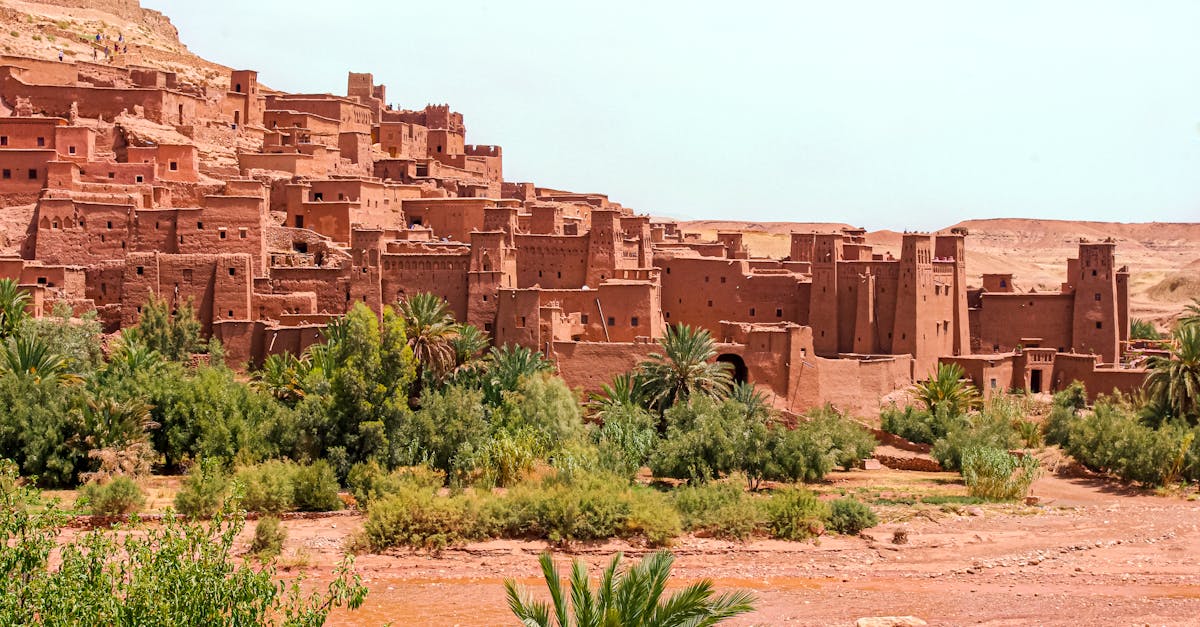
This is where the itinerary opens up. Leave the city behind and drive toward Ait Ben Haddou, the famous fortified ksar and UNESCO site. Continue via Ouarzazate and the “Road of a Thousand Kasbahs” to Dades Valley or nearby accommodation.
The landscapes change so often that the drive feels like several countries stitched together: red earth, palm groves, rocky valleys, and mountain villages clinging dramatically to hillsides as if gravity were just a suggestion.
- Driving time is long, often 6 to 8 hours with stops
- A private driver or small-group desert tour is the easiest option
- Stay overnight in Dades Valley or Boumalne Dades
Day 4: Dades Valley to Merzouga and Sahara camp
This day takes you deeper into southern Morocco, passing dramatic gorges and desert-edge landscapes before arriving in Merzouga. By late afternoon, you can switch vehicles or camels and head into the dunes for a night in a desert camp.
On the way, stop at Todra Gorge for a short walk between towering canyon walls. Then continue to Merzouga, gateway to the Erg Chebbi dunes. Most travelers do a sunset camel ride to camp, though 4×4 transfers are available if your knees have filed a formal complaint.
Desert camp evenings usually include:
- Moroccan dinner
- Traditional music around the fire
- Stargazing
- Sunrise the next morning over the dunes
Day 5: Merzouga to Fes
This is the longest transit day of the itinerary, but it connects the Sahara with northern Morocco in a single arc. Expect changing scenery, from arid plains to cedar forests and mountain towns, before reaching Fes in the evening.
After sunrise in the desert, leave for Fes. The route often passes through Erfoud, the Ziz Valley, Midelt, Ifrane, and cedar forests where Barbary macaques may appear. It is a full day, but an eventful one.
By the time you arrive in Fes, you may feel slightly melted, gloriously dusty, and very ready for a hot shower and a quiet riad courtyard. This is normal. Even expected.
Day 6: Discover Fes
Dedicate this day to Fes, one of Morocco’s most historically significant cities. The medina is dense, layered, and easier to appreciate with a local guide, especially if you want to understand the crafts, religious heritage, and architecture.
Fes el-Bali is a maze of workshops, mosques, riads, schools, and markets. Visit the Chouara Tanneries, admire the gates of the Royal Palace, and explore madrasas and artisan quarters. A guide is highly recommended here, not because you are incapable, but because the medina seems personally committed to confusing everyone equally.
If Marrakech is theatrical, Fes is scholarly and intricate. It feels older, more layered, and less polished in a way many travelers find deeply compelling.
Day 7: Final morning in Fes or departure transfer
The final day should be kept light, with time for a relaxed breakfast, last-minute shopping, or a short cultural stop before heading to the airport. If flights allow, enjoy one final slow moment rather than squeezing in another ambitious detour.
Depending on your flight, use the morning to shop for ceramics, leather goods, spices, or textiles. If you are flying from Fes, this itinerary ends neatly. If you must return to Marrakech or Casablanca, consider a domestic flight or train extension rather than attempting heroics by road on the same day.
Is Casablanca nicer than Marrakech?
Casablanca and Marrakech offer different experiences, and most first-time visitors prefer Marrakech for atmosphere and sights. Casablanca feels more modern and local, while Marrakech is more iconic, immersive, and immediately rewarding for a short trip.
If your time is limited, Marrakech usually wins. It has more classic postcard appeal, more traditional stays, and better access to the desert route. Casablanca is more of a business city, though the Hassan II Mosque is absolutely worth seeing if your route passes through.
In short:
- Choose Marrakech for history, souks, and atmosphere
- Choose Casablanca for a modern urban feel and easier international connections
Unspoken rules to know before visiting Morocco
Morocco is welcoming, but understanding local etiquette makes the trip smoother. Dress modestly, ask before taking photos of people, negotiate politely in souks, and be respectful in religious or traditional settings. Small cultural awareness goes a very long way.
These are not hard rules designed to scare you off. They are simple habits that show respect and help you travel better.
- Dress modestly, especially outside very touristy zones
- Ask permission for photos, particularly in markets and villages
- Carry cash, as small shops and tips often require it
- Greet politely; basic courtesy matters
- Bargain with humor, not aggression
- Avoid public drunkenness, which is culturally inappropriate
A friendly, respectful attitude works wonders. Morocco tends to give energy back: if you arrive patient and open, the experience becomes warmer, easier, and much more interesting.
Best time to visit Morocco
The best time to visit Morocco is spring or autumn, when temperatures are milder and travel between cities and the desert is more comfortable. March to May and September to November are generally the most pleasant months for this itinerary.
Summer can be intensely hot, especially in inland cities and desert regions. Winter is viable, but desert nights become very cold and mountain weather can be unpredictable. For a one-week trip covering multiple regions, shoulder season is ideal.
| Season | What to expect | Best for |
|---|---|---|
| Spring | Mild temperatures, greener landscapes | Best overall travel season |
| Summer | Very hot inland and in the desert | Coast, short city stays |
| Autumn | Warm days, pleasant evenings | Desert and city combinations |
| Winter | Cool cities, cold desert nights | Budget trips, fewer crowds |
Practical tips for a smooth 7-day trip
A successful one-week Morocco trip depends on planning transport carefully, packing for climate changes, and keeping expectations realistic about distances. With the right setup, the itinerary feels exciting rather than exhausting.
- Choose an open-jaw route if possible: arrive in Marrakech, depart from Fes
- Book a desert tour or private driver for days 3 to 5
- Pack layers: desert nights and mountain mornings can be chilly
- Stay in riads for a more memorable local experience
- Keep one day bag with essentials for the desert overnight
- Download offline maps for medinas and road travel
If you can, do not over-engineer every hour. Morocco shines when you leave a little room for mint tea breaks, rooftop pauses, and the occasional glorious wrong turn.
A one-week trip that feels bigger than seven days
This itinerary gives you a strong first impression of Morocco by combining imperial history, striking scenery, and desert atmosphere. In only seven days, it creates variety, rhythm, and memorable contrasts without trying to do absolutely everything at once.
That is the magic of this route: one week can feel surprisingly full when every stop brings a completely different mood. One day you are weaving through medieval alleys, the next you are crossing mountain passes, and then suddenly you are watching dawn spill over the dunes like the planet is showing off.
If Morocco is calling, it might be time to answer properly: discover WeRoad group trips for Morocco and share the adventure with fellow travelers who are just as ready for riads, road trips, and a little desert magic.
FAQ | Morocco itinerary
- What is the best Morocco itinerary for 7 days?
-
For first-time visitors, the best itinerary is Marrakech – Ait Ben Haddou – Dades Valley – Merzouga – Fes. It combines one imperial city, the desert, mountain scenery, and a second major cultural center in one efficient route.
- Should I visit Fes or Chefchaouen in a 7-day trip?
-
If you are also including the desert, Fes is usually the better fit because it connects more naturally with the Sahara route. Chefchaouen is beautiful, but it works better in a 9 to 10-day itinerary.
- Is a desert tour from Marrakech worth it?
-
Yes, especially on a first trip. A multi-day desert tour makes remote areas much easier to reach and usually includes transport, overnight stays, and key stops like Ait Ben Haddou and Todra Gorge.
- What should I wear in Morocco?
-
Wear comfortable, breathable clothes and aim for modest coverage, especially in medinas and rural areas. Layers are useful because temperatures can shift a lot between cities, mountains, and desert nights.
- Is Morocco safe for tourists?
-
Morocco is generally safe for tourists, especially on well-traveled routes. As in any destination, stay aware of your surroundings, be cautious with unofficial guides, and use licensed transport or pre-booked services when possible.