
In a nutshell
- The total solar eclipse of August 12, 2026 is one of the most significant astronomical events of the decade in Europe: the path of totality crosses southern Iceland and Spain (including Zaragoza, Valencia, Mallorca, and Ibiza), with totality lasting up to approximately 1 minute and 36 seconds at Palma de Mallorca.
- The total phase is not visible from the United States, but parts of the country will still see a partial eclipse. For example, New York reaches magnitude 0.186 and Boston 0.266.
- Mallorca is the top recommended destination: fully inside the path, reliable August sunshine, and strong international flight connections. Zaragoza is the best choice for maximum totality duration on the Spanish mainland.
- ISO 12312-2 certified eclipse glasses are mandatory during all partial phases; the only moment they can be safely removed is during totality itself. Book accommodation and flights well in advance, as demand in the path of totality will be exceptional.
On August 12, 2026, the sky above parts of Europe will darken during one of the decade’s most anticipated astronomical events: a total solar eclipse crossing Iceland, northern and eastern Spain, the Balearic Islands, and the Mediterranean before continuing toward Russia and Kazakhstan. During totality, the Moon will completely cover the Sun along a corridor roughly 150–200 kilometers wide, with the longest phase lasting up to 2 minutes and 15 seconds at the point of greatest eclipse.
A summer evening suddenly turning into twilight over Mediterranean beaches and volcanic Icelandic landscapes is not something that happens often, which is why the total solar eclipse of 2026 is expected to attract observers from all over the world. In this guide, you’ll find everything you need to know: the exact date, the path of totality, the best viewing locations, and how to plan your trip to experience the eclipse live.
The 2026 solar eclipse path of totality

The path of totality for the 12 August 2026 eclipse is roughly 260–320 km wide, with a maximum width of about 294 km according to NASA. It first crosses parts of Russia, then Greenland and Iceland, before reaching Spain and the Balearic Islands. It enters European landmass through the south of Iceland, sweeps across the Iberian Peninsula from northwest to southeast, crosses the Balearic Islands, and continues over the Mediterranean toward Algeria, Russia, and Kazakhstan.
Key points along the path:
- Iceland: the southern part of the island (including areas around Vík and the Westman Islands (Vestmannaeyjar)) falls within the path of totality. Reykjavik lies just outside the northern limit, but only by a few kilometers; a short drive south from the capital is enough to reach the totality zone.
- Northern Spain: the path enters the Iberian Peninsula via Galicia and Asturias, then passes through Navarre and Aragon. Zaragoza sits close to the central line, maximizing totality duration in this region.
- Valencian Community: Valencia and its surrounding province are inside the path of totality.
- Balearic Islands: both Mallorca and Ibiza are fully within the path. Palma de Mallorca is expected to experience approximately 2 minutes of totality.
- Barcelona: the city is expected to see a very deep partial eclipse, not totality. Current calculations place the city just outside the path of totality
- Algeria, Russia, Kazakhstan: the shadow continues east over the Mediterranean and North Africa before heading deep into Central Asia.
Where to see the 2026 solar eclipse: best viewing locations
The best viewing locations combine position inside the totality corridor, reliable weather statistics, and travel accessibility. Two destinations stand out clearly for most international travelers.
Solar eclipse 2026 in Spain: Mallorca, Valencia and Zaragoza
Spain is the top destination for the 2026 eclipse. Mallorca is particularly well-positioned: the island sits fully within the path, August weather is reliably sunny, and flight connections from across Europe and the Americas are numerous. Valencia is a solid mainland alternative with excellent transport links. Zaragoza, close to the centerline, is the choice for those who want to maximize their time inside the shadow. The eastern coast of Spain consistently ranks among Europe’s sunniest regions in August, a crucial advantage when cloud cover can mean missing everything.
Planning your eclipse trip to Spain? Browse WeRoad’s group trips to Spain for itineraries covering Mallorca, Valencia and the eastern coast, right in the path of totality for August 12, 2026.
Iceland solar eclipse 2026: the most dramatic setting on Earth
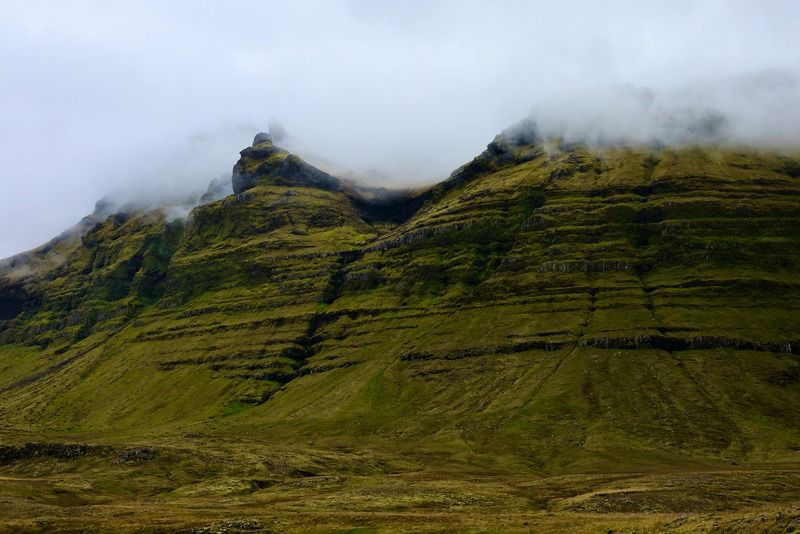
Few settings on Earth combine a total solar eclipse with scenery as striking as Iceland. The southern coast (particularly around Vík and the Westman Islands) lies within the path of totality. Weather in August can be unpredictable, and cloud cover is a real risk. But for those lucky enough to see a clear sky, the combination of volcanic landscape, black sand beaches, and a midday sky that suddenly turns to dusk is an experience that stays with you far longer than the two minutes of totality. Reykjavik itself is inside the path of totality: according to current calculations, the city will experience a total solar eclipse with about 1 minute of totality.
If volcanic landscapes and the chance of a clear sky over the Atlantic are calling your name, explore WeRoad’s Iceland group itineraries and find the trip that puts you in the right place on August 12.
Will the 2026 solar eclipse be visible in the United States?
The 2026 total solar eclipse is not visible from the continental United States. North America will experience only a negligible partial eclipse (under 5% coverage in the most northeastern locations). Seeing totality in 2026 means booking a trip to Spain or Iceland. For Americans who experienced the 2017 or 2024 eclipses, this one offers the same reward but with a very different geographic and cultural backdrop.
| Location | Eclipse type | Coverage | Approx. totality time (local) |
|---|---|---|---|
| Palma de Mallorca | Total | 100% | ~20:04 |
| Valencia | Total | 100% | ~20:02 |
| Zaragoza | Total | 100% | ~20:00 |
| Vík, Iceland | Total | 100% | ~17:45 UTC (17:45 local) |
| New York (USA) | Partial | <5% | n/a |
Times are approximate. Definitive data will be published by NASA Eclipse.
How to view the solar eclipse safely

Looking directly at the Sun without adequate protection causes permanent retinal damage. The only safe method for observing a solar eclipse is through eclipse glasses certified to ISO 12312-2 standard. Standard sunglasses, regardless of how dark they are, provide no meaningful protection and must not be used.
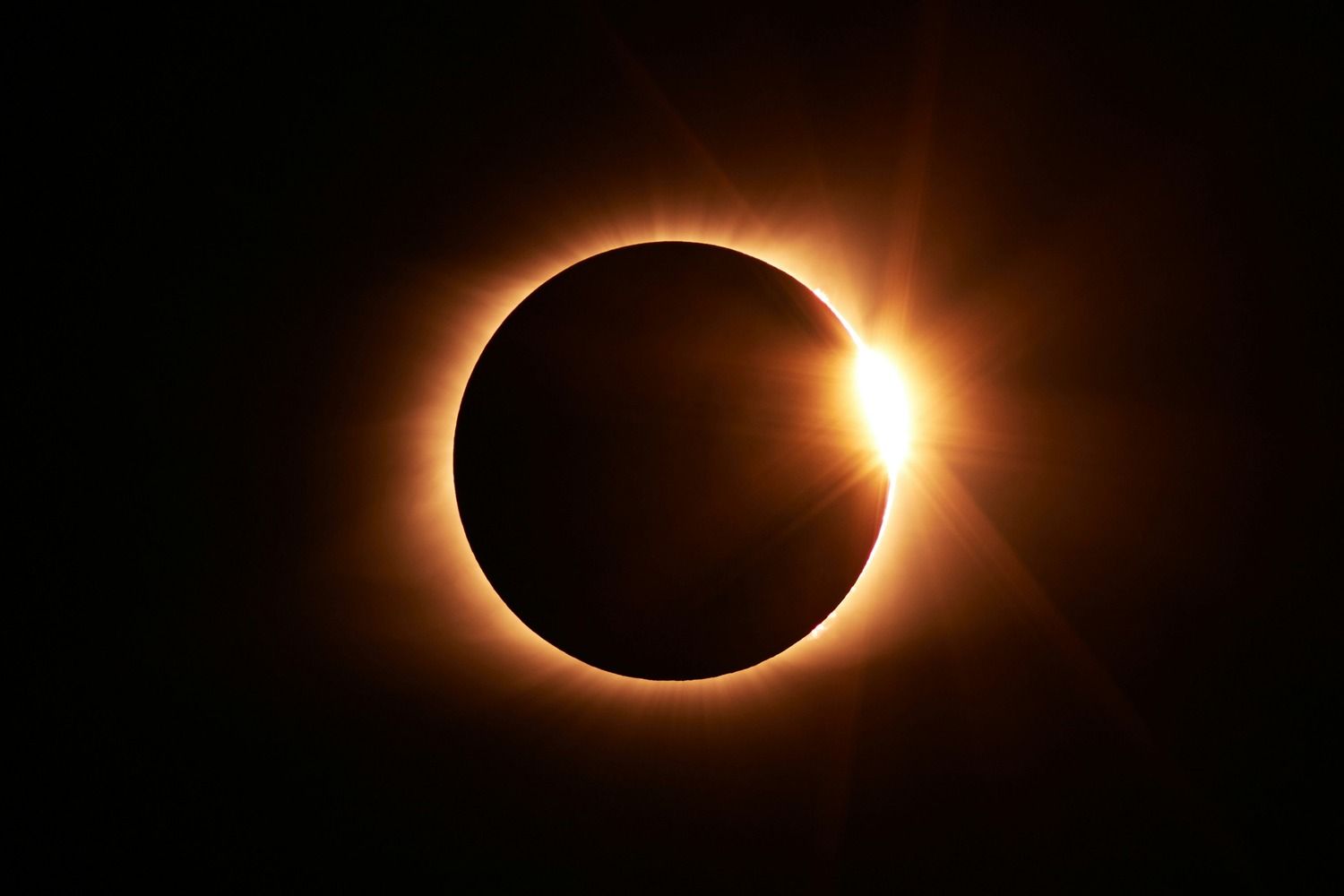
There is one exception: during totality itself, when the Moon fully blocks the Sun’s disk. At that moment, the sky darkens dramatically, the brightest stars become visible, and the Sun’s corona (its outer atmosphere) appears as a luminous white halo surrounding the silhouette of the Moon. It is safe to observe with the naked eye only during this brief window. The instant the first sliver of sunlight re-emerges (the so-called “diamond ring” effect), eclipse glasses must go back on immediately.
For camera and telescope users: a solar filter is mandatory on every optical surface during all partial phases. Without one, the sensor and the observer’s eyes are both at risk.
How to plan your 2026 solar eclipse trip
Book early, ideally now. Every major total solar eclipse in recent history has caused sharp spikes in travel demand within the path of totality. The 2017 US eclipse and the 2024 North American eclipse both saw destinations sell out many months in advance. Mallorca and the Spanish cities in the path will follow the same pattern.
When choosing between Spain and Iceland, weather reliability is the deciding factor for most travelers. The eastern Spanish coast and the Balearic Islands are among Europe’s sunniest areas in August. Iceland offers more dramatic scenery but higher meteorological uncertainty. Some eclipse chasers book a primary location in Spain and plan a separate trip to Iceland entirely.
If you’d rather have someone handle the logistics (transport, accommodation, and the best observation spots already sorted), WeRoad organizes group trips to Spain and Iceland with itineraries built around the eclipse. It’s the difference between scrambling for a clear patch of sky alone and spending that two-minute window of totality with people who planned the whole thing together. Take a look at what’s on offer.
FAQ
- What is the path of totality for the 2026 solar eclipse?
-
The path of totality for the August 12, 2026 solar eclipse runs from the North Atlantic through the south of Iceland (including the area around Vík and the Westman Islands), across northern and eastern Spain (Galicia, Asturias, Aragon, Valencia region), over the Balearic Islands (Mallorca, Ibiza), through Algeria, and into Russia and Kazakhstan.
- Will the 2026 solar eclipse be visible in the US?
-
No. The total solar eclipse of August 12, 2026 is not visible as a total eclipse from the continental United States. At most, extreme northeastern locations might see a very minor partial eclipse with less than 5% coverage. Experiencing totality in 2026 requires traveling to Spain or Iceland.
- How long will totality last during the 2026 solar eclipse?
-
The duration of totality varies by location. At Palma de Mallorca, totality lasts approximately 2 minutes. In Zaragoza and Valencia, around 1 minute 30–40 seconds. The maximum duration of totality for the entire eclipse, at the point of greatest eclipse over the North Atlantic, is approximately 2 minutes and 15 seconds.
- Is Iceland in the path of totality for the 2026 eclipse?
-
Yes. The south of Iceland (including areas around Vík and the Westman Islands (Vestmannaeyjar)) is within the path of totality. Reykjavik falls just outside the northern edge of the path; visitors based in the capital need to travel approximately 30–50 km south to reach the totality zone.
- When should I book for the 2026 total solar eclipse?
-
As soon as possible. Destinations in the path of totality, Mallorca and the Spanish Mediterranean coast in particular, are expected to fill up well in advance of August 2026. Based on patterns from the 2017 and 2024 total solar eclipses, flights and accommodation within the totality corridor can sell out 12–18 months before the event. Early booking is strongly advised.