In a nutshell
- Deserts cover nearly every continent and come in wildly different forms: burning sand seas, salt mirages, volcanic wastelands, ancient fossil coasts — there are around 33 desert areas on Earth, and the best ones are nothing like the dry brown stereotype.
- The Sahara (Africa) is the world’s largest hot desert: camel treks, Berber villages, mint tea, and the Milky Way spread over a sky with no light pollution. The Namib (Namibia) is the oldest — and its Skeleton Coast, scattered with shipwrecks, feels like walking through a film set.
- For the otherworldly: Wadi Rum (Jordan) is Mars on Earth — the filming location of Lawrence of Arabia and The Martian, with red rock formations, Bedouin camps and jeep rides across crimson sand. The Atacama (Chile) is the driest non-polar desert, home to the Valle de la Luna, El Tatio geysers and some of the best stargazing on the planet.
- The Gobi (Mongolia) straddles the old Silk Road and offers Bactrian camels and nomadic tribes; the Rub’ al Khali (Oman) is the world’s largest sand desert, with dunes over 250 metres high; and the Uyuni Salt Flats (Bolivia) — not technically a desert but feels like one — is 10,000 square kilometres of white salt that turns into a perfect mirror in the rainy season.
- Timing matters: visit the Sahara and Rub’ al Khali in spring or autumn to avoid brutal heat; the Atacama from April to October for clearest skies; Uyuni in the rainy season (December–April) for the mirror effect, or dry season for salt crust exploration.
If the epic visuals of the Dune movies have been living rent-free in your head, you’ve probably thought – “well, that looks gorgeous.” Of course, that’s without the massive worm and drinking of body fluids. But the truth is, some of the most stunning deserts in the world look just as surreal, and you don’t have to travel to Arrakis to find them.
In fact, there are about 33 desert areas across the globe, including some of the hottest, like the Sahara Desert, which earns its spot among the most extreme and best deserts in the world.
These deserts aren’t all concentrated in one place either. They are scattered across nearly every continent, giving you a ton of room for exploration. In this guide, we’ll go through seven of the most epic ones you can visit with your friends.
That said, let’s talk deserts!
1. Sahara Desert
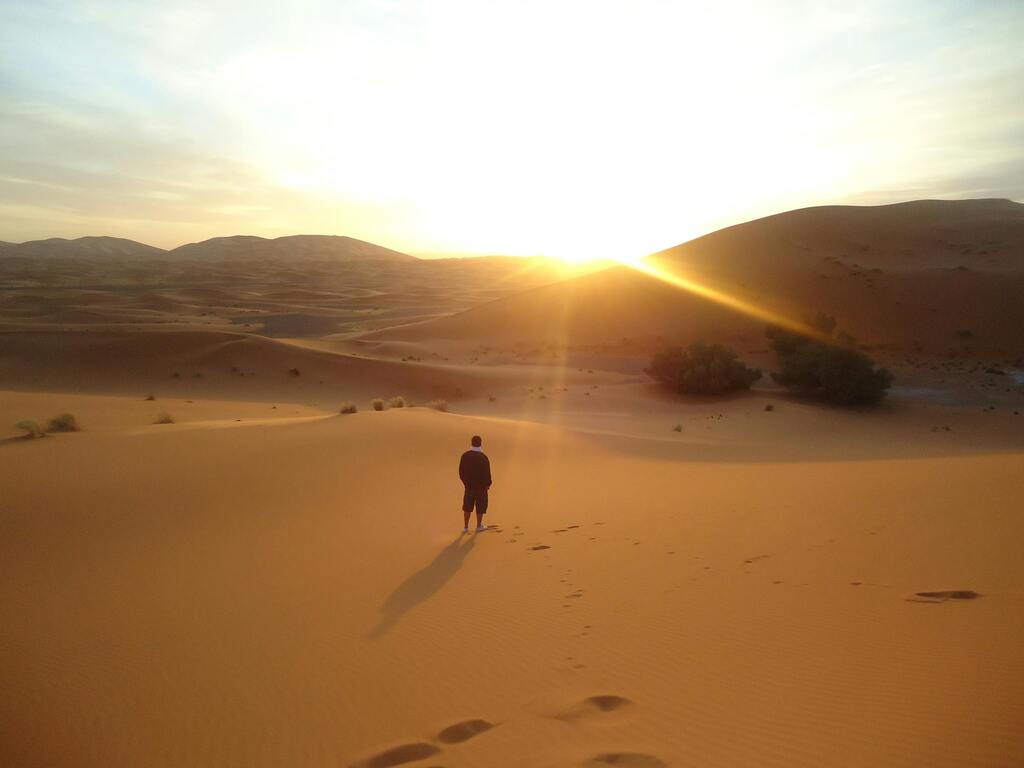
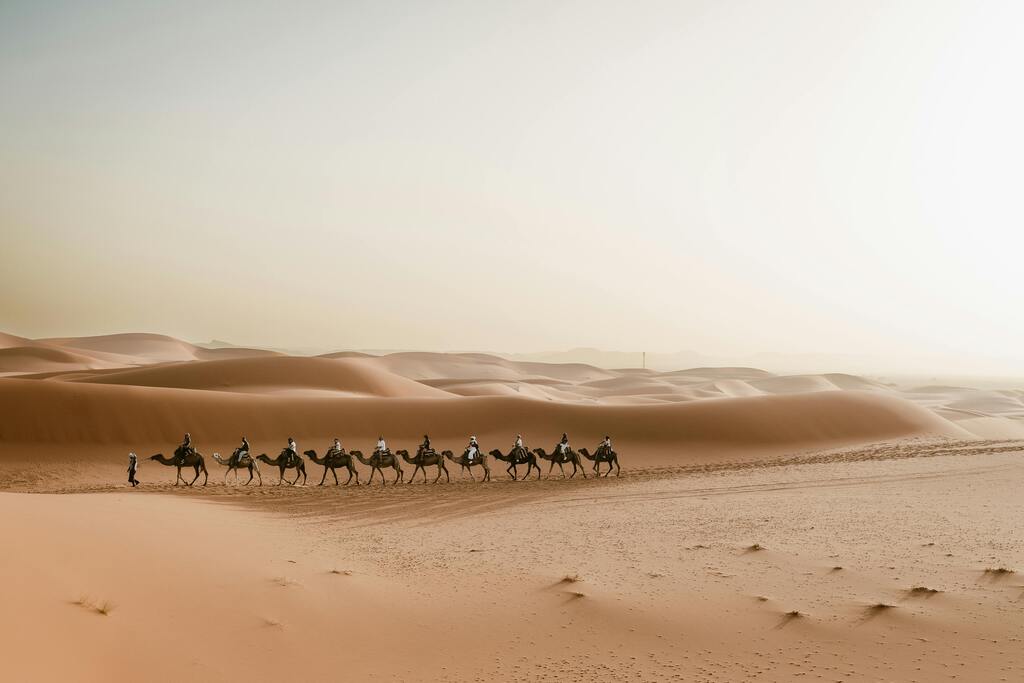
Introducing the Sahara — the largest hot and dry desert in the world. It sprawls across the horizons of multiple African countries that all bow down to its wonder as one of the great deserts of the world. Few things will make you feel smaller and more humble than weaving through the golden grains of the Sahara.
The King of Deserts
To begin with, Marrakech desert trips are quite the treat and, depending on your travel agency/company, they come with camel treks! For all you real-deal adventure lovers, this may just become your new favorite hobby. The sunsets here will also leave you with lasting memories. Further, when the stars come out, the Milky Way and her twinkling stars are all spread out just for you to experience and be under!
Outside its landscapes, the Sahara is replete with cultures and experiences. You can go to the Berber villages. There; you’ll learn about the ancient culture while drinking mint tea and chatting with the locals. What’s more – that’s not all the Sahara has to offer. To truly experience the magic of the Sahara, look into an organized group tour from Marrakech to the Sahara. You won’t be sorry.
2. Wadi Rum
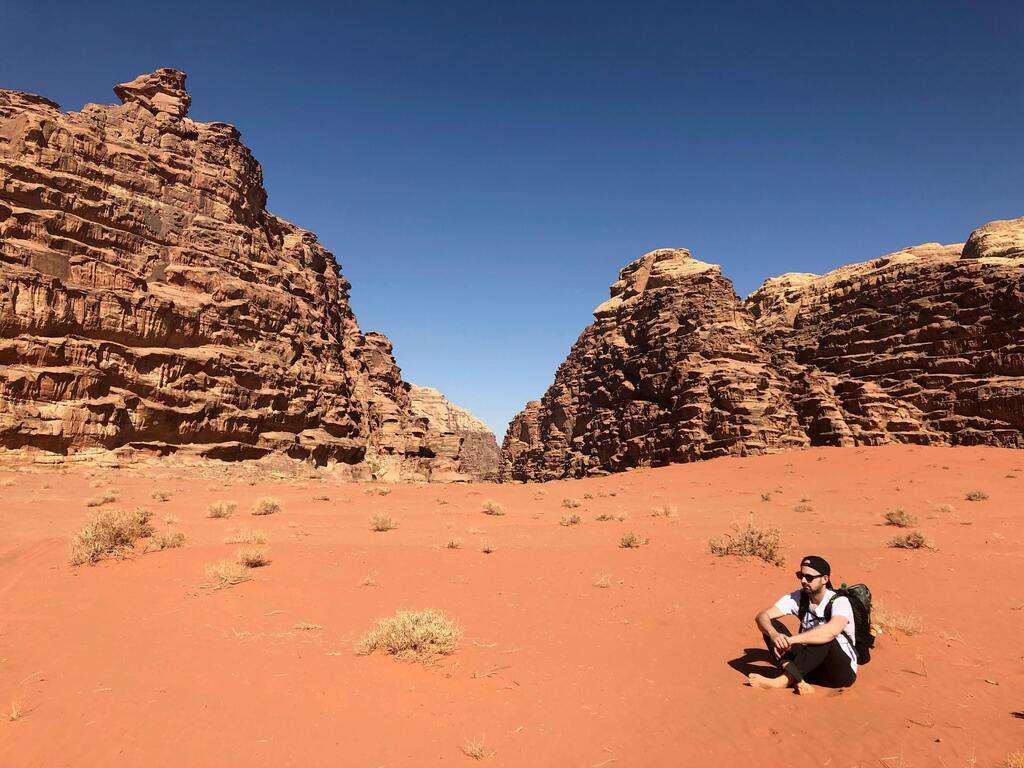
Everyone occasionally wants to be transported to a place that feels a little out of this world. Wadi Rum is easily the closest you can get to that desire. This apple of a desert with its epic red sand dunes, shapes and rocks has pretty much become Mars on Earth.
In more ways than one, the Wadi Rum is an epic and otherworldly playground, where the landscape creates the impossible again and again. Wadi Rum is where magic is lost and magic is found.
The Mars-like Desert of Jordan
Beyond its good looks, Wadi Rum has many adventurous activities to satisfy your inner daredevil. Whether you love the sound of high-speed jeep rides across the sands, conquering the looming rocks via rock climbing or sitting back in a Bedouin camp to wake under a star-lit sky, you will fall for the magnetic pull of the desert while consuming delicious, tasty traditional food that would leave you wanting more!
Further, if you want to cosplay and take some great pictures looking like characters from your favorite movies like, say, “Lawrence of Arabia” or “The Martian” this is the desert this epic films were filmed in! So, don’t dilly-dally. Join a group tour to Jordan and explore Wadi Rum now now!
3. Namib Desert
When you look at a map of deserts of the world, there is one that is a must see, given its status as the oldest desert in the world. Seriously, if you haven’t already been to see this grandpa of the deserts, what are you waiting for?! Discover Namibia’s Namib desert with an organized group adventure now.
The Oldest Desert in the World
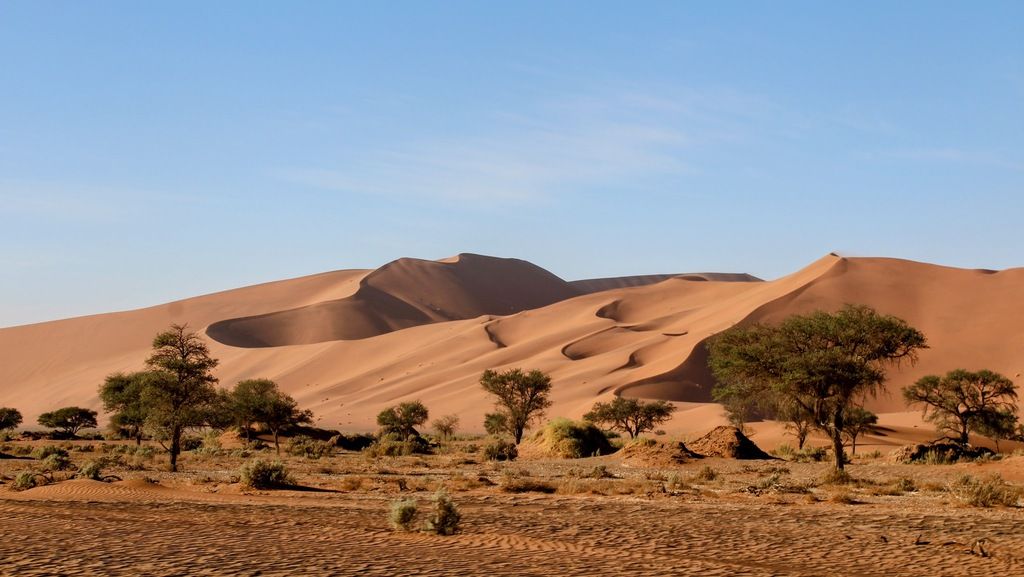
The most amazing thing about this place is Dune 45. This—and other dunes—are evidence of the desert’s insistence on leaving you mesmerized. Apart from looking at the landscape, you can sandboard also, go quad biking and do others. The Namib desert is full of surprises.
One such surprise is the Skeleton Coast of the Namib, which is a visually stunning place that feels like walking through a cinematic apocalypse.
Other deserts welcome you with heat and dunes. The Skeleton Coast of the Namib desert, however, is home to shipwrecks that show humans’ love for adventure. The Skeleton Coast also got its name from a history of having whale bones on its shores, a remnant of the whaling industry. This natural wonder has desert-adapted wildlife Iike the Oryx. They freely graze against a backdrop that’s the subject of many poems. In a nutshell, every moment spent here is a new lesson in Mother Nature’s beauty!
4. Gobi Desert
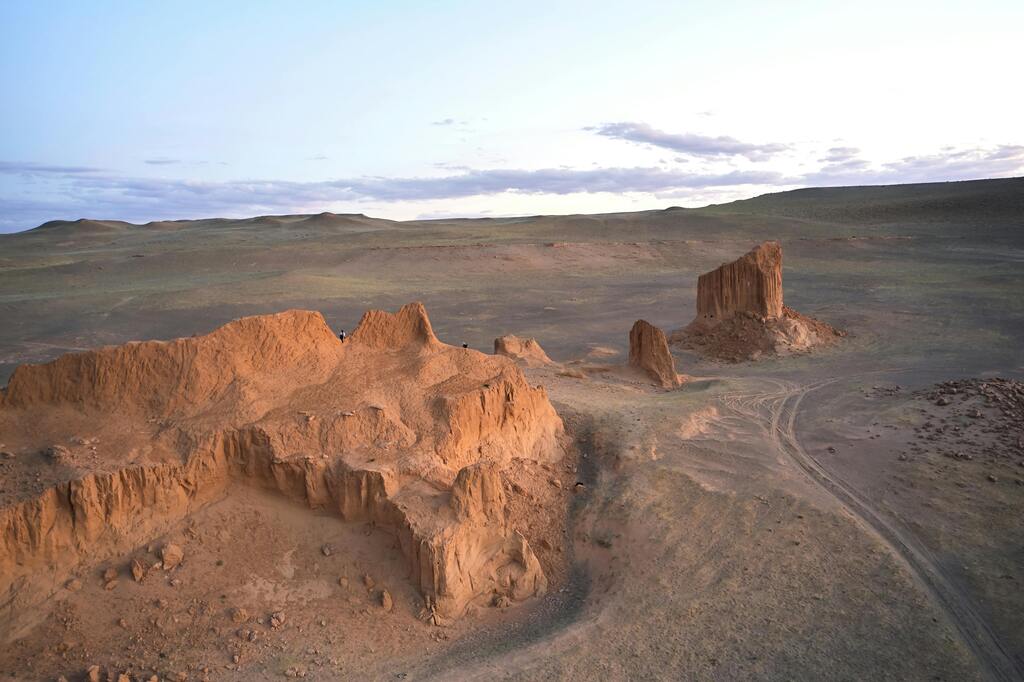
Africa has the most famous deserts in the world, but the exclusive reserve for natural wonders it isn’t. Asia has this one, and this Gobi desert is an oasis mix of green mountains, rivers, oceans, desert dunes, and rugged mountains. Even if you don’t know of it, its truly incredible and worth a visit. More than that is its a peek to the past for many cultures and peoples.
A Mongolian Treasure
For instance, did you know that the Gobi Desert provided a major pathway for people and their caravans traveling down the Silk Road? Even though the climate is harsh, it served as a connector between the east and west, allowing for cultural and economic exchange crucial to the development of the modern world.
That said, when you go to Gobi, you will eventually find Bactrian camels—you know, the ones walking around gracefully like they own the place. You may also meet the nomadic tribes of the desert. The easiest way to see all that it has to offer is to book a group tour through Uzbekistan and beyond. The memories are to die for. Not literally, of course.
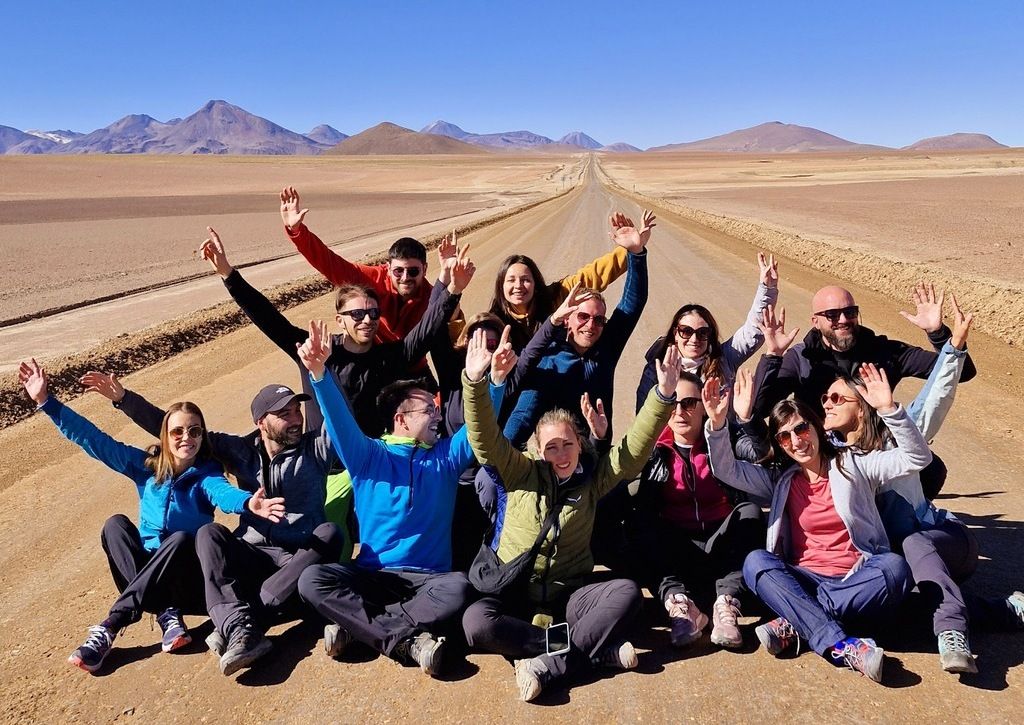
5. Atacama Desert
Atacama is in the North of Chile. It is the driest non-polar desert in the world. Some places here have never seen rain. Now, this a desert worthy of the name!
One of the most stunning places in the Atacama is the Valle de la Luna, or Valley of the Moon. This is a huge sand theatre with paths covered in salt. The uniqueness of the landscape makes it resemble craters on the moon—kinda like paintings come to life. If you like the stars, the Atacama is pretty much begging you to come around. The lack of clouds makes it great for astronomers.
The World’s Driest Desert
Atacama is also home to geysers. Or, better put, exploding hot water in the middle of the desert! The El Tatio geyser Field is the most famous. Just wait until you see the earth’s hot belly blow up into the air. It’s almost like fireworks, but you know, not made by people.
There’s more, like the beautiful mix of plant life and animals that have decided to call this place their home. You will see flamingos chugging along through salt flats and flowers that only bloom in such conditions. You would think nothing could possibly thrive here but the miracle is – plenty does!
6. Rub’ al Khali
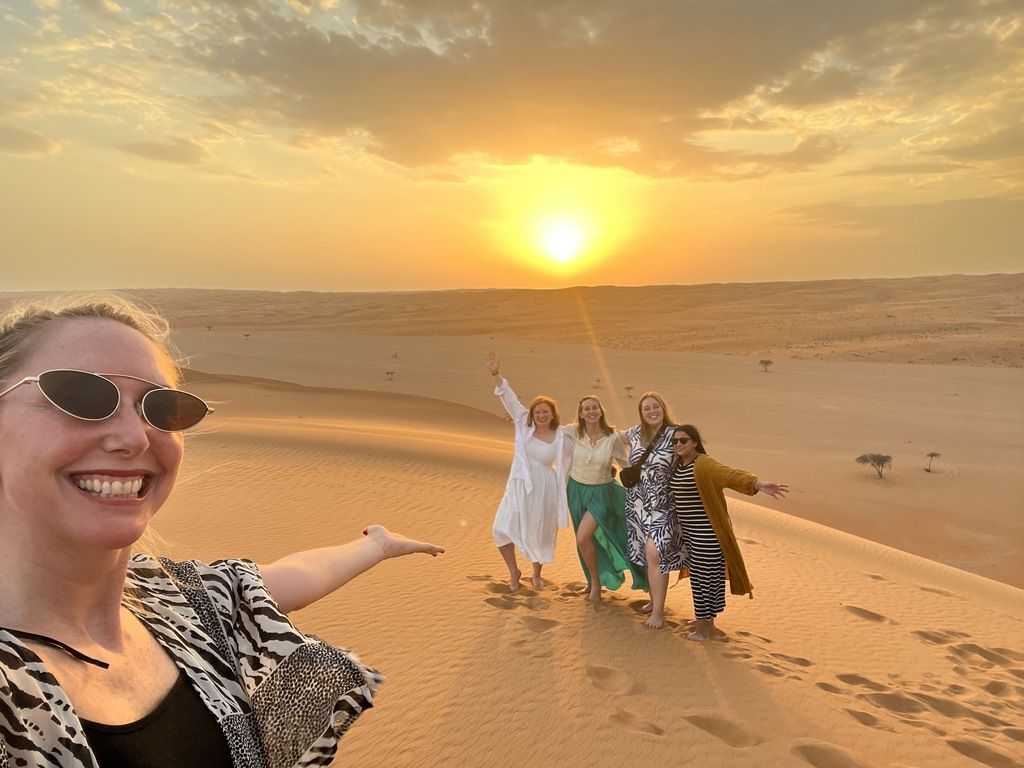
Next, we’re off to the Rub’ al Khali—also known as the Empty Quarter. Over 1,000km long, the Rub’ al Khali is actually the largest sand desert in the world. Just picture finding amazing dunes left and right – dunes that feel like they never end. Most of them are over 250 meters high, and they’ll make you feel like a child in a sandbox!
The Empty Quarter of Oman
One thing you’d love to do in Rub’ Al Khali— sleep under the night sky, listenin to the gentle whisper of the air. Further, if you’re lucky, you could see the rare sighting of a falling star!
You can also walk through the old merchant routes. They once linked this sandy place with the rest of the Arabian Peninsula. And we’re saying walking specifically because it’s the closest you can get to feeling like an olden-day merchant who lived their lives, exchanging goods and stories, drinking a bit of tea here and there.
When it comes time to list deserts of the world that are an absolute trip, you would be remiss if you did not mention Rub’ al Khali. And if you want to be guided through this place and get the lay of the land from some natives, a group adventure through Oman’s Empty Quarter just might be what the doctor ordered! Go for a ride on a camel. Feel the sands under you and reach the most incredible oasis of your life – which, by the way, looks like a postcard from a fairy kingdom.
7. Uyuni Salt Flats
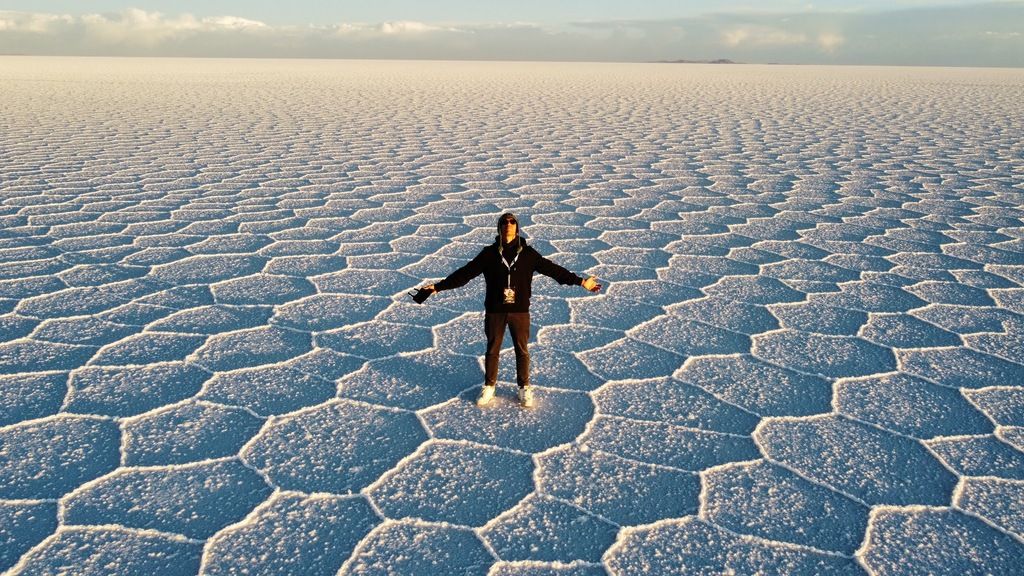
Hold onto your hat. We’re going down to the Uyuni Salt Flats in Bolivia, a place that quite literally looks and feels like Salvador Dali painted – it is an absolute stunner! The 10,000 square kilometer spread of white is the biggest in the world, and a trip there is so incredible you’ll question afterward whether it was really real. In the rainy season, the flat turns into a mirror, showing the sky. Instagram filters have nothing on this place.
Bolivia’s Surreal Landscape
The fun doesn’t end with this place being a picture-perfect place (literally)! The Salt Flats are also a real playground for the adventurous – from 4×4 tours taking you all over the flat’s turquoise landscapes to a nearby Train Cemetery that you can walk through and see some cool rusted hulks.
You can equally visit communities, learn about lives long forgotten, and, most importantly of all, eat some of the food of the region — it’s quite the experience. The best part of seeing this desert is you can also get to see some surrounding areas and spice up your exploration with a group trip through Peru and Bolivia. Not only will you marvel at the surreal perfection of the Salt Flats, but you also tackle the majestic Andes and get to know the secrets of long-gone societies.
If you’re visiting the Uyuni Salt Flats, time your trip to catch both worlds: arrive during the tail end of the rainy season (late March or early April) when the thin layer of water still covers parts of the flats — giving you the iconic mirror effect — while other sections have already dried out enough for 4×4 exploration. The combination of reflections and crystal salt formations in the same trip is unbeatable.
When to Visit the World’s Most Famous Deserts
Most people would think that deserts maintain the same state throughout the year — dry. While that is somewhat true, it’s a bit of an oversimplification. There are, in fact, times when it’s best to visit different deserts in the world. They are, after all, some of the toughest climates on the planet. Here are the best times to visit some of the most famous deserts:
- Atacama Desert: The best time to visit is the dry season from April to October. This is when you get those clear, starry skies and the best temperatures for exploring those otherworldly landscapes you traveled so far to see. Plus, if you are really lucky, you will be there to see the desert in full bloom after one of those rare rainfalls comes through – putting a bit of color to what is usually a dry, drab desert land!
- Rub’ al Khali: The cooler months are from October to April. This is when the daytime temperatures will be more bearable, and you can enjoy a delightful activity such as camel trekking or a night under the stars without puddling into the ground! Can’t you just imagine sipping mint tea, surrounded by nothing but dunes as far as the eye can see?
- Uyuni Salt Flats: The wet season is between December through April which is when you will see the most magical reflections. However, if you visit during the dry season (May through November), you will get to explore the salt crust and see more of what Uyuni has to offer, with some unique formations that you are able to adventure out to. Either way, the Uyuni is sure to blow your mind away!
- The Sahara: You want to avoid those really hot months and go for their spring to autumn seasons, which are much cooler and allow you to make it a Sahara desert/Marrakech trip where you can explore and walk around and even camp at night!
Embark on a Desert Adventure
Want to discover some of the best deserts of the world during your next trip? Desert landscapes are not just dry, dusty brown places that are always hot with sandstorms everywhere. Oh no! There are quite varied – some with gorgeous vegetation and wildlife, some white and snowlike, and yes– some fall into the stereotype but are still stunning. On top of all this, these deserts come with the chance to explore surrounding areas and go on some pretty cool adventures! The best way to make sure you glean all you can from these deserts is to go on some guided company-filled group tours like an organized group tour to Morocco’s iconic deserts!
Desert travel: your questions answered
- Which is the best desert in the world to visit?
-
Depends entirely on what you’re after. For raw scale and culture, the Sahara is unbeatable. For surreal photography, the Uyuni Salt Flats win every time. For a cinematic, Mars-like experience, Wadi Rum in Jordan is extraordinary. For extreme natural science — geysers, flamingos, astronomy — the Atacama stands alone.
- Is the Sahara actually the largest desert in the world?
-
It’s the largest hot desert, but the true largest desert on Earth is actually Antarctica — a cold desert. The Sahara is the largest hot and dry desert, covering parts of 11 African countries.
- What is the Uyuni Salt Flat and why is it so famous?
-
The Salar de Uyuni in Bolivia is the world’s largest salt flat — 10,582 square kilometres of blinding white crust at high altitude. During the rainy season (December–April), a thin layer of water creates a perfect mirror effect that reflects the sky, producing some of the most extraordinary natural photography on Earth.
- Is Wadi Rum safe to visit?
-
Yes. Jordan is one of the safest countries in the Middle East for tourists. Wadi Rum is a well-established tourist destination with excellent infrastructure, local Bedouin guides, and a range of accommodation from luxury tented camps to basic desert sleepouts.
- What's the best desert for stargazing?
-
The Atacama Desert in Chile is widely considered the best place in the world for astronomy — it has virtually no cloud cover, minimal light pollution, and high altitude. Several major international observatories are located here. The Sahara and Wadi Rum are also exceptional for stargazing.