In a nutshell
- Route 66 spans eight states from Illinois to California and is best explored as a collection of state-by-state experiences, each with its own identity, from urban history in Chicago to desert icons in Arizona and California.
- The main attractions along Route 66 include diners, motels, museums, roadside art, and classic signs, with standout stops such as the Blue Whale of Catoosa, Cadillac Ranch, Blue Swallow Motel, Wigwam Motel, and Santa Monica Pier.
- Illinois, Oklahoma, New Mexico, and Arizona are especially rewarding for travelers because they combine recognizable landmarks with strong Route 66 atmosphere, drivable sections, and historic preservation that helps the road feel alive rather than purely commemorative.
- Much of Route 66 is still drivable, though not as a single uninterrupted road; the easiest and most enjoyable approach is to alternate interstate travel with preserved historic alignments, particularly in Oklahoma and Arizona.
- The best itinerary balances iconic attractions with flexibility, combining famous photo stops, memorable local food, overnight stays in classic motels, and unplanned detours that capture the spirit of the Mother Road.
There are road trips, and then there is Route 66—the kind of journey that makes you slow down, roll the windows down, and suddenly care deeply about neon signs, pie, and oddly shaped motels. If you are searching for the most memorable attractions, the real magic is not just in the famous landmarks, but in the changing personality of each state along the way.
From Chicago to Santa Monica, the Mother Road crosses eight states and serves up a glorious mix of diners, ghost signs, classic motels, giant roadside art, and small towns with big stories. Some stops are iconic, some are wonderfully weird, and some are so charming you will pull over “just for five minutes” and leave an hour later with fudge, postcards, and 47 photos of an old gas pump.
What makes Route 66 attractions so special
Route 66 attractions stand out because they combine history, Americana, local culture, and a sense of nostalgia that few road trips can match. The route is less about rushing from one major sight to the next and more about collecting memorable stops that reflect different eras of travel across the United States.
That is the beauty of the Mother Road: it rewards curiosity. One minute you are standing beneath a polished city sign in Illinois, the next you are gawking at buried Cadillacs in Texas or sleeping in a wigwam in Arizona. It is basically a long, lovable museum where the exhibits also sell milkshakes.
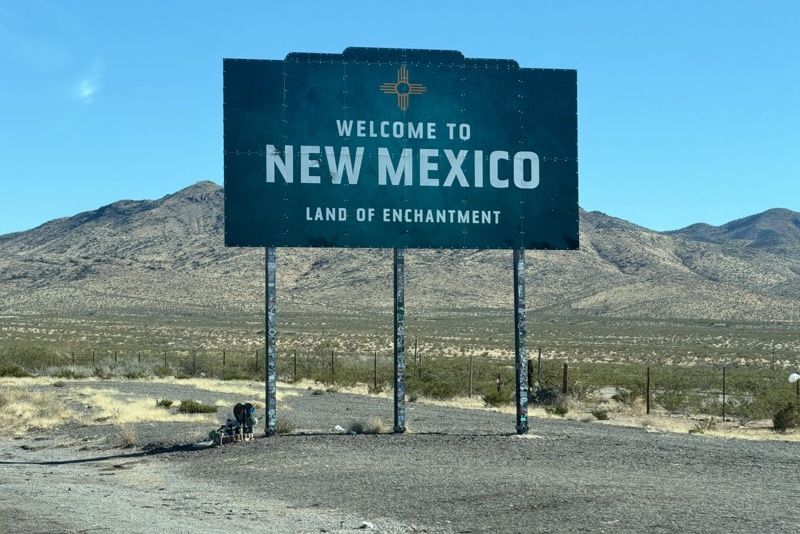
Route 66 attractions by state at a glance
The best way to plan the trip is by thinking state by state. Each stretch of Route 66 has its own highlights, from urban landmarks and classic diners to retro motels and natural wonders. This overview helps you spot the attractions worth prioritizing without losing the spirit of spontaneous discovery.
| State | Style of experience | Top attraction examples |
|---|---|---|
| Illinois | Historic start, diners, classic signs | Route 66 Begin Sign, Cozy Dog Drive In, Gemini Giant |
| Missouri | Bridges, caves, nostalgic roadside stops | Chain of Rocks Bridge, Meramec Caverns, 66 Drive-In |
| Kansas | Short but iconic vintage stretch | Galena, Rainbow Bridge, Old Riverton Store |
| Oklahoma | Longest drivable feel, museums, neon | Blue Whale, Pops 66, Oklahoma Route 66 Museum |
| Texas | Big roadside art and open-road energy | Cadillac Ranch, U-Drop Inn, Midpoint Cafe |
| New Mexico | Neon motels, adobe charm, trading posts | Tucumcari, Blue Swallow Motel, Albuquerque signs |
| Arizona | Best-preserved classic Route 66 atmosphere | Petrified Forest, Wigwam Motel, Seligman, Winslow |
| California | Desert icons and coastal finale | Roy’s Motel, Bottle Tree Ranch, Santa Monica Pier |
Illinois: where the Mother Road begins
Illinois is the official starting point for many travelers and offers a strong introduction to Route 66 history. This state mixes major city landmarks with classic roadside Americana, making it ideal for easing into the trip before the road starts getting dustier, weirder, and increasingly obsessed with giant things.
Start in Chicago with the famous “Begin Route 66” sign. It is not the grandest monument in America, but it does carry serious symbolic weight. For many travelers, this is where the road trip really begins.
As you head south, key stops include:
- Lou Mitchell’s for a classic breakfast and old-school Route 66 vibe
- Gemini Giant in Wilmington, one of the most recognizable roadside statues on the route
- Cozy Dog Drive In in Springfield, famous for its corn dogs and nostalgia-packed interior
- Pontiac, known for murals, museums, and strong Route 66 character
Illinois feels like the opening chapter of a great novel—except with more fried food and souvenir magnets.
Missouri and Kansas: short stretches, strong personality
Missouri and Kansas add historic depth and some of the route’s most memorable small-town stops. While Kansas is brief in mileage, both states are worth slowing down for thanks to classic bridges, old service stations, and communities that still proudly celebrate their Route 66 identity.
Best Route 66 stops in Missouri
Missouri combines urban history with classic roadside scenery. It is a state where restored diners, old motels, and scenic detours make the route feel tangible and lived-in rather than simply marked on a map.
- Chain of Rocks Bridge near St. Louis, famous for its unusual bend
- Meramec Caverns, one of the most famous attractions associated with the route
- Cuba, loved for its murals and nostalgic downtown feel
- 66 Drive-In in Carthage, a rare surviving drive-in theater
Missouri has that lovely “Americana with a side of custard” energy. You stop for a bridge and somehow end up adding three diners and a cave to your day.
Best Route 66 stops in Kansas
Kansas has only a short section of Route 66, but it packs in several historic landmarks and a very photogenic old-road atmosphere. It is a small slice of the route that many travelers remember fondly.
- Galena, linked to the inspiration behind characters in Pixar’s Cars
- Rainbow Bridge, one of the last remaining Marsh arch bridges on Route 66
- Old Riverton Store, a classic stop for snacks and local character
Kansas is proof that size is not everything. Eleven-ish miles, and still enough nostalgia to make your camera work overtime.
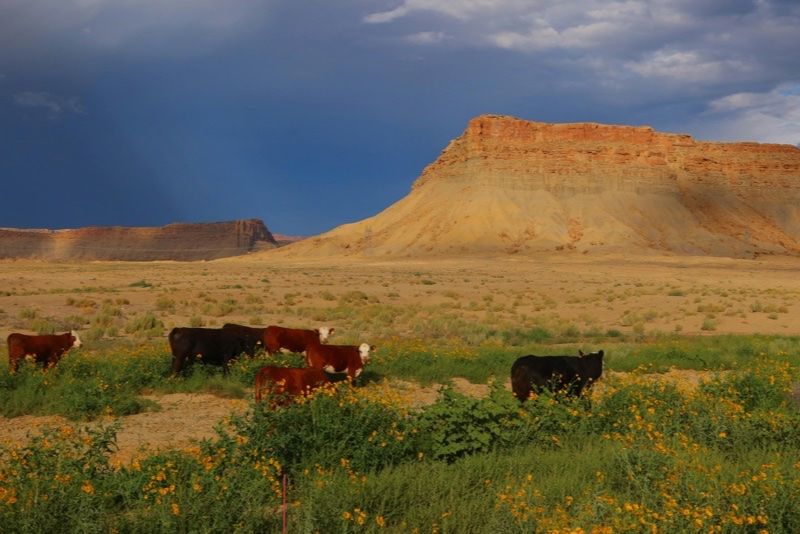
Oklahoma and Texas: classic roadside Americana
Oklahoma and Texas deliver some of the most famous roadside attractions on Route 66. This is where the trip starts to feel bigger, bolder, and more cinematic, with standout museums, giant signs, quirky sculpture, and a long horizon that practically begs for a playlist.
Top attractions in Oklahoma
Oklahoma is often considered one of the richest states for Route 66 travelers because of its long drivable sections, strong preservation efforts, and variety of attractions. It offers a balanced mix of kitsch, history, and local pride.
- Blue Whale of Catoosa, the lovable icon of Route 66 weirdness
- Arcadia Round Barn, one of the route’s most recognizable historic buildings
- Pops 66 in Arcadia, famous for its giant soda bottle and huge drink selection
- Oklahoma Route 66 Museum in Clinton for historical context
- Milk Bottle Grocery in Oklahoma City for a quick photo stop
If Route 66 had a mascot, the Blue Whale would be in the running. It is joyful, slightly absurd, and exactly the kind of stop that makes this road legendary.
Top attractions in Texas
Texas offers fewer miles of Route 66 than Oklahoma, but its stops are among the most iconic of the entire trip. This section is defined by landmark architecture, public art, and the symbolic halfway point of the route.
- U-Drop Inn in Shamrock, an Art Deco gem
- Cadillac Ranch near Amarillo, where half-buried cars became roadside legend
- Big Texan Steak Ranch for classic road trip bravado
- Midpoint Cafe in Adrian, marking the midpoint between Chicago and Los Angeles
Texas does not whisper. It announces itself with giant steaks, giant art, and the kind of sky that makes you understand why people write road songs.
New Mexico and Arizona: neon, motels, and desert icons
New Mexico and Arizona represent the most atmospheric section of the route for many travelers. Here, Route 66 feels especially vivid, thanks to preserved motels, glowing signs, trading posts, and landscapes that look like they were designed by a very showy cinematographer.
New Mexico highlights
New Mexico blends Route 66 nostalgia with Southwestern character. It offers some of the best neon stops on the route along with towns where the road still feels deeply rooted in local identity.
- Tucumcari, known for vintage motels, murals, and neon signs
- Blue Swallow Motel, one of the most beloved overnight stops on Route 66
- Albuquerque, where old signage and urban Route 66 history still shine
- Gallup, with trading posts and classic Western-roadside atmosphere
Tucumcari at night is pure Route 66 theater. Neon hums, motel signs glow, and suddenly you feel like you should own a convertible and say things like “let’s hit the road at dawn.”
Arizona highlights
Arizona contains some of the most famous and best-preserved Route 66 attractions in the country. It is the state many travelers imagine when they picture the Mother Road: old motels, diners, trading posts, and cinematic desert landscapes.
- Petrified Forest National Park, the only national park directly tied to Route 66
- Wigwam Motel in Holbrook, one of the route’s most iconic stays
- Standin’ on the Corner Park in Winslow
- Delgadillo’s Snow Cap Drive-In in Seligman
- Kingman and Oatman for classic road and Wild West atmosphere
Arizona is where many travelers fall fully in love with Route 66. It has the strongest “this cannot be real, and yet here I am buying postcards from a place with burros in the street” effect.
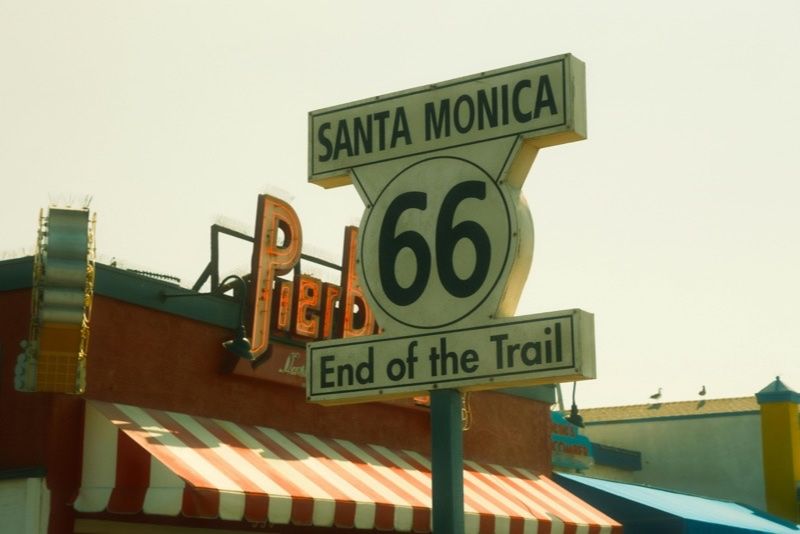
California: the final stretch to the Pacific
California closes the Route 66 journey with a mix of stark desert scenery, preserved roadside landmarks, and a symbolic finish by the ocean. It is less about one single attraction and more about the emotional build-up toward the end of a legendary road.
- Roy’s Motel and Café in Amboy, one of the most photographed Route 66 sites
- Elmer’s Bottle Tree Ranch, a wonderfully eccentric art stop
- Cucamonga Service Station, a preserved piece of road history
- Wigwam Motel in San Bernardino
- Santa Monica Pier, the most popular symbolic endpoint
Reaching Santa Monica feels a bit triumphant and a bit surreal. After all those miles, diners, signs, and detours, you end the trip with sea air, a final photo, and the powerful urge to immediately talk about doing it all again.
What part of Route 66 is still drivable
Large portions of historic Route 66 are still drivable, though not as one uninterrupted road. In most states, surviving alignments run alongside or near modern interstates, especially I-40, I-44, and I-55. Some sections are beautifully preserved, while others require extra planning and navigation.
The most rewarding drivable stretches are often found in:
- Oklahoma, for long continuous sections
- Arizona, for scenic and well-preserved classic alignments
- Illinois, for a strong historic beginning
- New Mexico, for atmospheric towns and old-road feel
It is smart to mix historic segments with interstate driving, especially if you want to cover the full route without spending half the trip arguing with your map app like it just betrayed you personally.
How to choose the best Route 66 stops for your trip
The best stops depend on the kind of road trip you want. Some travelers focus on classic roadside kitsch, others prefer history, photography, food, or drivable original alignments. A strong itinerary usually combines famous landmarks with a few spontaneous local discoveries in each state.
A simple way to choose is to prioritize:
- One major icon per state
- One food stop worth remembering
- One motel, museum, or neon landmark
- One surprise stop you did not plan
That last one matters. Route 66 is at its best when it catches you off guard.
If this legendary road has sparked your wanderlust, take a look at WeRoad group trips on the Route 66 and start planning your next big adventure with people who are just as ready to hit the road.
FAQ
- What are the main attractions along Route 66?
-
The main attractions include historic diners, neon motels, quirky roadside landmarks, museums, bridges, and major icons like Cadillac Ranch, the Blue Whale of Catoosa, Blue Swallow Motel, Wigwam Motel, and Santa Monica Pier.
- What is the number one tourist attraction in Illinois on Route 66?
-
For Route 66 travelers, the most symbolic attraction in Illinois is the Begin Route 66 sign in Chicago, though many visitors also consider the Gemini Giant and Cozy Dog Drive In essential stops.
- What places do you go on Route 66?
-
Most travelers visit a mix of cities, small towns, diners, motels, museums, and roadside attractions across all eight states, including Chicago, Springfield, Tulsa, Amarillo, Tucumcari, Winslow, Seligman, Kingman, Amboy, and Santa Monica.
- What part of Route 66 is still drivable?
-
Many sections are still drivable, especially in Oklahoma, Arizona, Illinois, and New Mexico. The original route is fragmented, so travelers often combine preserved alignments with nearby interstates.
- How many days do you need for Route 66?
-
A full Route 66 road trip is best enjoyed in 10 to 14 days, though two to three weeks allows more time for museums, photo stops, classic motels, and detours without rushing.