
Group trips to Georgia
Our organized trips to Georgia
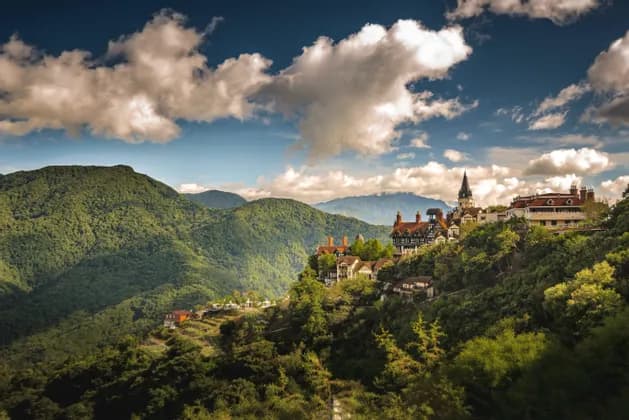
Georgia is a Caucasus republic at the crossroads of Europe and Asia, a country of snow-dusted mountains, ancient cave monasteries, and one of the world's oldest wine cultures dating back eight thousand years. It stands out for legendary hospitality, distinctive cuisine, and Europe-to-Asia overland appeal. Wander Tbilisi's cobbled Old Town and Narikala Fortress, trek the High Caucasus trails of Kazbegi and Svaneti's Ushguli, taste qvevri wines in Kakheti and Kartli, explore the cave city of Vardzia, swim at the Black Sea resort of Batumi, and ski Gudauri in winter. Sample khachapuri, khinkali, and mtsvadi. Visit the UNESCO monasteries of Mtskheta. Georgia suits foodies, wine lovers, hikers, adventurous road-trippers, and culture travelers seeking affordable depth off the main European circuit.
Book with confidence
Book with $ 0
Lock in your spot and only pay once it's confirmed
Free changes
Switch dates or destination within 31 days, at no extra cost
Maximum Flexibility
New Flexible Cancellation! Cancel up to 24hrs before
Pay in installments
Spread the cost over time, interest-free
FAQs about Georgia
Find out the entry requirements for Georgia, and, if needed, apply for your visa through our partner Sherpa.
Before traveling, always remember to check the government website of your country of origin for updates on the entry requirements for Georgia – you wouldn’t want to stay home due to a bureaucratic detail!
- UK residents: review the FCDO Travel Advice.
- US residents: consult the US Department of State Travel Advice.
- Other residents: refer to your government or local consulate's travel advice.
Georgia is in the Georgia Standard Time Zone (GET), which is 4 hours ahead of Coordinated Universal Time (UTC+4). Georgia does not observe daylight saving time.
- If it is 12pm in the UK, it will be 3pm in Georgia.
- If it is 12pm in New York, USA (Eastern Time), it will be 8pm in Georgia.
In Georgia, the currency used is the Georgian Lari (GEL). As of the latest rates:
- 1 British Pound (GBP) equals approximately 3.50 GEL
- 1 US Dollar (USD) equals about 2.80 GEL
- 1 Euro (EUR) is around 3.10 GEL
You can easily exchange currency at banks, exchange offices, and even at some hotels.
You can pay in Georgia using credit cards, debit cards, and cash. Credit cards are widely accepted in major cities and tourist areas, but it's always a good idea to have some cash on hand for smaller towns and local markets. ATMs are readily available in urban areas for withdrawing cash. When using credit cards, Visa and Mastercard are the most commonly accepted. American Express might not be as widely accepted, so it's best to check beforehand. Additionally, mobile payment options like Apple Pay and Google Pay are becoming increasingly popular in many places.
In Georgia, tipping is appreciated but not always expected. In restaurants, it's common to leave a tip of about 10 percent of the bill if you received good service. Taxi drivers and hotel staff might also appreciate a small tip for their services. While tipping isn't mandatory, it can be a nice gesture to show your appreciation for good service. Always check your bill at restaurants, as sometimes a service charge might already be included.
In Georgia, the internet is pretty reliable and you'll find Wi-Fi in most hotels, cafes, and restaurants, especially in bigger cities like Tbilisi and Batumi. If you need constant connectivity, we suggest you buy a local SIM card or an e-SIM data plan. Popular providers include:
- Magti
- Beeline
- Geocell
They offer affordable data packages and you can find their SIM cards at the airport or in city shops. Overall, Wi-Fi is widely available, but a local SIM can be handy for staying connected on the go.
In Georgia, the official language is Georgian. It is a unique language with its own script. Here are a few useful expressions you might hear or want to use:
- Hello: გამარჯობა (Gamarjoba)
- Thank you: მადლობა (Madloba)
- Yes: დიახ (Diakh)
- No: არა (Ara)
These phrases can help you connect with locals during your visit!
In Georgia, you'll find Type C and Type F plugs, which have two round pins. The standard voltage is 220 V, and the frequency is 50 Hz. If your devices use a different plug type, you'll need a universal adapter to ensure they fit the outlets. Make sure your devices are compatible with the voltage to avoid any damage.
The main religion in Georgia is Eastern Orthodox Christianity, with the Georgian Orthodox Church being the dominant religious institution. Important religious holidays include:
- Easter, celebrated with traditional feasts
- Christmas, observed on January 7th
While there are no specific dressing requirements related to religion, it's respectful to dress modestly, especially when visiting religious sites like churches and monasteries.
Packing for a trip to Georgia requires a bit of planning due to its varied climate. Here’s a handy guide to help you pack your backpack:
Clothing:
- Lightweight clothes for summer
- Warm layers for cooler evenings and winter
- Rain jacket or poncho
- Swimwear for the Black Sea or thermal baths
Shoes:
- Comfortable walking shoes
- Sandals for warmer weather
- Hiking boots if you plan to explore the mountains
Accessories and Technology:
- Sunglasses and a hat
- Power bank for your devices
- Camera or smartphone for photos
Toiletries and Medication:
- Travel-sized toiletries
- Sunscreen and insect repellent
- Basic first aid kit
- Common travel medication like pain relievers, antihistamines, and motion sickness pills
Georgia has a diverse climate, so be prepared for different conditions depending on where and when you travel.
Georgia's weather varies quite a bit depending on the region and time of year:
- Western Georgia (near the Black Sea): This area has a humid subtropical climate with mild winters and hot summers. Expect lots of rain, especially in autumn.
- Eastern Georgia (including Tbilisi): This region has a more continental climate with hot summers and cold winters. Rainfall is less frequent here, but it can still get quite cold in winter.
- Mountainous Areas (like the Caucasus): These regions experience cooler temperatures year-round with heavy snowfall in winter.
The best time to visit Georgia is during the late spring (May-June) or early autumn (September-October) when the weather is pleasant across most of the country.