Group trips to Cyprus
Our organized trips to Cyprus
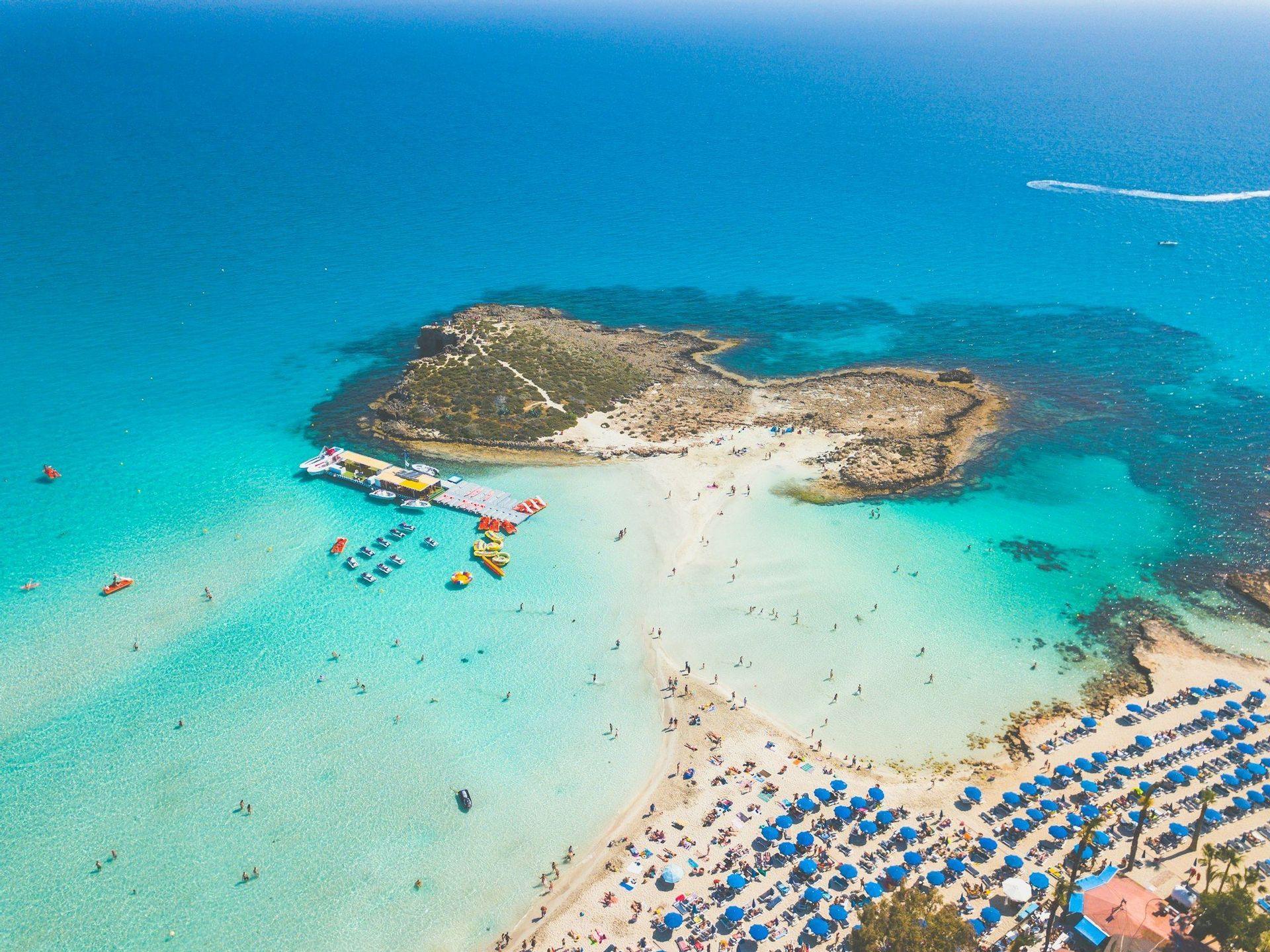
More than just sun-drenched beaches, Cyprus is an island where ancient legends intertwine with breathtaking natural beauty, a land sculpted by Aphrodite herself. From the UNESCO World Heritage archaeological park of Paphos, teeming with Roman mosaics and ancient tombs, to the majestic, pine-clad peaks of the Troodos Mountains, home to charming villages and historic painted churches, Cyprus offers a journey through millennia. Imagine vibrant coastal towns blending seamlessly with serene olive groves and azure waters, inviting both curious explorers and discerning relaxation seekers to uncover its unique tapestry of culture, cuisine, and Mediterranean charm.


FAQs about Cyprus
Find out the entry requirements for Cyprus, and, if needed, apply for your visa through our partner Sherpa.
Before traveling, always remember to check the government website of your country of origin for updates on the entry requirements for Cyprus – you wouldn’t want to stay home due to a bureaucratic detail!
- UK residents: review the FCDO Travel Advice.
- US residents: consult the US Department of State Travel Advice.
- Other residents: refer to your government or local consulate's travel advice.
Cyprus is in the Eastern European Time Zone, which is UTC+2. During daylight saving time, which typically runs from the last Sunday in March to the last Sunday in October, Cyprus moves to UTC+3.
If it is 12 pm in the UK, it will be 2 pm in Cyprus during standard time and 3 pm during daylight saving time.
If it is 12 pm in the USA Eastern Time Zone, it will be 7 pm in Cyprus during standard time and 8 pm during daylight saving time.
Cyprus uses the Euro (EUR) as its currency. The exchange rates can vary, but as a rough guide:
- 1 British Pound (GBP) is approximately 1.15 Euros
- 1 US Dollar (USD) is about 0.95 Euros
- 1 Euro is equivalent to 1 Euro, of course
You can exchange currency at banks, exchange offices, and some hotels.
In Cyprus, you can pay using credit cards, debit cards, and cash. Most places accept major credit cards like Visa and Mastercard, and you will find ATMs easily available in cities and towns for withdrawing cash. However, it is always a good idea to carry some cash for smaller vendors or in rural areas where card payments might not be as common. Using contactless payments is also widely accepted, making transactions quick and convenient.
Tipping in Cyprus is appreciated but not mandatory. In restaurants, consider leaving a tip of around 5 to 10 percent of the bill if you're satisfied with the service. For taxis, rounding up to the nearest euro is a nice gesture. Hotel staff like porters or housekeepers will appreciate a small tip, usually a couple of euros. While tipping is common, it's always at your discretion based on the level of service you receive.
In Cyprus, you'll find decent internet connectivity, but it's a good idea to get a local SIM card for reliable data access. You can purchase a SIM card from providers like Cyta or MTN at the airport or in phone shops across the island. Wi-Fi is widely available in hotels, cafes, and restaurants, though speeds may vary. If you're coming from Europe or the Schengen area, you can use roaming without additional charges. However, a local SIM ensures you have constant access, especially useful for navigation and staying connected while exploring.
In Cyprus, Greek and Turkish are the official languages. Greek is predominantly spoken in the southern part, while Turkish is mainly used in the north. Here are some useful Greek expressions you might hear or use:
- Hello: Γεια σου (Yia sou)
- Thank you: Ευχαριστώ (Efharisto)
- Please: Παρακαλώ (Parakalo)
- Yes: Ναι (Ne)
- No: Όχι (Ohi)
Knowing a few phrases can enhance your travel experience.
In Cyprus, you'll find Type G plugs, which are the same as those used in the UK. The standard voltage is 240V with a frequency of 50Hz. If you're coming from a country that uses a different plug type, we suggest you bring a universal adapter to ensure your devices can be plugged in without any issues. Always check your device's voltage compatibility to avoid any problems.
In Cyprus, the main religion is Christianity, specifically the Greek Orthodox Church, which is predominant in the southern part of the island. In the northern part, Islam is the major religion due to the Turkish Cypriot community. If you visit during religious holidays, keep in mind that Easter is a significant celebration for Greek Orthodox Christians, while Ramadan is important for Turkish Cypriot Muslims. During Ramadan, it's respectful to dress modestly, especially in religious sites, and it's a good idea to be mindful of those who are fasting.
For a trip to Cyprus, you'll want to be prepared for the Mediterranean climate, with warm summers and mild winters. Here's a handy packing guide for your backpack:
-
Clothing:
- Lightweight shirts and t-shirts
- Shorts and skirts
- A light sweater or jacket for cooler evenings
- Swimwear
-
Shoes:
- Comfortable walking shoes or sandals
- Flip-flops for the beach
- Dress shoes for evenings out
-
Accessories and Technology:
- Sunglasses and a sun hat
- A power bank and phone charger
- Universal adapter if you're from the UK or USA
-
Toiletries and Medication:
- Sunscreen and lip balm with SPF
- Basic toiletries like toothbrush, toothpaste, and deodorant
- Common travel medication such as pain relievers, antihistamines, and motion sickness tablets.
Keep in mind that Cyprus can be quite sunny, so sun protection is key.
Cyprus enjoys a Mediterranean climate, which means warm summers and mild winters. Here's a quick breakdown:
- Coastal Areas: Summers are hot and dry, with temperatures often reaching above 30°C (86°F) from June to September. Winters are mild, averaging around 15°C (59°F).
- Mountains: Cooler in the summer, making it a great escape from the heat. Winters can be cold, with occasional snowfall.
- Inland: Expect hotter summers than the coast, often exceeding 35°C (95°F), and cooler winters.
The best time to visit is during spring (April to June) and autumn (September to November) when the weather is pleasant and not too hot.