Group trips to the Faroe Islands
Our organized trips to the Faroe Islands
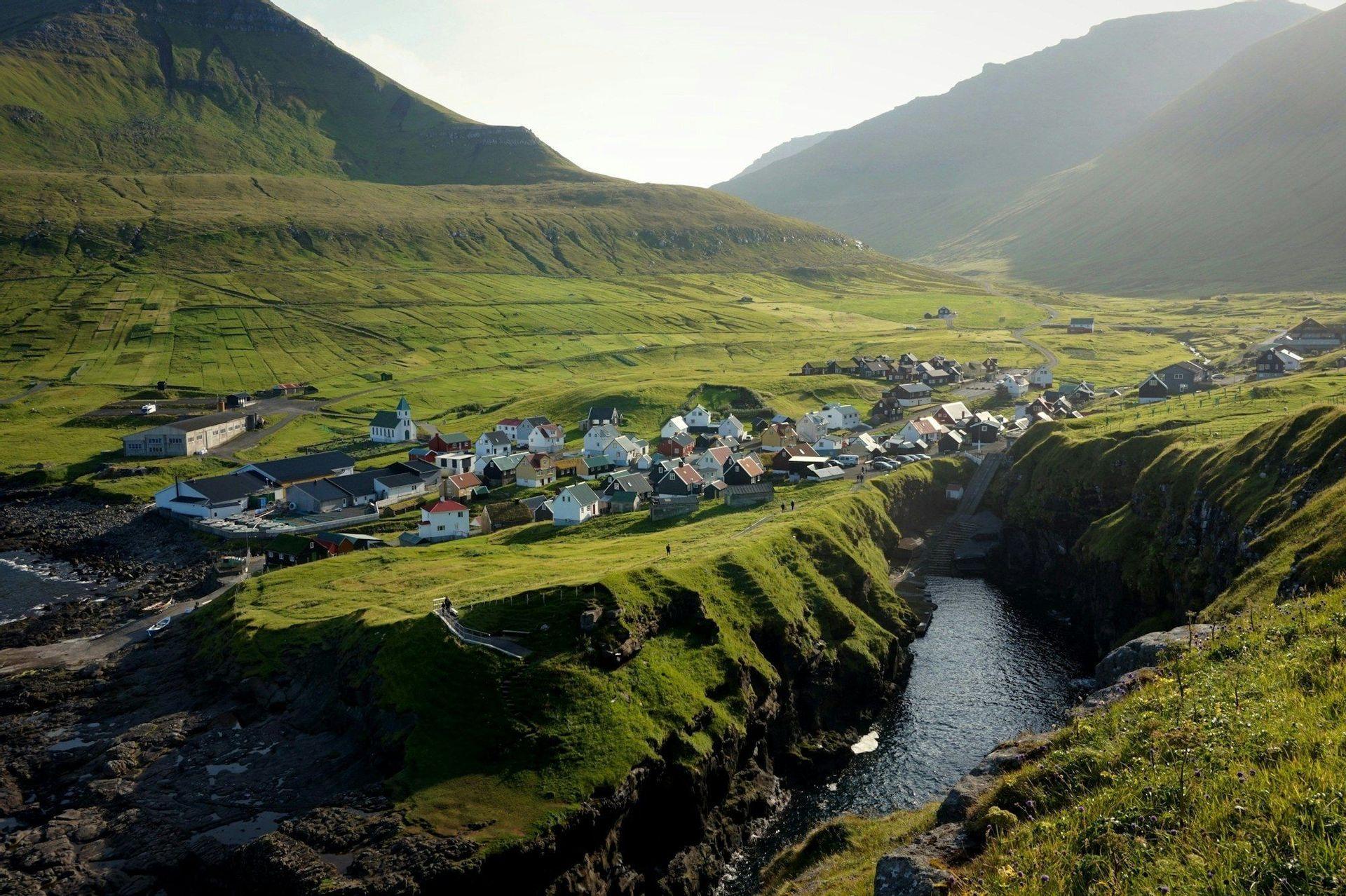
Far beyond the familiar, discover an archipelago where dramatic landscapes meet an intimate culture, creating a world of unparalleled natural beauty and authentic Nordic charm. From the iconic optical illusion of Sørvágsvatn, where a lake seemingly floats above the ocean, to the breathtaking Múlafossur waterfall cascading into the sea at Gásadalur, and the vibrant, historic capital of Tórshavn with its grass-roofed houses, the Faroe Islands beckon to discerning explorers and nature enthusiasts yearning for invigorating adventures and a profound connection to the wild.


FAQs about the Faroe Islands
Find out the entry requirements for Faroe Islands (the), and, if needed, apply for your visa through our partner Sherpa.
Before traveling, always remember to check the government website of your country of origin for updates on the entry requirements for Faroe Islands (the) – you wouldn’t want to stay home due to a bureaucratic detail!
- UK residents: review the FCDO Travel Advice.
- US residents: consult the US Department of State Travel Advice.
- Other residents: refer to your government or local consulate's travel advice.
The Faroe Islands are in the Greenwich Mean Time (GMT) zone. They do not observe daylight saving time, so the time remains the same throughout the year. If it is 12 pm in the UK, it will also be 12 pm in the Faroe Islands. However, if it is 12 pm on the East Coast of the USA, it will be 5 pm in the Faroe Islands. Keep this in mind when planning your activities or making calls.
The currency used in the Faroe Islands is the Faroese króna (FOK), which is equivalent to the Danish krone (DKK). The exchange rate can vary, but generally:
- 1 GBP is about 8.6 FOK
- 1 USD is about 6.8 FOK
- 1 EUR is about 7.5 FOK
You can exchange currency at banks or at the airport.
Credit cards, especially Visa and MasterCard, are widely accepted in the Faroe Islands, so you can use them for most purchases. However, it's a good idea to carry some cash for smaller shops or remote areas. The local currency is the Faroese króna (FOK), which is equivalent in value to the Danish krone. You can exchange money in banks or at the airport.
Tipping in the Faroe Islands is not a common practice, and it is not expected at restaurants, cafes, or for services like taxis. Service charges are usually included in the bill, so locals generally do not tip. However, if you receive exceptional service and wish to show appreciation, you can round up the bill or leave a small tip, but it's entirely up to you.
In the Faroe Islands, Wi-Fi is generally available in hotels, cafes, and some public places, but it can be spotty in rural areas. If you want to stay connected while exploring the islands, we suggest you buy a local SIM card or an e-SIM data plan. Føroya Tele and Hey are the main providers, offering good coverage. This is a great option if you want reliable internet on the go. Keep in mind that the Faroe Islands are not in the European Union, so roaming charges may apply if you're using a SIM from a European country.
In the Faroe Islands, people speak Faroese. It's a North Germanic language similar to Icelandic but with its own unique characteristics. Here are some useful Faroese phrases you might hear or want to use:
- Hello: Hej
- Thank you: Takk
- Please: Ver so vælgod
- Yes: Ja
- No: Nei
These phrases can be handy when interacting with locals during your visit.
In the Faroe Islands, you'll find Type C and Type K plugs. The voltage is 230 V, and the frequency is 50 Hz. If your devices' plugs aren't compatible with these types, we suggest bringing a universal adapter to ensure your gadgets work smoothly.
The main religion in the Faroe Islands is Christianity, specifically the Evangelical Lutheran Church, which is the state church. While the Faroe Islands have a rich cultural heritage, their religious practices are similar to those in other parts of Scandinavia. There are no specific dressing requirements related to religion, and while some Christian holidays like Christmas and Easter are widely celebrated, they do not have any unique religious holidays.
For a trip to the Faroe Islands, it's important to pack for unpredictable weather, as conditions can change quickly. Here's a handy list for your backpack:
-
Clothing:
- Waterproof jacket
- Warm sweaters
- Long-sleeve shirts
- Thermal layers
- Quick-dry pants
-
Shoes:
- Waterproof hiking boots
- Comfortable walking shoes
-
Accessories and Technology:
- Travel adapter
- Power bank
- Camera
- Binoculars
-
Toiletries and Medication:
- Sunscreen
- Lip balm
- Insect repellent
- Pain relievers
- Motion sickness tablets
The weather in the Faroe Islands can be quite unpredictable, with frequent changes throughout the day. Here's a general idea of what to expect:
- Spring (March to May): Cool and windy, with temperatures ranging from 3°C to 10°C.
- Summer (June to August): Mild, with temperatures between 10°C and 15°C, and longer daylight hours.
- Autumn (September to November): Cool, with temperatures falling from 10°C to 5°C, and increased rainfall.
- Winter (December to February): Cold and windy, with temperatures around 0°C to 5°C, and occasional snow.
The best time to visit is during the summer months when the weather is milder and days are longer, offering more time to explore the stunning landscapes.