Group trips to Western Sahara
Our organized trips to Western Sahara
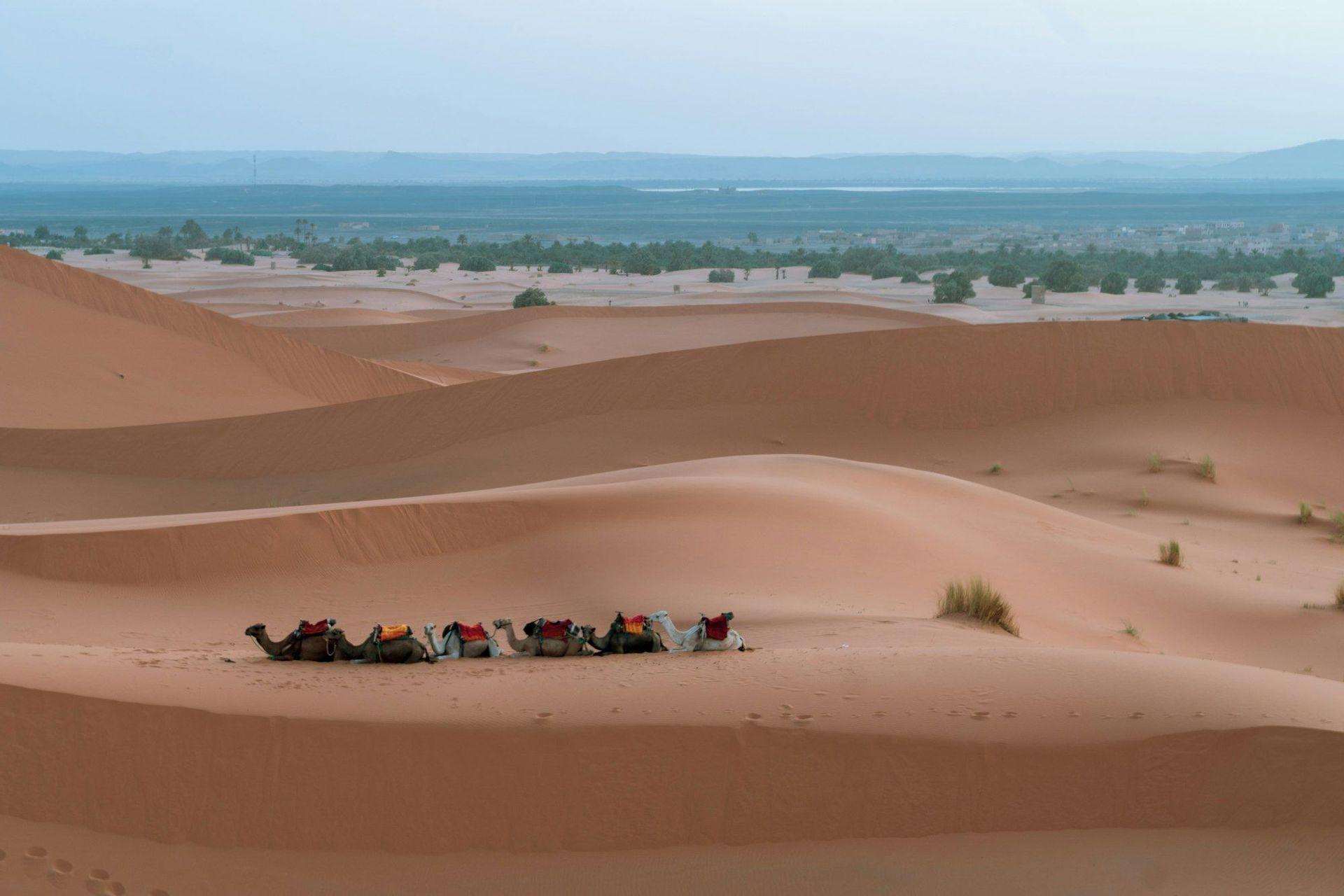
Western Sahara is a disputed North African territory mostly controlled by Morocco, a vast coastal desert stretching along the Atlantic between Morocco proper and Mauritania. It stands out for endless empty dunes, kitesurf-perfect winds at Dakhla, and ancient trans-Saharan caravan routes. Kitesurf and wind-surf the lagoon of Dakhla, drive the empty Atlantic coast from Laayoune south, camp beneath the stars in the Aousserd desert, spot dorcas gazelles and addax on rare off-road expeditions, and visit the ocean-facing cliffs around Boujdour. Boat to the migratory bird sanctuary of Cintra Bay and eat freshly caught fish at beach shacks. Travel here requires careful planning and awareness of the political situation. It suits kitesurfers, Sahara overlanders, photographers, and adventurous travelers seeking remote coastlines.

Book with confidence
Book with $ 0
Lock in your spot and only pay once it's confirmed
Free changes
Switch dates or destination within 31 days, at no extra cost
Maximum Flexibility
New Flexible Cancellation! Cancel up to 24hrs before
Pay in installments
Spread the cost over time, interest-free
FAQs about Western Sahara
Find out the entry requirements for Western Sahara, and, if needed, apply for your visa through our partner Sherpa.
Before traveling, always remember to check the government website of your country of origin for updates on the entry requirements for Western Sahara – you wouldn’t want to stay home due to a bureaucratic detail!
- UK residents: review the FCDO Travel Advice.
- US residents: consult the US Department of State Travel Advice.
- Other residents: refer to your government or local consulate's travel advice.
Western Sahara operates on Western European Time (WET), which is the same as GMT (Greenwich Mean Time) and does not observe daylight saving time. So, if it is 12pm in the UK, it will also be 12pm in Western Sahara. If it is 12pm on the East Coast of the USA, it will be 5pm in Western Sahara. Keep this in mind when planning your activities or contacting others while you're there.
Western Sahara primarily uses the Moroccan Dirham (MAD) as its currency. The exchange rates are approximately:
- 0.08 GBP
- 0.10 USD
- 0.09 EUR for 1 MAD
You can exchange your money at banks and official exchange offices in major cities. Always check the current rates before exchanging.
In Western Sahara, you can pay with cash or major credit and debit cards. ATMs are available in larger towns and cities, but it is always a good idea to have some cash on hand, especially when traveling to more remote areas. Cards are generally accepted in hotels, larger restaurants, and shops. Keep in mind that outside urban areas, cash is often the preferred method.
In Western Sahara, tipping is not mandatory, but it's a nice gesture if you receive good service. In restaurants, you can leave 5-10% of the bill. For taxi drivers, rounding up the fare is appreciated. Hotel staff, like porters or housekeeping, might also appreciate a small tip for their services. Just remember, tipping is more about showing appreciation than following strict rules, so feel free to tip according to the service you receive.
In Western Sahara, Wi-Fi is mostly available in larger towns and cities, particularly in hotels and cafes, but it can be spotty in more remote areas. Since Western Sahara is not part of the Schengen area, buying a local SIM card is a good idea to stay connected on the go. You can find SIM cards from providers like Maroc Telecom, Orange, or Inwi. They offer various data plans, and purchasing one at the airport or in larger cities is usually straightforward. An e-SIM data plan is another option if your phone supports it, providing flexibility without needing a physical SIM card.
In Western Sahara, the primary language spoken is Arabic. However, Spanish is also commonly used due to historical influences. Here are a few useful Arabic expressions you might hear or use:
- Hello: Salam
- Thank you: Shukran
- Please: Min fadlak (for males) / Min fadlik (for females)
- Yes: Na'am
- No: La
Knowing a few basic phrases can be really helpful when interacting with locals.
In Western Sahara, the plugs used are typically Type C and Type E, similar to those in many European countries. The voltage is 220V, and the frequency is 50Hz. If your devices use a different plug type, we suggest you bring a universal adapter to ensure compatibility. This way, you'll be all set to keep your devices charged during your stay.
The main religion in Western Sahara is Islam, predominantly Sunni. If you’re visiting, it's respectful to dress modestly, particularly for women. This means covering shoulders and knees, especially in rural areas.
Important religious holidays include:
- Ramadan, a month of fasting
- Eid al-Fitr, which marks the end of Ramadan
- Eid al-Adha, known as the Festival of Sacrifice
These holidays are significant and widely observed throughout the region.
Packing for Western Sahara involves preparing for a desert climate with hot days and cooler nights. Here's what you should consider putting in your backpack:
-
Clothing:
- Light, breathable shirts
- Long-sleeve tops for sun protection
- Lightweight pants or skirts
- Warm sweater or jacket for evenings
-
Shoes:
- Sturdy walking shoes or boots
- Sandals for casual wear
-
Accessories and Technology:
- Wide-brimmed hat
- Sunglasses
- Sunscreen
- Portable charger
- Camera or smartphone for photos
-
Toiletries and Medication:
- Basic toiletries like toothpaste and shampoo
- Lip balm with SPF
- Moisturizer for dry skin
- First-aid kit
- Common travel medication like pain relievers and anti-diarrheal tablets
Consider the cultural norms as well, with modest clothing being a good idea.
The main religion in Western Sahara is Islam, predominantly Sunni. If you’re visiting, it's respectful to dress modestly, particularly for women. This means covering shoulders and knees, especially in rural areas.
Important religious holidays include:
- Ramadan, a month of fasting
- Eid al-Fitr, which marks the end of Ramadan
- Eid al-Adha, known as the Festival of Sacrifice
These holidays are significant and widely observed throughout the region.