


Is this trip for me?
Party and nightlife
Relax
Nature and adventure
City and cultures
Monuments and history
Physical effort
Trip type


Our journey through Japan, exploring tradition, culture, and winter sports, begins in Tokyo , a futuristic metropolis where skyscrapers and temples coexist in perfect harmony. We explore the neighbourhoods of Shibuya , with its iconic pedestrian crossing, Akhiabara with its famous manga shops, and Shinjuku , with its neon lights. Meanwhile the tranquility of the Meiji Shrine and the ancient charm of Asakusa with the Senso-ji temple offer a fascinating contrast. We continue on to Kyoto , the heart of Japanese culture, among shrines and Zen gardens. Strolling through the Fushimi Inari Taisha , with its endless red torii, is a mystical experience. Kinkaku-ji , the Golden Temple, leaves you breathless with its beauty reflected in the lake...but not only that, in Kyoto we can also participate in a tea ceremony and test our culinary skills with a sushi cooking class ! We'll also have the opportunity to stay in a traditional Japanese ryokan . Kinkaku-ji , the Golden Temple, is breathtaking in its beauty reflected in the lake. This journey concludes with an forgettable ski escape in Nagano Prefecture, renowned for its powdery slopes and winter charm. Whether you're in Shiga Kogen, Hakuba, or Nozawa Onsen, you'll find world-class skiing paired with the soothing tradition of onsen hot springs - ideal for unwinding after a day on the mountain. This itinerary beautifully blends the vibrant energy of Japan’s cities, the timeless allure of tradition, and the breathtaking beauty of the Japanese Alps.


We hit the ground running tonight—no time to waste. Our Japan adventure begins with a nighttime stroll through Asakusa to visit Sensō-ji, Tokyo’s oldest Buddhist temple. Entering through the iconic Kaminarimon, or “Thunder Gate,” we’re greeted by a massive red paper lantern that glows against the night sky. It’s a short visit before dinner, just enough to soak in the atmosphere… and then, finally, it’s sushi time.

After a first taste last night, today we continue exploring the capital, discovering both its traditional and modern sides. This morning we head to Kamakura, our first stop being Engaku-ji , one of the most important Zen Buddhist temple complexes in Japan, followed by the Shinto shrine of Torugaoka Hachiman and a visit to Gotoku-ji temple, known for its large seated Buddha statue—one of the few Buddha statues open to the public!
In the afternoon, we return to the heart of Tokyo, stopping at Hachikō-guchi, where the statue of Hachikō—the loyal dog who waited for his owner every day for years—greets us at one of the city’s most iconic meeting points. Just steps away, we find ourselves at the legendary Shibuya Scramble Crossing. It’s the most famous pedestrian intersection in Japan and one of the busiest in the world, where hundreds (and sometimes thousands) of people surge across from every direction the moment the light turns green.

This morning, we hop on the iconic Shinkansen—the sleek bullet train that races us from Tokyo to Kyoto in record time. Once we arrive, it’s straight to lunch with a visit to Nishiki Market, the vibrant heart of Kyoto’s food scene. Spanning five lively blocks, this maze of stalls and family-run shops is packed with colors, aromas, and flavors. It’s the perfect place to sample anything and everything Japanese—from street snacks to local specialties.
After indulging our senses at Nishiki Market, we shift from flavor to pure beauty with a visit to Kinkaku-ji—the legendary Golden Pavilion. As we approach, the sight is absolutely stunning: the shimmering gold temple reflected perfectly in the still waters of Kyōko-chi pond creates a surreal scene, like a painting floating between sky and water. It’s one of those moments where we just stop and take it all in.
After all the incredible food we’ve tasted so far, it’s our turn to step behind the counter with a hands-on sushi-making class! No pressure here—mistakes are welcome and there are no eliminations. It’s all about having fun, learning some traditional techniques, and rolling our way through a delicious experience.

This morning, we set off to explore one of Japan’s most iconic spiritual sites: Fushimi Inari Taisha. The moment we step through its entrance, we’re surrounded by a mystical atmosphere that feels suspended in time. Dedicated to Inari, the Shinto god of rice and prosperity, this shrine is where nature and spirituality meet in perfect balance. We follow the path lined with over a thousand vibrant red torii gates, winding their way up Mount Inari, creating a tunnel of colour and serenity. Walking through them is like moving through a living painting—every step more magical than the last.
n the afternoon, we slow the pace with a visit to a traditional chashitsu—a tea room with tatami floors, delicate decor, and the soft aroma of incense in the air. Here, we witness the timeless ritual of the Japanese tea ceremony, guided by a tea master whose graceful, deliberate movements invite calm and reflection. From there, we make our way to one of Kyoto’s most breathtaking landmarks: Kiyomizu-dera, the “Pure Water Temple.” Perched on a hillside and surrounded by forest, it seems to hover in the air. We ascend Sannenzaka Avenue, passing charming wooden houses and shops that feel straight out of feudal Japan. Once we reach the temple, we step onto its famous wooden terrace—built without a single nail—and take in a panoramic view of Kyoto that stretches as far as the eye can see.

We begin the day surrounded by emerald green, stepping into the serene Arashiyama Bamboo Forest. The moment we enter the path, we're wrapped in a dreamlike stillness—towering bamboo stalks soar up to 50 meters high, swaying gently above us and filtering the morning light. It feels like walking through a natural cathedral. Nestled near the forest’s northern edge is Tenryu-ji, a UNESCO World Heritage Site and one of Kyoto’s most important Zen temples—an invitation to pause and reflect before the scenery shifts again.
In the afternoon, we board the Shinkansen once more—this time heading toward a completely different Japan. As we speed away from Kyoto, the landscape transforms before our eyes: skyscrapers give way to rice fields, quiet towns, and wide open countryside. The air grows crisper, and distant mountains appear, their peaks dusted with snow. We're arriving in Nagano, where nature takes center stage. For the next three days, we’ll call these alpine landscapes home—between relaxing onsen, cozy mountain resorts, and the magic of Japan’s winter side.

Today marks the beginning of our skiing adventure, and we’re kicking things off in Myōkō Kōgen—one of Japan’s oldest and most beloved alpine areas. This mountain region is home to several interconnected ski resorts, offering runs for every level, whether we’re just starting out or chasing thrills. The real highlight? Japan’s longest continuous slope—a stunning 8.5 km descent we can’t wait to carve our way down. Let the snow-filled fun begin!

Today we head to Shiga Kogen, one of Japan’s largest and most impressive ski areas—and we're dedicating the whole day to it. This massive resort is made up of 19 interconnected ski zones, all accessible with a single pass. With over 80 km of slopes and 50 lifts, there’s something for everyone—from wide, gentle runs to steep, technical descents. And there's history beneath our skis too: Shiga Kogen was a venue for the 1998 Nagano Winter Olympics. Whether we’re chasing speed or just soaking up the scenery, it’s going to be an unforgettable day on the mountain.

Another day on the snow, another incredible resort to discover! Today we head to Hakuba, one of Japan’s most iconic ski destinations, nestled in the stunning Northern Japan Alps. Rather than a single resort, Hakuba is a network of 10 distinct ski areas, each with its own vibe and specialties—from powder-filled bowls to perfectly groomed runs. With so much terrain to explore, the only question is: which slope do we hit first?

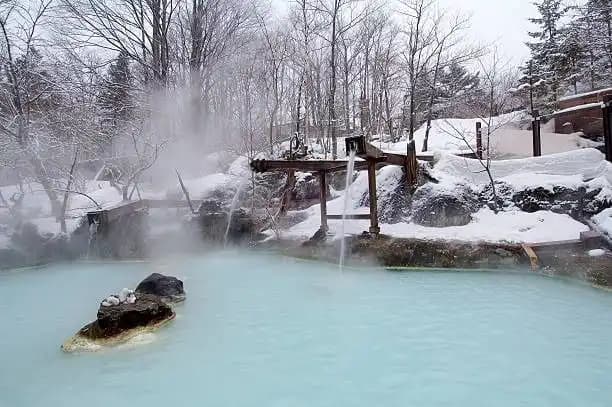
As the name suggests, today’s destination blends the thrill of skiing with the charm of tradition: Nozawa Onsen. This resort isn’t just known for its powdery slopes—it’s also home to one of Japan’s most historic hot spring villages, where natural onsen waters have been flowing for over 1,300 years. After a day on the mountain, we unwind with a steamy soak and take a peaceful stroll through the village’s quaint streets, lined with artisan shops, cozy inns, and local eateries. It’s the perfect balance of adventure and relaxation.

That's right, there are so many ski resorts around Nagano that you'll never get bored! We could easily return to one of the resorts we visited in the past few days, of course, but our advice is to explore Karuizawa, a smaller but well-maintained resort with slopes suitable for everyone!
In the afternoon, before sunset, we can choose to take a stroll through the quiet center of Karuizawa or warm up with a hot chocolate while looking at the snow-covered slopes.

Before heading back to Tokyo in the evening, we’ve got one last day to enjoy the magic of Nagano—and several great ways to spend it. If we’re still hungry for the slopes, there’s no shortage of incredible resorts to return to. Prefer to unwind? A peaceful soak in one of the local onsen might be calling.
For those up for a bit of exploring, a visit to Jigokudani Monkey Park is hard to resist. Here, we can watch the famous snow macaques lounging in the steamy natural hot springs—a scene that’s as amusing as it is iconic. Alternatively, we can take a cultural detour to Zenko-ji, one of Japan’s oldest and most revered Buddhist temples, founded in the 7th century and home to the country’s very first Buddha statue.
Whether we choose adventure, relaxation, or history, it’s a beautiful way to wrap up our time in Nagano.

Time to say goodbye: see you in your next WeRoad adventure!

Shinkansen from Tokyo to Kyoto on day 3
Shinkansen from Kyoto to Nagano on day 5

5 days of daily ski pass, days 6, 7, 8, 9 and 10
Shinkansen from Nagano to Tokyo on day 10

11 nights: accommodation in a shared room with private bathroom
 Medical and baggage insurance - (coverage limits by destination country/region - €10,000 Italy, €20,000 Europe, €30,000 World, €50,000 USA/Canada)
Food and beverages when not specified
All the extras you'll be able to fit in your backpack
Please see below extra optional activities that you can experience during your trip. Your Group Leader will be happy to assist with organizing these activities for the group. Availability may vary depending on location and group preferences.
Please note these activities are provided by third party suppliers and liability rests exclusively with these third party suppliers.
Admission to Kamakura temples and Golden Pavilion: approx. 17 USD
Cooking class: approx. 52 USD
Tea ceremony: approx. 23 USD
Snow Monkey Park admission: approx. 6 USD

Shared rooms with private bathroom

Why WeRoad
Small groups, on average 11 people
Move or change your trip for free up to 31 days before departure
Book with $ 0. Pay the $ 100 deposit only once the trip is confirmed
Find your flight
For this trip, we recommend arriving and departing from these airports.

This is a WeRoadX
A trip designed and created entirely by an experienced WeRoad Travel Group Leader.
This is a trip designed and created entirely by an experienced WeRoad Travel Group Leader. They organise the whole trip: from defining the itinerary to selecting accommodation and on-site experiences. On the WeRoad website you can book the trip and manage it in MyWeRoad, just like any other WeRoad.


