EUROPE FLASH SALE đŸ”„ New to WeRoad? Save with WEROADER150

10
Hours
19
Min
33
Sec
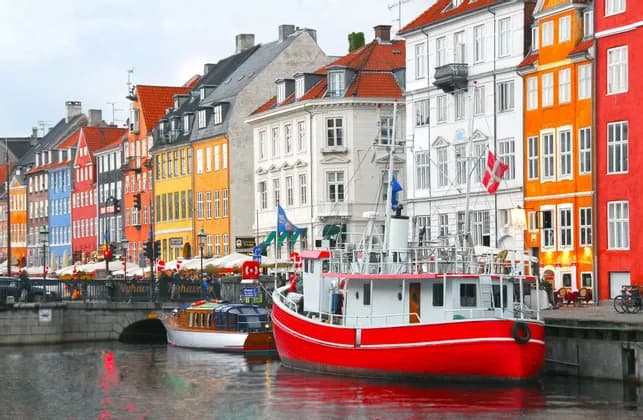
Colorful buildings line a canal where several boats are docked along the waterfront under a cloudy sky.

Group trips to Denmark

Our organized trips to Denmark

Denmark is a small Nordic kingdom where the Jutland peninsula and more than four hundred islands open out between the North Sea and the Baltic. It stands out for cycling-friendly cities, Viking heritage, and a design-driven lifestyle that has given the world hygge and New Nordic cuisine. Wander Copenhagen's Nyhavn and Tivoli Gardens, climb the Round Tower, explore Viking burial ships in Roskilde, cycle the flat countryside of Funen and visit Hans Christian Andersen's Odense, ferry to the pastel houses of Bornholm, and surf or see the Wadden Sea seals off Jutland. Sample smorrebrod, frikadeller, and pastries. Denmark suits design lovers, families with kids, foodies, cyclists, short-break travelers, and culturally curious Europe visitors chaining Copenhagen with Sweden or Germany.

View by
1 trip found
Show maps

Book with confidence

Book with $ 0

Lock in your spot and only pay once it's confirmed

Free changes

Switch dates or destination within 31 days, at no extra cost

Maximum Flexibility

New Flexible Cancellation! Cancel up to 24hrs before

Pay in installments

Spread the cost over time, interest-free
FAQs about Denmark

What are the entry requirements for Denmark?

Find out the entry requirements for Denmark, and, if needed, apply for your visa through our partner Sherpa.

Before traveling, always remember to check the government website of your country of origin for updates on the entry requirements for Denmark – you wouldn’t want to stay home due to a bureaucratic detail!

What's the time zone in Denmark?

Denmark is in the Central European Time (CET) zone. If it is 12pm in the UK, it will be 1pm in Denmark. In the USA, the time difference varies depending on your location. For example, if it is 12pm Eastern Standard Time (EST), it will be 6pm in Denmark. Denmark also observes daylight saving time, so clocks are set forward one hour on the last Sunday of March and set back one hour on the last Sunday of October.

Which currency is used in Denmark?

Denmark uses the Danish Krone (DKK) as its currency. As of the latest rates, 1 GBP is approximately 8.60 DKK, 1 USD is around 7.05 DKK, and 1 EUR is about 7.45 DKK. You can exchange your money at banks, currency exchange offices, or even some hotels. Always check for the best rates to ensure you get a good deal.

How can I pay in Denmark?

In Denmark, you can pay using credit cards, debit cards, and mobile payment apps like MobilePay. Cash is also accepted, but cards are more commonly used. Make sure your credit or debit card has a chip and PIN for smoother transactions. Most places accept Visa, Mastercard, and American Express. It's always a good idea to inform your bank of your travel plans to avoid any issues with your card while abroad.

Do I need to tip in Denmark?

Tipping in Denmark is not mandatory as service charges are usually included in the bill at restaurants, hotels, and taxis. However, if you receive exceptional service and want to show your appreciation, you can round up the bill or leave a small tip, like 10 percent. It is entirely up to you and appreciated but not expected.

What's the internet like in Denmark? Should I buy a SIM card? How available is Wi-Fi?

In Denmark, you can take advantage of EU roaming if you're from a European country, so your current SIM might work without extra charges. If you're visiting from outside the EU, consider buying a local SIM or an e-SIM data plan for better rates. Providers like TDC, Telia, and Telenor offer good options. Wi-Fi is widely available in hotels, cafes, and public places, so you should be well-connected during your stay.

What language do they speak in Denmark?

In Denmark, the official language is Danish. While many Danes speak excellent English, it might be helpful to know a few local expressions. Here are some you might hear or use:

  • Thank you: Tak
  • Please: VĂŠr venlig
  • Hello: Hej
  • Goodbye: Farvel
  • Yes: Ja
  • No: Nej

These basic phrases can be quite handy during your visit.

What kind of plugs are used in Denmark?

In Denmark, the plugs are Type C and Type K. The voltage is 230V with a frequency of 50Hz. If you're coming from a country that uses different plug types, you should bring a universal adapter to charge your devices. This will ensure you can stay connected without any hassle while you travel.

What’s the main religion in Denmark?

The main religion in Denmark is Christianity, specifically Lutheran Christianity. The Evangelical Lutheran Church of Denmark is the state church and has a significant following. Religious holidays like Christmas and Easter are widely celebrated. In Denmark, you will find that society is quite secular, and there is a high degree of religious freedom, with many people identifying as non-religious or atheist.

What should I pack for Denmark?

Here's what you should consider packing for your trip to Denmark, keeping in mind its often cool and windy climate:

1. Clothing:

  • Lightweight layers
  • Warm sweater or fleece
  • Waterproof jacket
  • T-shirts and long-sleeve shirts
  • Comfortable pants or jeans

2. Shoes:

  • Comfortable walking shoes
  • Waterproof boots
  • Casual sneakers

3. Accessories and Technology:

  • Universal travel adapter
  • Portable charger
  • Camera or smartphone
  • Sunglasses
  • Backpack rain cover

4. Toiletries and Medication:

  • Basic toiletries (toothbrush, toothpaste, deodorant)
  • Sunscreen
  • Lip balm
  • Common travel medication (pain relievers, motion sickness tablets, antihistamines)

Denmark can be chilly, especially outside of summer, so we recommend you pack accordingly and be prepared for rain.

What’s the weather like in Denmark?

Denmark has a temperate maritime climate, with mild winters and cool summers. Here’s what you can expect:

  • Winter (December to February): Cold and damp, with temperatures ranging from 0 to 5°C. It can snow, but it's not very common.
  • Spring (March to May): Gradually warming up, with temperatures between 5 to 15°C. This season can be quite rainy.
  • Summer (June to August): Pleasantly cool, with temperatures from 15 to 25°C. It's the sunniest time of the year, perfect for outdoor activities.
  • Autumn (September to November): Cool and windy, with temperatures dropping from 15 to 5°C. It gets rainier as the season progresses.

The best time to visit is in the summer, from June to August, when the weather is most favorable for exploring the country's many attractions.