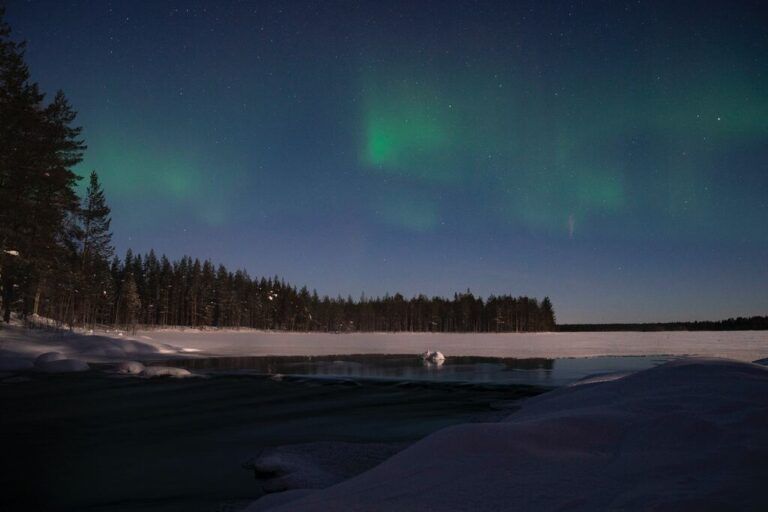
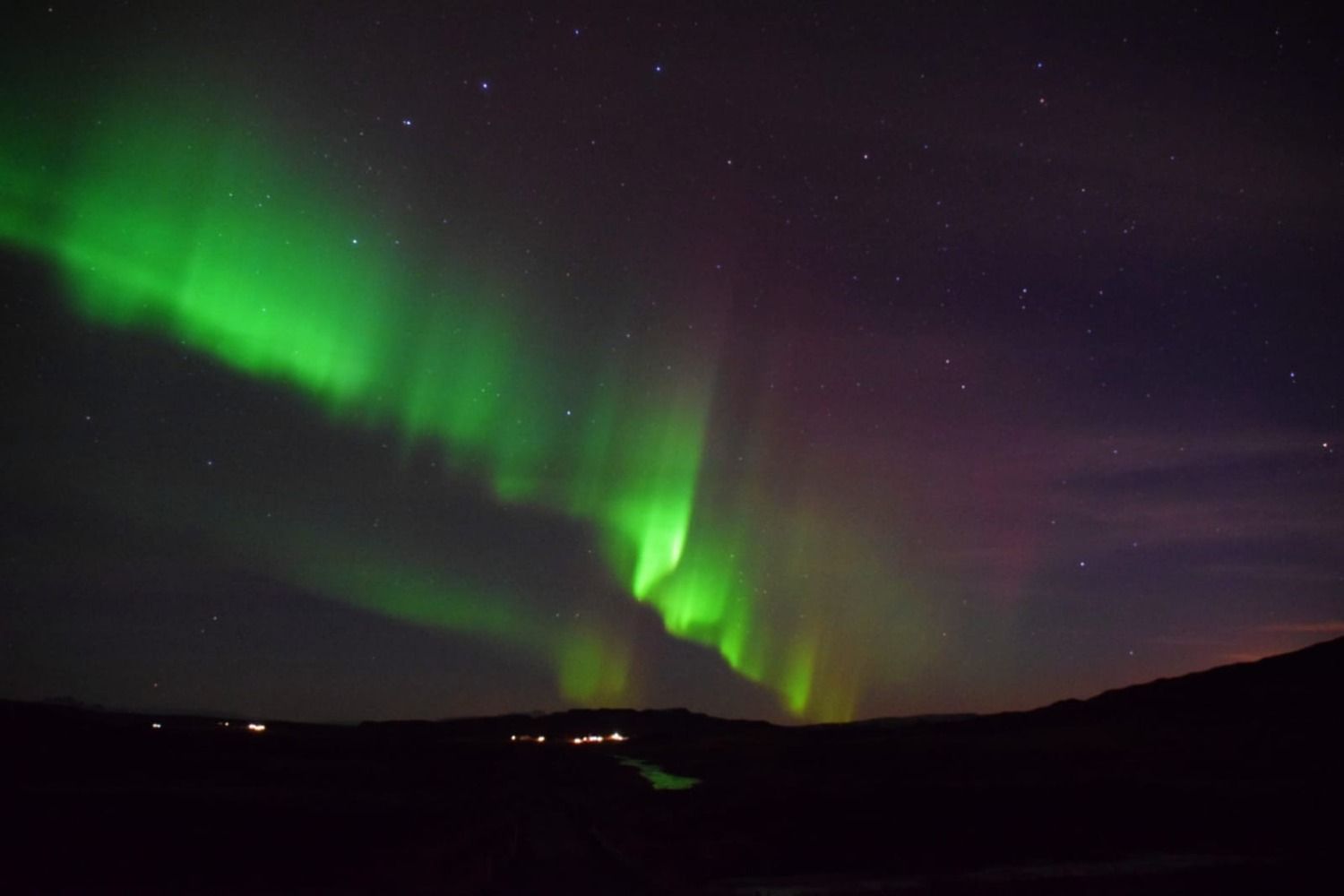
In a nutshell
- The northern lights are visible from late August to early April across all major destinations; October through March is the peak window, with September and March equinoxes producing statistically higher geomagnetic activity.
- The best time of night is 10 pm–2 am local time, when Earth’s rotation maximises your exposure to the aurora oval; planning trips around a new moon gives you the darkest, most aurora-friendly skies.
- Top destinations span two continents: Iceland, Norway (Tromsø, Lofoten, Alta), Finland (Lapland), and Sweden (Abisko) in Europe; Yellowknife in Canada and Fairbanks in Alaska for North American travellers.
- The KP-index is your most practical tool: a reading of KP 3+ is sufficient at high latitudes; KP 5+ brings the lights further south. Aurora apps provide real-time alerts so you don’t miss sudden activity spikes.
- Clear, dark skies matter more than any other factor once you’re in the right location and season — inland destinations like Abisko and Yellowknife consistently outperform cloudier coastal areas.
Few natural phenomena can stop a person mid-breath the way the northern lights can. Curtains of green, pink, and purple rippling across a pitch-black sky feel less like weather and more like the universe deciding to show off. If you’ve been wondering where and when you can see the northern lights, the honest answer is: more places than you’d think, for longer than you’d expect — but timing and location do matter a lot.
This guide covers the best months, the best destinations (including some that US travellers often overlook), the science behind the aurora, and everything you need to plan a trip that actually ends with lights in the sky rather than a lot of hopeful staring into clouds.
What causes the Northern Lights?
The aurora borealis forms when charged particles from the sun – carried on the solar wind — enter Earth’s magnetic field and collide with gases in the upper atmosphere. When these particles interact with oxygen and nitrogen at altitudes between 60 and 250 miles up, they release energy as visible light. Oxygen produces the classic green (and at higher altitudes, red), while nitrogen creates blue and purple hues.
The whole show is concentrated in a ring around the magnetic North Pole called the aurora oval, which passes through northern Norway, Sweden, Finland, Iceland, northern Canada, and Alaska. The closer you are to that oval, the better your chances — and the more dramatic the display.
When can you see the Northern Lights?
The northern lights happen year-round, but you need darkness to see them. That single constraint shapes everything: the aurora season runs from late August to early April, when nights are long enough in high-latitude destinations for the lights to be visible.
The best months: October to March
October through March is peak aurora season across all major viewing destinations. Nights are at their longest, skies are at their darkest, and temperatures —while cold — are consistently aurora-friendly. December and January offer the most hours of darkness, but the trade-off is often more cloud cover in coastal areas like Norway and Iceland.
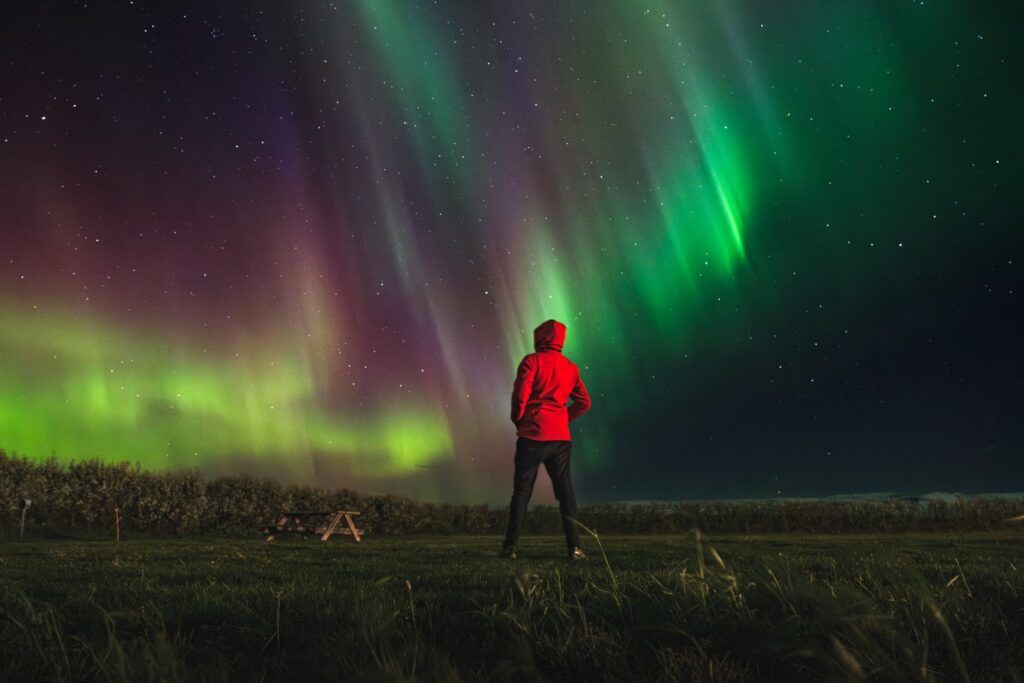
Why equinoxes are special: September and March
Statistically, September and March produce more intense geomagnetic storms than any other months. This is known as the Russell-McPherron effect: around the equinoxes, the orientation of Earth’s magnetic field becomes more favourably aligned with the solar wind, triggering stronger activity in the aurora oval. If you can travel in late September or mid-March, you’re stacking the odds in your favour — and you’ll likely have milder temperatures than deep winter.
The best time of night
The aurora can technically appear any time it’s dark, but activity peaks between 10 pm and 2 am local time. That three-to-four-hour window centred around local midnight is when Earth’s rotation brings you into the most active part of the aurora oval. Set an alarm. Embrace the sleep deprivation. It’s worth it.
Where can you see the Northern Lights?
The best places to see the northern lights all sit above roughly 60–72°N latitude, directly beneath or close to the aurora oval. Below is a breakdown of the top destinations — including two North American options that US travellers often don’t consider.
Iceland
Iceland‘s combination of accessibility, dramatic landscape, and consistently dark skies makes it one of the world’s most popular aurora destinations. The lights are often visible from the outskirts of Reykjavík, though heading to darker spots like Þingvellir National Park, the Snæfellsnes Peninsula, or the Westfjords dramatically increases your odds. Iceland also wins on flexibility — you can drive the Ring Road to chase clear skies wherever they appear. Best time: September to April.
Norway
Tromsø (69°N) is arguably the northern lights capital of the world, sitting directly beneath the aurora oval. But Norway offers far more than one city: the Lofoten Islands combine spectacular fjord scenery with aurora-rich skies, Alta has some of the clearest, driest air in Norway and the world’s first permanent northern lights observatory, and Kirkenes experiences some of the longest Polar Nights of any populated place. Solar Cycle 25 peaked in October 2024 — one of the strongest cycles in decades — and the 2026–2027 season falls in the early declining phase, which historically still delivers intense geomagnetic storms and spectacular displays. The first two to three years after a solar maximum are reliably excellent for aurora chasers. Best time: mid-September to late March.
Finland
Finnish Lapland — centred around Rovaniemi and stretching north to Saariselkä and Utsjoki — delivers some of the most magical aurora experiences on Earth. Snow-covered forests provide a surreal backdrop, and accommodation ranges from glass-ceiling igloos to aurora domes specifically designed for sky watching. Finland’s inland position also means it tends to have clearer skies than the Norwegian coast. Best time: September to March.
Sweden
Abisko National Park in Swedish Lapland is a favourite among serious aurora hunters for one specific reason: a persistent microclimate created by nearby Lake Torneträsk tends to keep the skies clear even when the surrounding region is overcast. The Aurora Sky Station sits at 900m elevation above the clouds. Nearby Kiruna is home to the famous ICEHOTEL, rebuilt entirely from ice each winter. Best time: November to March.
Canada: Yellowknife and beyond
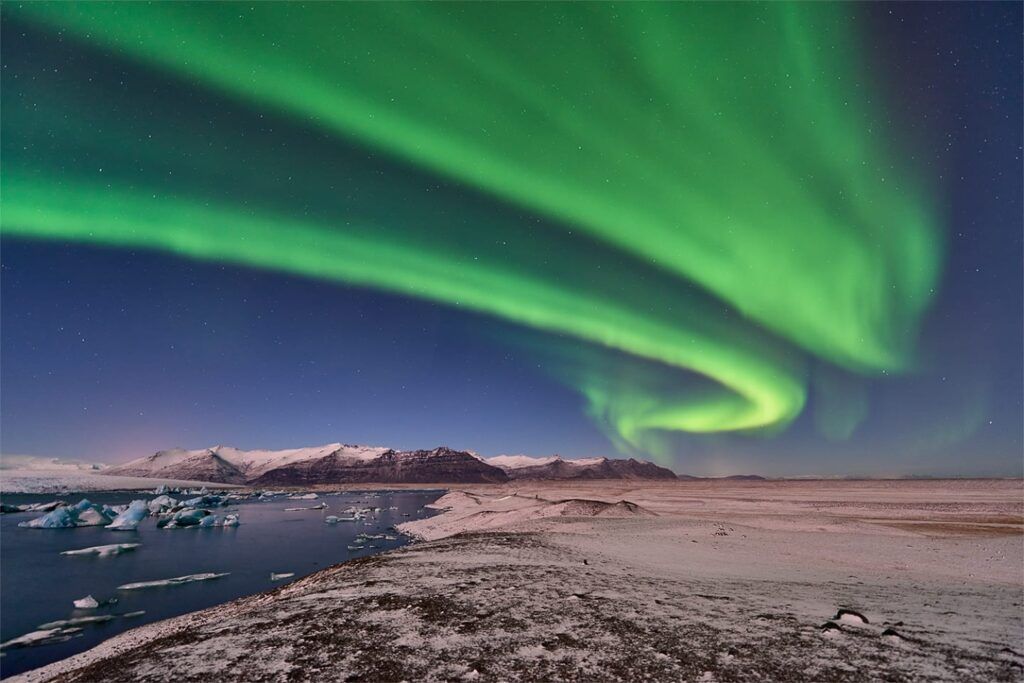
Yellowknife, in Canada’s Northwest Territories, sits directly under the aurora oval and is the best place in North America to see the northern lights reliably. It boasts over 240 clear nights per year, its own Aurora Village, and special tepee-style heated viewing shelters so you can watch the sky in comfort. Further east, Churchill, Manitoba offers aurora viewing alongside the chance to see polar bears and beluga whales. Best time: mid-August to late April.
Alaska, USA
Fairbanks, Alaska is the best place in the United States to see the northern lights. Located just two degrees below the Arctic Circle, it has its own university-run aurora forecast system and hundreds of km of wilderness to escape light pollution. Nearby Denali National Park adds a spectacular mountain backdrop. Best time: late August to mid-April.
At a glance: northern lights destinations compared
| Destination | Country | Best Months | Latitude | Why Go |
|---|---|---|---|---|
| Tromsø | Norway | Oct – March | 69°N | Auroral oval, city comforts, fjords |
| Fairbanks | USA (Alaska) | Sept – April | 64°N | Best US spot, live aurora forecast |
| Yellowknife | Canada | Aug – April | 62°N | 240+ clear nights/year, Aurora Village |
| Reykjavík area | Iceland | Sept – April | 64°N | Accessible, Ring Road flexibility |
| Abisko | Sweden | Nov – March | 68°N | Driest, clearest skies in the region |
| Lapland / Rovaniemi | Finland | Sept – March | 66°N | Glass igloos, snow forests, clear inland skies |
| Lofoten Islands | Norway | Sept – April | 68°N | Dramatic scenery, 8 months of viewing |
Key conditions for a successful aurora chase
Being in the right place and the right month gets you most of the way there. These three conditions seal the deal.
Darkness and moon phases
The aurora is always happening — you just need the sky dark enough to see it. Light pollution is the obvious enemy, but so is a bright moon. A new moon period gives you the darkest possible skies and is the best time to plan your trip if you have flexibility. A full moon can wash out fainter displays, though a strong aurora will punch through it regardless.
Solar activity and the KP-index
The KP-index is a 0–9 scale that measures global geomagnetic activity. For aurora viewing at high latitudes (Tromsø, Fairbanks, Yellowknife), a KP of 3 or above is enough. At mid-latitudes — Scotland, northern Germany, southern Canada — you typically need KP 5 or higher. Apps like SpaceWeatherLive, Aurora Forecast, and My Aurora Forecast update in real time. Check them before heading out; a KP jump from 2 to 6 overnight can transform a quiet sky into a riot of colour.
Weather and cloud cover
No aurora app can compensate for clouds. This is why inland destinations like Abisko and Yellowknife — with their lower precipitation — statistically outperform coastal spots like Bergen or the outer Lofotens in winter. If you’re based somewhere with unpredictable weather, having a car (or joining a tour with local guides) lets you chase clear skies within a few hours’ drive.
Tips for seeing and photographing the Northern Lights
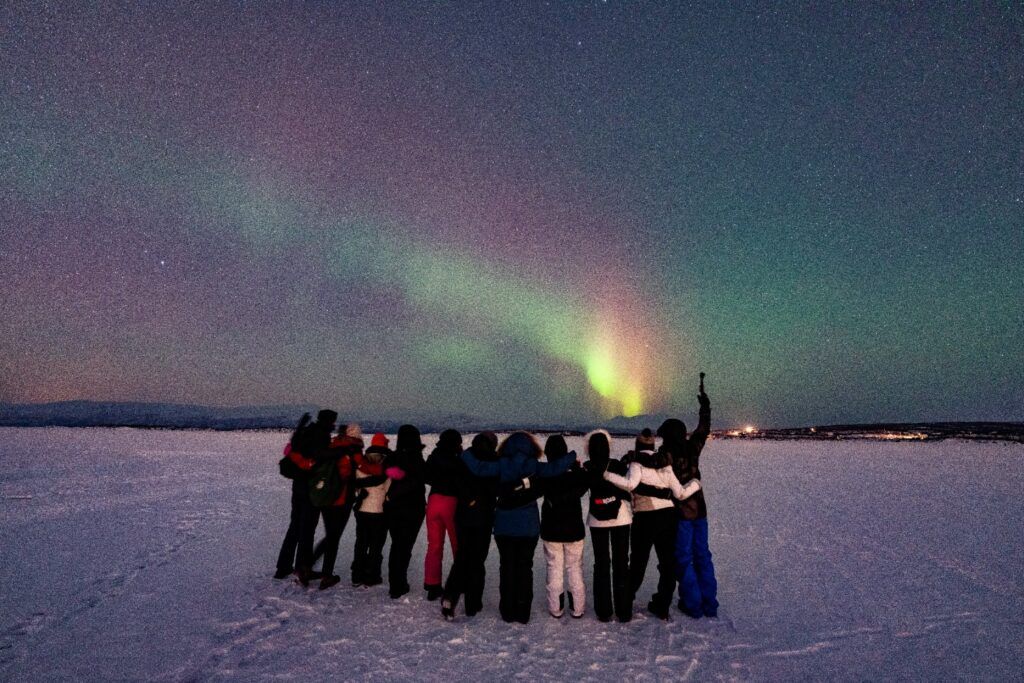
Logistically, seeing the aurora is mostly about patience plus preparation. Here’s what actually makes a difference.
-
- Layer up properly. You’ll be standing still in sub-zero temperatures for hours. Thermal base layers, a windproof outer shell, insulated boots rated to at least -20°C, and thick gloves are non-negotiable. Cold feet end aurora chases faster than clouds do.
- Use an aurora app. Download SpaceWeatherLive or My Aurora Forecast and set up alerts for KP spikes. Checking the KP-index before heading out — and getting a push notification at midnight when activity suddenly surges — is the single most practical thing you can do to improve your odds.
- Give your eyes 20 minutes. Let your eyes adapt fully to the dark before deciding the lights aren’t there. Faint aurora often looks like nothing to freshly light-adjusted eyes, then becomes unmistakable once you’ve been in the dark for a while.
- For photography: use a tripod, set your lens to its widest aperture (f/1.8–f/2.8 if possible), and start with ISO 800–1600 and a 10–15 second exposure. Modern smartphones in night mode can capture weaker displays surprisingly well, but a camera gives you control over composition and exposure.
- Plan to stay at least three nights. Aurora hunting is inherently unpredictable. Three nights in a prime location gives you a reasonable statistical chance of at least one clear, active night.
If you want to chase the aurora without having to figure out the logistics yourself, take a look at the Northern Lights trips by WeRoad — small groups, local expertise, and the kind of collective excitement that makes waiting in the cold for midnight lights genuinely fun.
FAQ
- What is the absolute best month to see the Northern Lights?
-
If you can only go once, aim for late September or mid-March. Both months coincide with the equinox effect, which statistically produces stronger geomagnetic storms. You’ll also have reasonably manageable temperatures compared to January or February, and the shoulder-season crowds are lower in most destinations.
- Can you see the Northern Lights in the United States?
-
Yes — Fairbanks, Alaska is the best place in the US to see the northern lights, with reliable viewing from late August to mid-April. During very strong solar events (KP 7+), the aurora can be visible across northern US states including Michigan, Minnesota, and Montana, but these sightings are unpredictable. For a guaranteed experience, Fairbanks or Yellowknife (Canada) are your best bets in North America.
- How long do you need to stay to see the Northern Lights?
-
Plan for at least three nights at your chosen destination. One night is a gamble — you might get lucky, but a single cloudy or low-activity night can wipe out your entire chance. Three to five nights gives you a realistic statistical window, especially combined with the right app and some willingness to stay up past midnight.
- Do you need a guided tour to see the Northern Lights?
-
Not strictly — the aurora can appear from any dark location within the auroral zone. But guided tours offer a real advantage: local guides know the forecasts, can drive you away from cloud cover, and have experience reading faint aurora that first-time visitors often miss. In places like Tromsø or Yellowknife, guided chases often cover 100–200km in a single night to find the clearest skies.
- Is 2026–2027 still a good time to see the Northern Lights given the solar cycle?
-
Yes — and the nuance here is actually good news. Solar Cycle 25 peaked in October 2024, making it one of the strongest cycles in decades. We are now in the early declining phase, but history shows that the first two to three years after solar maximum continue to produce powerful geomagnetic storms. Solar Cycle 23, for instance, peaked in 2001 but delivered back-to-back extreme (G5) storms in 2003 — two years into the decline. Strong individual events, including X-class flares and Earth-directed coronal mass ejections, remain very much possible through 2026 and 2027, making both seasons highly favourable for aurora travel. Total frequency will be lower than 2024, but spectacular displays will still occur.