In a nutshell
- Pamukkale is a UNESCO World Heritage Site in southwestern Turkey, famous for its white travertine terraces formed by mineral-rich thermal waters, and paired with the impressive archaeological remains of Hierapolis.
- The main highlights include the calcite terraces, Hierapolis, the Roman theatre, Cleopatra’s Pool, and the necropolis; together they create a visit that blends natural scenery, thermal bathing, and Roman history in one destination.
- Swimming is only allowed in designated areas, especially at Cleopatra’s Pool, while the protected terrace formations are regulated to preserve the fragile landscape and its bright white surface.
- The easiest way to reach Pamukkale is via Denizli, using a flight to Denizli Çardak Airport or arriving by bus, train, or car, then continuing by taxi, shuttle, or local dolmuş to the site.
- The best visiting strategy is to arrive early and allow enough time for both the terraces and the ruins, ideally in spring or early autumn, with sun protection, light luggage, and swimwear if you plan to use the thermal pools.
Some places look so unreal that your camera roll starts feeling smug before you even arrive. Pamukkale is one of those places: bright white terraces, warm thermal waters, and ancient ruins sitting dramatically above the valley like they know they’re photogenic. In southwestern Turkey, this UNESCO-listed site combines natural beauty and Roman history in one easy-to-love stop, whether you’re on a road trip, a quick detour, or building the ultimate Turkey itinerary.
Known as the “cotton castle,” Pamukkale is famous for its white travertine terraces, formed over thousands of years by mineral-rich thermal water. But the magic is not only visual. You can also explore the ancient city of Hierapolis, admire a superb Roman theatre, and enjoy a soak in the natural thermal springs near the archaeological ruins. In short: nature did the art direction, the Romans handled the architecture, and you get the reward.
Why Pamukkale is worth visiting
Pamukkale is worth visiting because it offers a rare mix of natural wonder and historical heritage in a single site. The white calcite terraces, thermal waters, and the ruins of Hierapolis create a full-day experience that feels visually striking, culturally rich, and easy to include in a wider Turkey itinerary.
There are many beautiful places in Turkey, but few are this instantly recognizable. The dazzling white slopes look almost snowy from a distance, even in summer. Up close, the shallow pools and mineral formations create that dreamlike landscape people usually associate with overedited postcards. Here, annoyingly enough, it’s real.
Then there’s Hierapolis, the ancient Greco-Roman spa city built above the terraces. This is what makes the visit feel complete rather than just scenic. You’re not only walking through a natural site, but also through layers of history, from baths and streets to temples, tombs, and one of the best-preserved theatres in Turkey.
What to see in Pamukkale
The main things to see in Pamukkale are the travertine terraces, the ancient city of Hierapolis, the Roman theatre, Cleopatra’s Pool, and the necropolis. These attractions are all part of the same wider archaeological and natural area, so they can be visited together without complicated logistics.
The white travertine terraces
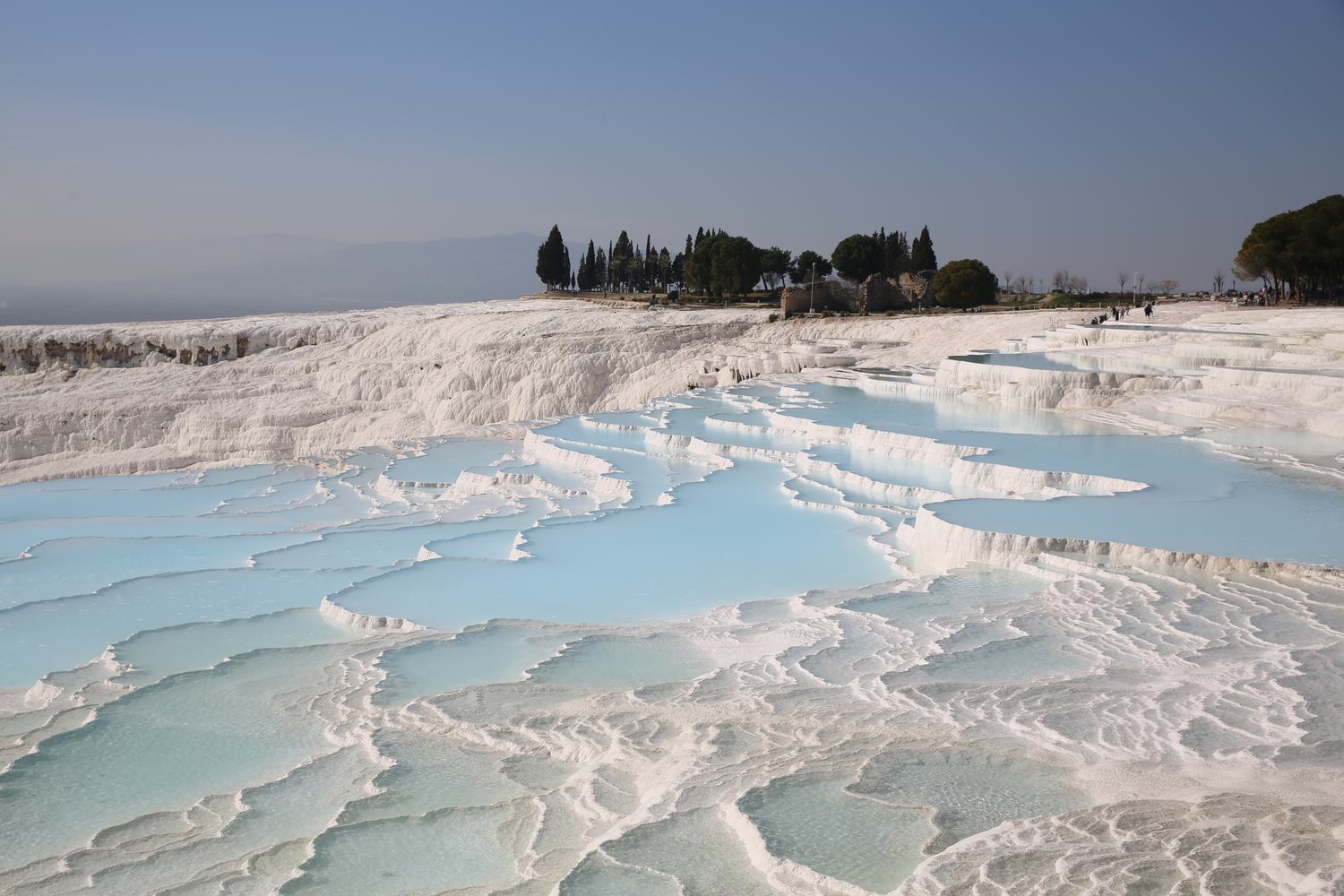
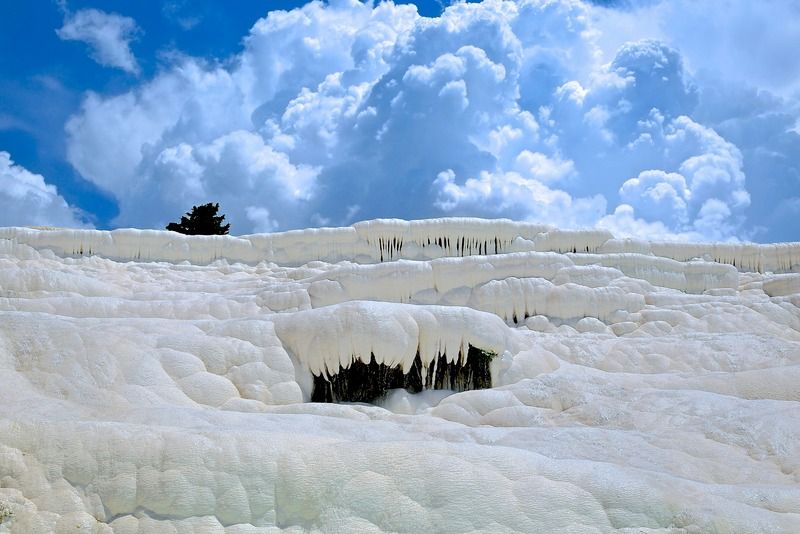
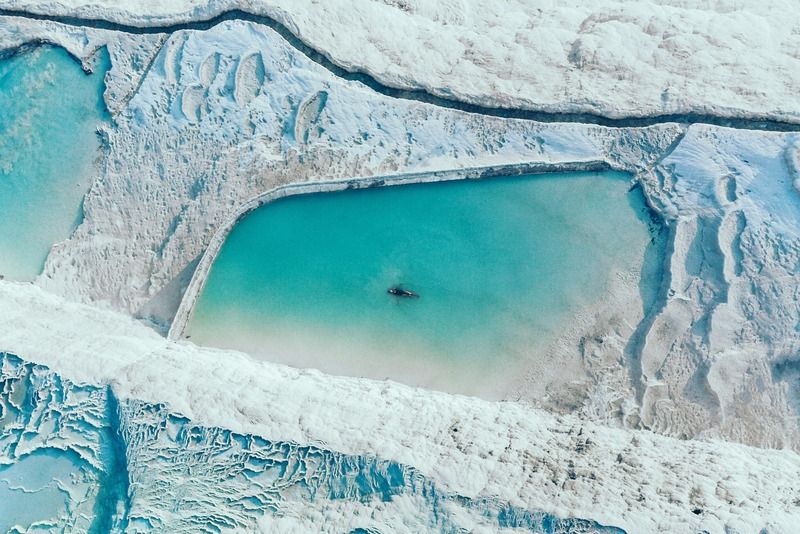
The travertine terraces are Pamukkale’s most iconic sight. Their brilliant white appearance comes from calcium-rich thermal water that deposits calcite as it flows downhill. The result is a stepped landscape of basins and shallow pools that has made the site famous around the world.
This is the image most travelers come for, and yes, it absolutely delivers. The white “stuff” in Pamukkale is not snow, salt, or some giant spa experiment gone rogue. It is travertine, a sedimentary rock created by mineral deposits from hot springs. When sunlight hits the terraces, the whole slope seems to glow.
Access to the terraces is controlled to protect them, and visitors must usually remove their shoes in designated areas. It may feel a bit odd at first, but it helps preserve the formations. Think of it as a small sacrifice for nature, and also a chance to test your balance on slippery surfaces with unexpected dignity.
Hierapolis ancient city
Hierapolis adds historical depth to the visit with ruins spread across a large archaeological area above the terraces. Founded as a thermal spa city in antiquity, it later became an important Roman center known for healing waters, monumental architecture, and religious significance.
Do not make the classic mistake of racing through the ruins after ten thousand terrace photos. Hierapolis is not a side dish. It is half the meal. The city was built around the same hot springs that attract visitors today, and its remains reveal how people have been coming here to relax, heal, and show off for centuries.
Highlights include ancient streets, bath structures, gates, and scattered marble remains that make every walk feel a bit cinematic. If you enjoy historical sites with space to wander, this part of Pamukkale can easily keep you busy for hours.
The Roman theatre
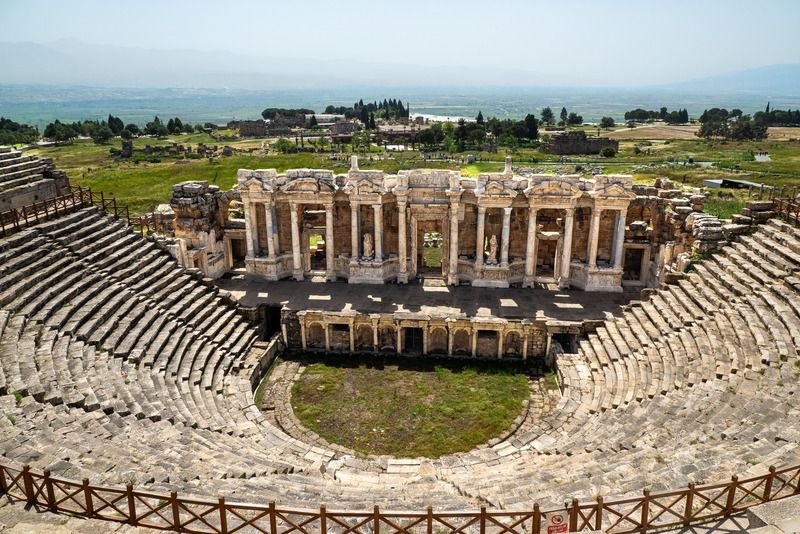
The Roman theatre is one of the standout monuments in Hierapolis. It is remarkably well preserved and offers sweeping views over the surrounding landscape. Its scale and condition make it one of the most memorable architectural stops within the site.
The theatre is the kind of place that makes everyone instinctively lower their voice for about twelve seconds before taking pictures. Its tiered seating, decorated stage building, and hilltop position give it genuine wow factor. Nearby, the contrast between Roman stonework and Pamukkale’s white terraces is especially striking.
And since the area around the theatre connects naturally with the thermal landscape, this is also the perfect zone to appreciate that unusual pairing of archaeology and nature. A soak in the natural thermal springs among Pamukkale’s white calcite terraces, near the Roman theatre ruins of Hierapolis, is one of the most memorable experiences in the area.
Cleopatra’s Pool and thermal waters
Cleopatra’s Pool is one of the most popular thermal bathing spots in Pamukkale. Unlike the protected terrace formations, this pool is a designated area where visitors can swim in warm mineral water among submerged ancient columns for an extra fee.
If you like your swims with a side of Roman drama, this is your moment. The pool is warm, mineral-rich, and scattered with ancient stone fragments said to have fallen in after an earthquake. It’s touristy, yes, but also genuinely fun. Where else do you casually float past archaeological remains and call it wellness?
It is important to know that you cannot freely swim in all Pamukkale pools. The protected travertine basins are heavily regulated, and swimming is only allowed in designated areas. This conservation system helps preserve the site’s fragile formations for future visitors.
The necropolis and museum areas
The necropolis and museum areas offer context beyond the postcard views. They help explain Pamukkale’s long history as a sacred and therapeutic destination. These sections are especially worthwhile for travelers interested in archaeology and ancient daily life.
The necropolis of Hierapolis is one of the largest ancient cemeteries in Turkey, with tombs, sarcophagi, and burial monuments stretching across a broad area. It may sound like a niche addition, but it reveals how important Hierapolis once was. People didn’t just pass through here; they came, stayed, healed, and, well, sometimes never left.
How to get to Pamukkale
Pamukkale is easy to reach from major Turkish cities by plane, bus, train, or car. The nearest transport hub is Denizli, about 20 kilometers away. From Denizli, local minibuses, taxis, and transfers connect travelers directly to the entrance area and nearby hotels.
For most travelers, the journey is straightforward once you know that Pamukkale is not in Cappadocia. They are completely different destinations in different parts of Turkey. Both are spectacular, both are all over Instagram, and both may tempt you into bad puns, but they are not neighbors.
By plane
The fastest way to reach Pamukkale is by flying to Denizli Çardak Airport. From the airport, the road transfer to Pamukkale usually takes around one hour, depending on traffic and your final stop in town.
Flights from Istanbul are the most common option, and you can also connect via other major Turkish cities. Once you land, you can continue by shuttle, private transfer, rental car, or taxi.
By bus or train
Buses are a popular and budget-friendly option for reaching Denizli from cities such as Istanbul, Izmir, Antalya, and Ankara. Train connections are more limited but can work well depending on your route and schedule.
From Denizli bus station, local minibuses known as dolmuş usually run to Pamukkale town. The final ride is short, making public transport one of the easiest low-cost options for independent travelers.
By car
Driving to Pamukkale is convenient if you are exploring western Turkey on a road trip. Roads are generally good, and having your own vehicle gives you more flexibility for timing, nearby stops, and accommodation choices.
This option is especially useful if you want to combine Pamukkale with places like Ephesus, Izmir, Antalya, or the Aegean coast. Plus, nothing says freedom like being able to stop for snacks without negotiating bus station pastry standards.
| Departure point | Best transport option | Approximate travel time | Notes |
|---|---|---|---|
| Istanbul | Flight to Denizli + transfer | 1 hour flight + 1 hour road transfer | Fastest and easiest option |
| Izmir | Bus or car | 3-4 hours | Great for western Turkey itineraries |
| Antalya | Bus or car | 3-4 hours | Popular inland route |
| Cappadocia | Flight via Istanbul or long bus | Varies significantly | Not a nearby day trip |
Best time to visit Pamukkale
The best time to visit Pamukkale is usually spring or early autumn, when temperatures are milder and the site is more comfortable to explore. Summer offers long days and warm water, but also stronger sun and bigger crowds.
If possible, arrive early in the morning. This gives you softer light, fewer people, and a better chance to enjoy the terraces before tour groups appear with the energy of a field trip and the photo coordination of a fashion campaign.
Good periods to consider include:
- April to June for pleasant weather and manageable crowds
- September to October for warm days without peak summer intensity
- Winter for fewer visitors and a different atmosphere, though temperatures can be cooler
Useful tips for visiting
A few practical tips can improve your visit significantly. Pamukkale is simple to explore, but the combination of water, sun, bare feet, and a large archaeological site means a little preparation goes a long way.
Bring the basics and plan for both sightseeing and thermal relaxation. A smart setup beats heroic improvisation every single time.
- Wear easy-to-remove shoes, as some areas require bare feet.
- Bring swimwear if you want to enjoy designated thermal pools.
- Pack sun protection, especially in warmer months.
- Allow at least half a day, or a full day if you want to explore Hierapolis properly.
- Carry water and travel light, since you will walk a lot.
Planning your Pamukkale itinerary
Pamukkale works well as either a day trip or an overnight stay. A day trip is enough for the highlights, while sleeping nearby allows for an earlier start, a slower pace, and more time to enjoy the site when it is quieter.
If you only have one day, focus on:
- The travertine terraces
- The Roman theatre
- A walk through Hierapolis
- A dip in Cleopatra’s Pool if that interests you
If you can stay overnight, even better. Early morning and late afternoon are when Pamukkale feels most atmospheric, and the light makes the white terraces look even more surreal. It’s the kind of place that rewards a little patience, and maybe a little less rushing around like you’re speed-running antiquity.
A final note before you go
Pamukkale combines geology, wellness, and ancient history in a way few destinations can match. It is visually unique, easy to access from Denizli, and rewarding whether you stay for a few hours or build a slower itinerary around it.
If Turkey is calling and you’d like to explore this destination with good company, take a look at the WeRoad group trips for Turkey and discover Pamukkale as part of a bigger adventure.
FAQ
- Can you swim in the Pamukkale pool?
-
Yes, but only in designated areas. The most popular bathing spot is Cleopatra’s Pool, while the protected travertine terraces are subject to strict access and conservation rules.
- What is the white stuff in Pamukkale?
-
The white surface is travertine, a sedimentary rock created by calcium-rich thermal water that deposits calcite over time. This is what gives Pamukkale its bright, cotton-like appearance.
- Is Pamukkale worth visiting?
-
Yes. Pamukkale is absolutely worth visiting for its unusual natural formations, thermal waters, and the extensive ruins of Hierapolis, all combined in one site.
- Is Pamukkale in Cappadocia?
-
No. Pamukkale is not in Cappadocia. It is located near Denizli in southwestern Turkey, while Cappadocia is in central Turkey.
- How much time do you need in Pamukkale?
-
You should plan at least half a day for the main highlights, but a full day is better if you want to explore Hierapolis properly and enjoy the thermal areas without rushing.
- What should you wear in Pamukkale?
-
Wear comfortable clothes, bring easy-to-remove shoes, and pack swimwear if you want to use the thermal pools. Sun protection is essential in warmer months.