In a nutshell
- Portugal is one of Europe’s most complete surf destinations thanks to year-round swell, a long Atlantic coastline, and a mix of beach breaks, reefs, and protected coves suitable for different levels.
- Sagres and Praia do Amado are top choices in the south, with flexible conditions, scenic cliffs, and beginner-friendly options, while Sagres also delivers unforgettable sunset sessions with red, orange, and purple skies over the ocean.
- Ericeira and Peniche are the country’s most iconic surf hubs, with Ericeira offering world-class reef breaks and deep surf culture, and Peniche standing out for its consistent peninsula setup and legendary waves like Supertubos.
- Nazaré is the most famous big-wave location in Portugal, known worldwide for giant winter swells amplified by the Nazaré Canyon, making it essential for spectators and elite big wave surfers rather than casual visitors.
- The best months depend on your experience level: summer is ideal for learning, autumn offers the best balance of conditions and atmosphere, and winter is best for advanced surfers seeking powerful surf and major swell events.
Portugal has a way of getting under your skin. Maybe it’s the Atlantic light, maybe it’s the seafood, maybe it’s the fact that you can spend the morning in a historic town and the afternoon chasing clean lines in the ocean. Whatever the reason, surfing in Portugal has become a dream trip for everyone from first-timers to seasoned surfers looking for powerful swells, scenic beaches, and a culture that takes wave-riding very seriously.
What makes Portugal special is simple: variety. The country offers exposed west-facing beaches, protected southern coves, famous reef breaks, beginner-friendly sandbanks, and some of the biggest waves on the planet. Add a mild climate, strong surf infrastructure, and easy road-trip logistics, and you have one of Europe’s most complete surf destinations. In other words, your board bag will feel very seen here.
Why Portugal is one of Europe’s best surf destinations
Portugal is one of the best places in Europe to surf because it combines consistency, variety, and accessibility. There are waves year-round, a wide range of breaks for different skill levels, and surf towns that make traveling between spots relatively easy. Few destinations pack so much coastline and personality into one trip.
The Atlantic delivers swell to much of the Portuguese coast throughout the year, but each region behaves differently. That means you can often find a surfable beach even when one area is blown out or too heavy. From the rugged Algarve to the iconic zones around Ericeira and Peniche, conditions shift fast, and that’s part of the fun.
- Beginners can find mellow beach breaks and surf schools.
- Intermediate surfers can explore consistent peaks with room to improve.
- Advanced surfers can target reefs, hollow beach breaks, and heavy winter swells.
- Spectators can watch world-class surf without ever waxing a board.
The top 5 spots for surfing in Portugal
These five destinations stand out because they combine quality waves, strong local surf culture, and a memorable setting. Some are ideal for learning, others are built for performance, and one is better admired with both feet planted safely on land. Together, they show the full range of Portuguese surf.
| Spot | Best for | Wave type | Best season |
|---|---|---|---|
| Sagres | All levels | Beach breaks and coves | Spring to autumn, also winter |
| Praia do Amado | Beginners to intermediate | Consistent beach break | Year-round |
| Ericeira | Intermediate to advanced | Reef and point breaks | Autumn to spring |
| Peniche | All levels, depending on spot | Beach breaks and reefs | Autumn |
| Nazaré | Big wave spectators, elite surfers | Big wave break | Late autumn to winter |
Sagres
Sagres is one of the most versatile surf bases in Portugal because it gives access to both west-facing and south-facing beaches. That means more flexibility when winds or swell direction change. It suits a wide range of surfers and offers a dramatic coastal setting that makes every session feel bigger than life.
Located at the southwestern tip of the country, Sagres feels wild, wind-shaped, and wonderfully remote. The beaches around town include Tonel, Beliche, and Mareta, each with different exposure and personality. On one side, the Atlantic comes in with energy; on the other, more sheltered coves can stay manageable.
One of the most memorable experiences here is a sunset surf session on Sagres beach, when the sky turns red, orange, and purple over the ocean. It sounds suspiciously like a travel brochure wrote it after a breakup, but it’s true. Even a mediocre ride feels cinematic when the whole horizon starts showing off.
- Best for: surfers who want options in changing conditions
- Nearby vibe: relaxed surf town, cliffs, simple restaurants, epic viewpoints
- Good to know: wind can be strong, so checking the daily forecast matters
Praia do Amado
Praia do Amado is one of the most reliable surf beaches in southern Portugal. It offers consistent waves, a sandy bottom, and sections that can work for different levels. It is especially popular with surf schools, but more experienced surfers can still find quality peaks on the right day.
Set between cliffs on the Costa Vicentina, Praia do Amado is often the place people fall in love with the Portuguese surf scene. The beach is broad, scenic, and usually alive with vans, wetsuits, instructors, and the universal pre-surf ritual of pretending you totally understood the forecast.
For beginners, this is one of the safest bets thanks to the number of schools and the generally forgiving nature of the beach break. For intermediates, cleaner days can still bring fun, punchy walls. The atmosphere is social but not overwhelming, and there’s enough space to spread out when conditions cooperate.
Ericeira
Ericeira is Portugal’s most iconic surf town and one of Europe’s standout surf destinations. It is known for its concentration of high-quality breaks, many of them reef-based, and its deep connection to surf culture. This is a destination where surfing shapes the rhythm of daily life.
Often called the surfing capital of Portugal, Ericeira is also a World Surfing Reserve. That label is not just fancy decoration. The coastline here holds a dense collection of respected breaks, including Ribeira d’Ilhas, Coxos, and Pedra Branca.
If you’re an intermediate surfer, Ribeira d’Ilhas is often the most approachable starting point. Advanced surfers may be drawn to the speed and power of Coxos, a right-hand reef that can be absolutely glorious or absolutely humbling, sometimes both within the same hour.
Beyond the water, Ericeira balances surf credibility with charm. There are cafés, seafood restaurants, whitewashed streets, and enough ocean viewpoints to make your phone storage start negotiating.
Peniche
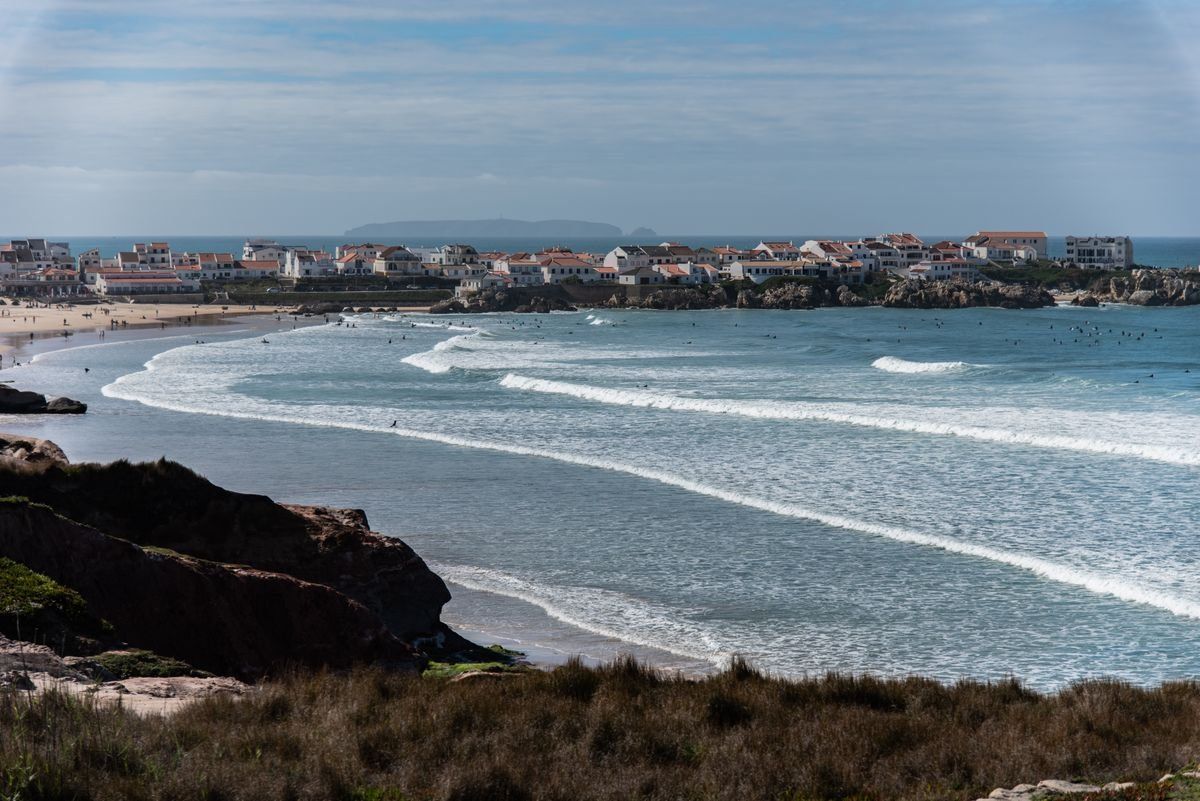
Peniche is one of Portugal’s most consistent surf hubs because its peninsula shape allows different beaches to work in different conditions. This flexibility, combined with famous waves and easy access, makes it a practical and exciting base for a surf trip in almost any season.
Peniche is home to Supertubos, the country’s most famous performance beach break. When it turns on, it produces fast, hollow barrels that have earned global recognition and a regular place on the professional surf calendar. This is where the ocean stops being polite and starts being very, very serious.
But Peniche is not only for chargers. Nearby areas such as Baleal offer softer, more beginner-friendly waves, and there are multiple beaches around the peninsula that can suit different levels depending on wind and swell direction.
- Supertubos: best for advanced surfers in solid conditions
- Baleal: more accessible and popular with surf camps
- Lagide: a quality reef option for experienced surfers
If you’re wondering where the famous surfing in Portugal is, Peniche is one of the strongest answers. It’s a proper surf town with gear shops, schools, events, and lineups that can range from playful to punishing in a short drive.
Nazaré
Nazaré is world-famous for its giant waves and is best known as a big wave spectacle rather than a standard surf holiday stop. It belongs on this list because it represents one of Portugal’s most legendary surf locations, even if most visitors are there to watch rather than paddle out.
The underwater Nazaré Canyon amplifies swell and creates the monstrous waves seen at Praia do Norte. In winter, the surf here can reach truly staggering heights, drawing elite big wave surfers from around the globe. For most mortals, this is less “let’s catch a few” and more “let’s stare in respectful disbelief.”
The viewpoint near the lighthouse offers the best perspective. Even if you never step in the water, seeing Nazaré during a major swell is unforgettable. It also helps answer a common question: yes, Portugal absolutely has good surf. In some places, it has surf that looks like it was designed by an action movie villain.
Best months to surf in Portugal
The best time depends on your level. Summer is generally better for beginners thanks to smaller, friendlier waves, while autumn and winter bring stronger, more consistent swell for experienced surfers. Portugal can be surfed year-round, but choosing the right season changes the whole experience.
Here is a simple breakdown:
- May to September: better for beginners, surf camps, milder conditions
- September to November: excellent balance of swell, weather, and water temperature
- December to February: best for experienced surfers and big wave watching
- March to April: variable but often rewarding, with fewer crowds
Autumn is often considered the sweet spot. The summer crowds thin out, the ocean starts delivering more energy, and conditions can be excellent in regions like Peniche and Ericeira. Winter, meanwhile, is prime time for advanced surfing and Nazaré spectacle mode.
How to choose the right spot for your level
Picking the right surf spot in Portugal depends on skill, confidence, and conditions on the day. A famous wave is not automatically the right wave. Choosing wisely improves safety, progression, and the overall fun of the trip, which is useful because being lovingly tumble-dried by the Atlantic gets old fast.
A practical rule is to match ambition with realism:
- Beginner: Praia do Amado, Baleal, sheltered beaches around Sagres
- Intermediate: Ribeira d’Ilhas, Arrifana-style beach breaks, selected Peniche peaks
- Advanced: Supertubos, Coxos, heavy reefs and winter swells
Before paddling out, always check:
- swell size and direction
- wind strength and orientation
- tide timing
- bottom type, especially if reef is involved
- crowd level and local etiquette
Planning your surf trip
A surf trip in Portugal is easiest when built around flexibility. Conditions can change quickly, so having a car, checking forecasts daily, and staying near multiple breaks will help you make the most of the coastline. Mobility matters almost as much as wave knowledge.
Most travelers fly into Lisbon, Faro, or Porto, depending on the region they want to surf. Renting a car is highly recommended, especially if you’re heading to the Algarve or moving between towns. Pack a good wetsuit for the season, reef awareness if relevant, and enough humility to accept that the ocean always has final say.
If you want to experience Portugal with the right mix of adventure, fun, and new people, take a look at the WeRoad group trips to Portugal for this destination and turn your surf escape into a shared journey.
Portugal is one of those places that keeps calling you back. One trip becomes two, two become a habit, and suddenly you’re discussing wind charts over breakfast like it’s perfectly normal. Which, to be fair, in Portugal it kind of is.
FAQ | Surf in Portugal
- Does Portugal have good surf?
-
Yes, Portugal has excellent surf. The country offers consistent Atlantic swell, varied wave types, and beaches for all levels, from beginner-friendly sandbanks to advanced reef breaks and giant waves like Nazaré.
- What is the surfing capital of Portugal?
-
Ericeira is widely considered the surfing capital of Portugal. It is famous for its strong surf identity, concentration of world-class breaks, and status as a World Surfing Reserve.
- What are the best months to surf in Portugal?
-
The best months depend on your level. Beginners usually do best from late spring to early autumn, while intermediate and advanced surfers often prefer September to February for stronger and more consistent swell.
- Where is the famous surfing in Portugal?
-
The most famous surfing areas in Portugal include Ericeira, Peniche, Sagres, and Nazaré. Peniche is known for Supertubos, Ericeira for reef breaks, Sagres for versatility, and Nazaré for giant waves.
- Is Portugal good for beginner surfers?
-
Yes, Portugal is very good for beginners, especially in places like Praia do Amado, Baleal, and some beaches near Sagres. Surf schools are common, and summer conditions are usually more manageable.