


Is this trip for me?
Party and nightlife
Relax
Nature and adventure
City and cultures
Monuments and history
Physical effort
Trip type



This is a WeRoad Collection
A trip designed for ultimate comfort, with specially selected hotels and unique experiences.
Three cities, two high-speed trains and three thousand years of history: Beijing, Xi'an and Shanghai are the China everyone imagines, without rushing or repacking every day. 4-star hotels in the city center, private transfers and first-class train travel: the comfort of a Collection trip.
In Beijing, the Forbidden City, the hutongs by rickshaw and the Great Wall at Mutianyu, the less crowded section, with the cable car up to the ridges. Then the Temple of Heaven early in the morning, when retirees dance in the gardens, the Summer Palace and Peking duck. In Xi'an, the Terracotta Army, the ancient walls by bike and the Muslim Quarter's night-time street food. We wrap up in Shanghai: the Bund facing the Pudong skyscrapers, the Shanghai Tower, the Yu Garden and a boat through the canals of Zhujiajiao.


We land in Beijing and settle into the city center: four nights in the same room.
Here the last millennium and the next live side by side on the same block: a temple with burning incense and, right behind it, a 200-meter-tall glass tower.
First dinner, straight to the essentials: jiaozi, the dumplings you eat by the dozen here, soy sauce noodles and fried tofu.
We toast with baijiu, the local spirit: just one shot, trust me! Tomorrow the real adventure begins.

We enter through Tiananmen Square, the largest in the world, and pass through the gate under Mao’s portrait.
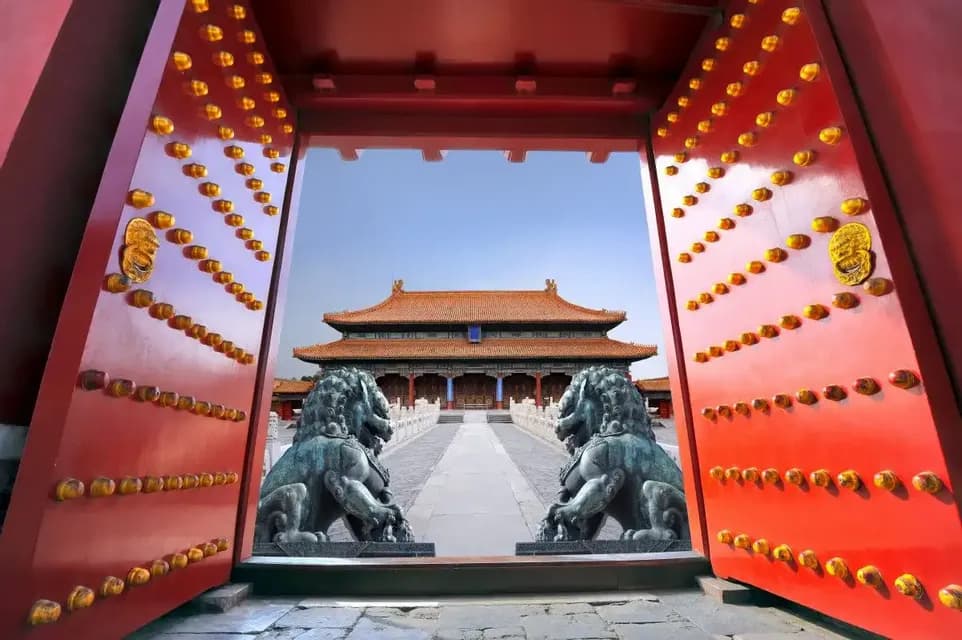
On the other side awaits the Forbidden City: 990 buildings, 500 years of Ming and Qing dynasties and courtyard after courtyard, each more secluded than the last.
For five centuries commoners couldn't set foot here: hence the name!
In the afternoon we change pace and hop on rickshaws through the hutongs, narrow alleys of traditional courtyard houses where the real Beijing still lives, with laundry drying and locals playing mahjong on the sidewalk.

Today it’s the Great Wall, and we’re doing it the right way. Forget Badaling, the spot near the city where busloads of tourists flock.
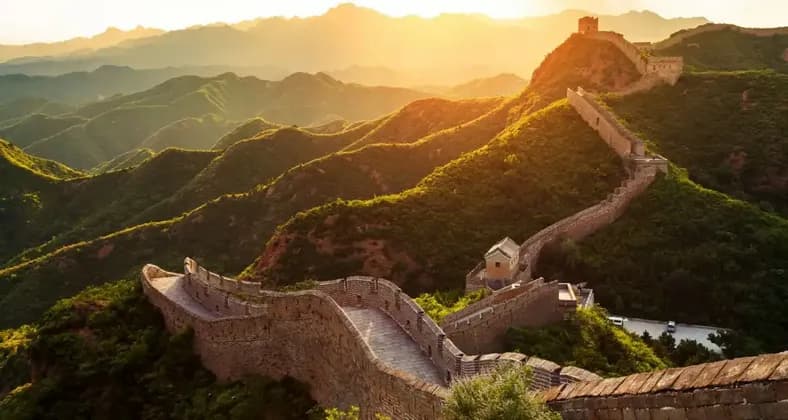
We head to Mutianyu: an hour and a half away, twenty-three restored watchtowers and the wall snaking along the ridge through the woods as far as the eye can see.
We take the cable car up so we don’t burn our legs out early, then walk the paths with the wind in our hair.
Anyone who wants can slide back down on the toboggan run: exactly as fun as it sounds!
This is our WOW experience, and honestly, there was no other choice.

The Temple of Heaven is best early: it’s the city at its absolute best, and it doesn’t cost a thing!
At dawn the park around the Temple of Heaven comes alive with locals practicing tai chi, dancing, singing opera and playing badminton.
Next up, the Summer Palace, the imperial residence on Kunming Lake, with its long painted corridor and the marble boat the empress had built using the navy’s budget.
For dinner, Peking duck, carved right at the table into eighty-six thin slices, ready to be rolled into a crepe with cucumber and sauce.

A slow breakfast, then off to the station: we hop on a first-class high-speed train.
1,200 kilometers in just four and a half hours, with the digital speedometer in the carriage hitting over 300 km/h!
Outside rolls the real China, the one you won't find in the brochures: cultivated plains, cities of two million people you’ve never heard of, power plants and skyscrapers going up everywhere.
We reach Xi'an in the afternoon for three nights. First stroll inside the city walls, still fully intact: all 14 kilometers of the Ming dynasty ramparts.

Back in 1974, a farmer digging a well stumbled upon a terracotta head. And beneath it? A whole army!
The Terracotta Army was built for the first Emperor of China to accompany him into the afterlife: eight thousand life-sized soldiers, with horses and chariots, standing in battle formation for 2,200 years.
The mind-blowing part: they all have unique faces, with different features, hairstyles and expressions, and were originally painted in vivid colors.
We explore the three pits and the museum: a full half-day lets us soak it all in without rushing.

The walls of Xi'an are wide enough to cycle along. Yes, really!
We rent bikes for the 14km loop of the city walls, old city tucked inside and new city sprawling outside, stopping at the corner towers.
In the afternoon, the Muslim Quarter, home to the Hui community for 1,300 years since they arrived via the Silk Road.
The Great Mosque is built just like a Chinese temple, with courtyards and curved roofs.
The market street is a river of lamb skewers, roujiamo and hand-pulled noodles.
Second train of the trip: six hours in first class heading east. This time we’re not just changing cities, but eras.
Shanghai is the China that looks ahead: twenty-six million people and the Pudong skyline, just countryside back in 1990 and now home to three of the tallest skyscrapers in the world.
We set up base in the city center for four nights.
On the first evening we head to the Bund to watch the lights come alive across the river: 1930s colonial architecture on one side, the future on the other. Just two hundred meters of river and eighty years of history apart!

We start at the Bund by day, strolling past the banks and hotels the British built when Shanghai was Asia’s richest port.
Then it’s off to Nanjing Road, China’s busiest shopping street: on a Saturday afternoon you’ll finally understand what 1.4 billion people actually looks like.
In the afternoon we hop on the metro and head up the Shanghai Tower: a 56-second elevator ride to the 102nd floor, 560 meters up.
Below, the city looks like a giant printed circuit board. Who’s looking down first?

Today we’re taking it slow.
The Yu Garden is a 16th-century Ming gem wedged between skyscrapers: rocks, koi ponds and zigzagging bridges, built that way because evil spirits were thought to move only in straight lines. Clever, right?
Right next door is the city's oldest tea house.
In the afternoon we hit the French Concession, with its plane trees and 1920s villas, then Tianzifang, a maze of alleyways in old shikumen houses packed with studios, shops and cafes.
Evening is free.
An hour from Shanghai lies a 1,600-year-old water village that feels like a different world.
Zhujiajiao has canals instead of streets, 36 stone bridges and houses perched right on the water, with steps leading straight down.
We explore on foot and by rowing boat, and wander through the Kezhi Garden.
At the canal-side stalls we grab some braised pork in lotus leaves.
Back in the afternoon, then our final dinner together at a spot for xiaolongbao, those legendary soup dumplings you eat with a straw!

One last breakfast and then off to Pudong for the flight.
Twelve days, three cities, two high-speed trains and zero nights in transit.
The Forbidden City and the Great Wall, 8,000 terracotta soldiers, a 560-meter skyscraper, a Ming garden and a water village: China in three bases, without packing your suitcase every single night. Zài jiàn, see you later!

11 nights in 4-star hotels in Beijing, Xi'an, and Shanghai

All breakfasts

Welcome dinner on day 1, Peking duck dinner on day 4, and group dinner on day 11

Two first-class high-speed trains: Beijing–Xi'an and Xi'an–Shanghai

Private transfers to and from the stations
 Medical and baggage insurance - (coverage limits by destination country/region - €10,000 Italy, €20,000 Europe, €30,000 World, €50,000 USA/Canada)
Please see below extra optional activities that you can experience during your trip. Your Group Leader will be happy to assist with organizing these activities for the group. Availability may vary depending on location and group preferences.
Please note these activities are provided by third party suppliers and liability rests exclusively with these third party suppliers.
Great Wall Toboggan Ride - approx. USD15
N/A

Two first-class high-speed train journeys and private transport with a driver in every city. No internal flights.

You'll need a passport with at least 6 months of remaining validity. Entry requirements for China can change frequently, so make sure to double-check the latest rules for Italian travelers when you book.

Physical rating: Low-to-medium. You'll be doing quite a bit of walking at the sites, and the Mutianyu section of the Great Wall has some steep stairs, but don't worry—you'll head up by cable car.

We’ll meet up on day 1 in Beijing. The trip wraps up on day 12 in Shanghai, at Pudong Airport.

There are no departures between October 1st and 7th: it’s China’s national holiday week, meaning hotels are fully booked and rates double.

Why WeRoad
Small groups, on average 11 people
Move or change your trip for free up to 31 days before departure
Book with $ 0. Pay the $ 100 deposit only once the trip is confirmed
Find your flight
For this trip, we recommend arriving and departing from these airports.


