Group trips to Crete
Gorges to hike, pink sand beaches, Venetian harbors, Minoan ruins, and food you'll keep coming back for: Crete is Greece's largest island, with enough stories for more than one trip. Join fellow travelers for trekking, the sea, and dinners that last all night.

Book with confidence
Book with $ 0
Lock in your spot and only pay once it's confirmed
Free changes
Switch dates or destination within 31 days, at no extra cost
Maximum Flexibility
With Flexible Cancellation, cancel up to 8 days before
Pay in installments
Spread the cost over time, interest-free
Which part of Crete should you choose?

Chania and the Northwest
Chania is the most scenic city on the island, featuring its Venetian harbor and lighthouse, the narrow streets of the old town, and evenings spent at the waterfront bars. It’s the perfect base for a trip that mixes city vibes and nature, with Balos and Falassarna just a day trip away.

The Southwest and the gorges

Rethymno, Preveli, and the south
Rethymno is a charming little town, complete with a Venetian harbor and a fortress overlooking the sea. Head further south and you'll find Preveli beach, with its palm trees and river, and Matala, a former hippie hideout with caves carved right into the rock. It’s the perfect spot for a trip blending sea and history.

Heraklion and the East
Heraklion is your gateway to Knossos, the Minoan palace that happens to be the island's most visited archaeological site. Head east, and you'll find Agios Nikolaos and the Elounda lagoon, the perfect jumping-off point for the fortress island of Spinalonga. It's the ideal spot for a trip mixing ancient myths and peaceful bays.
When to visit Crete
The sweet spots are April, May, June, September, and October: the weather is perfect for exploring and hitting the sites, plus the sea is already warm enough for a dip from late May.
July and August are the hottest months (we're talking over 30°C / 86°F) and definitely the busiest on the coast. In winter, the island stays mild but gets a bit cooler, and keep in mind that the main gorges are closed.
What to see in Crete
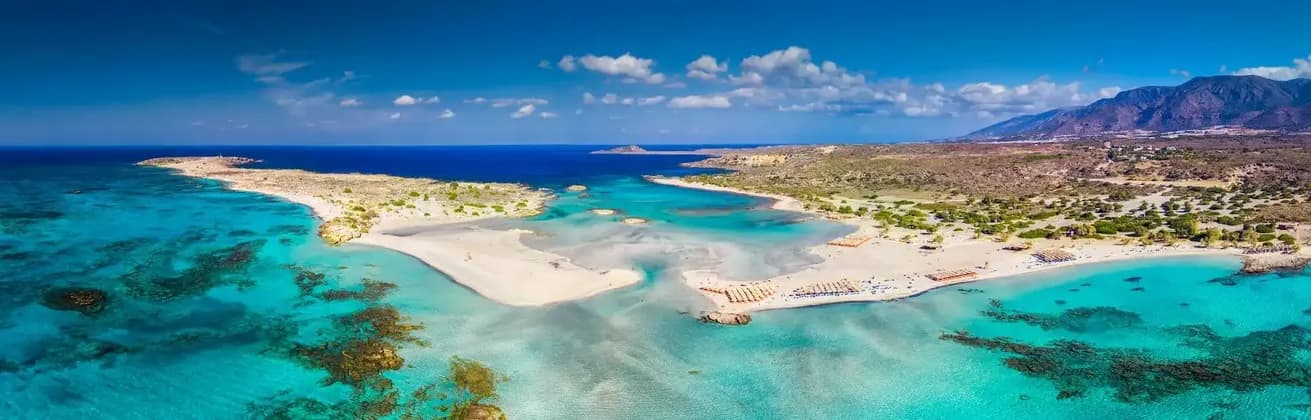
Crete packs mountains, sea, and ancient civilizations all within arm's reach: the Knossos palace, the Samaria Gorge, the beaches of Elafonisi and Balos, and the Venetian ports of Chania and Rethymno.
And that’s not all—there’s the fortress of Spinalonga, mountain villages on the plateau, and authentic Cretan cuisine: dakos, fresh cheese, and that raki that magically appears at the end of your meal without anyone ever ordering it.
To make sense of Knossos, it's worth a stop at the Heraklion Archaeological Museum, home to the original Minoan frescoes and the Phaistos Disc. On the Lasithi Plateau you can go inside the Psychro Cave, which myth names as the birthplace of Zeus, while Arkadi Monastery, near Rethymno, is the symbol of Cretan resistance against the Ottomans. In the south, the palace of Phaistos looks out over the Messara plain, one of the most fertile areas of the island.
From the WeRoad blog


Crete is the largest of the Greek islands, about 260 km long: Chania to Heraklion is roughly two hours by road, and crossing from north to south means going over mountains that stay snow-capped in winter. That's why a well-planned itinerary picks one base per area and heads out from there, mixing sea, archaeological sites and hiking trails.
The island was the heart of the Minoan civilization, then Venetian and Ottoman, and you can see those layers everywhere, from the fortresses to the minarets still standing in the old towns. In the villages the Cretan lyra is still played, and the word you'll hear most often is filoxenia, hospitality towards anyone arriving from elsewhere. In the wineries inland from Heraklion you can taste wines made from native grapes such as vidiano and liatiko.
Cretan cuisine starts with olive oil and wild greens, known as horta, and takes in kalitsounia, small cheese-filled pastries, and staka, a rich cream made from goat's butter, all the way to chochlioi, snails cooked with rosemary and vinegar. In summer the meltemi wind cools the north coast but can make the sea rough. An organized trip makes getting around easier on an island where distances look short on the map and feel long behind the wheel.
FAQs

How does WeRoad work?
Choose your trip based on departure dates, destinations, and travel mood and... book it! Once you get the email confirming your trip, book your round-trip flights to and from the destination – they aren't included in the package, we love flexibility! 15 days before departure, your Group Leader will set up a WhatsApp group so you can start getting to know your future travel buddies. You're all set: enjoy your WeRoad trip! You'll share incredible experiences, discover local culture, and live every minute to the max. (Want to know more? Read about How it works.)

Are there any age limits?
Yes. Our trips are organized by age group, so you travel with people at a similar stage of life, and there are mixed-age groups too. Finding the perfect WeRoad for you will be a breeze!

Is the flight included?
Flights are not included—we love flexibility! You choose your departure airport, airline, and layovers, and you can even add a few extra days on the island. Need a hand? Check our flight booking support.

What’s the best time to visit Crete?
April, May, June, September, and October are your best bet: pleasant weather, warm sea from late May, and fewer crowds. July and August are the hottest and busiest.

Wondering how much a week in Crete will set you back?
It depends on when you travel and the itinerary: high season is pricier, while spring and fall are lighter on the wallet. Your price always includes your Travel Coordinator, accommodation, and group activities. For up-to-date pricing, check the trip page.

Where exactly is Crete?
Crete is the largest Greek island, located in the eastern Mediterranean, south of the Aegean Sea. From the US, you'll usually fly into Athens and then catch a short domestic flight to Heraklion or Chania, or hop on a ferry.

What's the most beautiful area in Crete?
There’s no one-size-fits-all answer—it really depends on what you’re after. Head northwest for Chania and beaches, southwest for gorges and trekking, the center for Rethymno and the south, or the east for Knossos and Spinalonga.
What to do in Crete on a group trip?
Hike through a gorge, swim at Elafonisi or Balos, visit Knossos, stroll through Venetian ports, take a boat to Spinalonga, and savor the local cuisine.

Do you need a passport for Crete?
Yes. Crete is part of Greece, so US citizens need a valid passport to enter. Entry rules depend on your nationality, so definitely check the requirements before you book.