Group trips to the Galapagos
Join fellow travelers for snorkeling, volcanic hikes, and up-close wildlife: in the Galapagos, the animals don't run away—we're the guests.

Book with confidence
Book with $ 0
Lock in your spot and only pay once it's confirmed
Free changes
Switch dates or destination within 31 days, at no extra cost
Maximum Flexibility
With Flexible Cancellation, cancel up to 8 days before
Pay in installments
Spread the cost over time, interest-free
Which Galapagos island should you choose?

Santa Cruz and Puerto Ayora
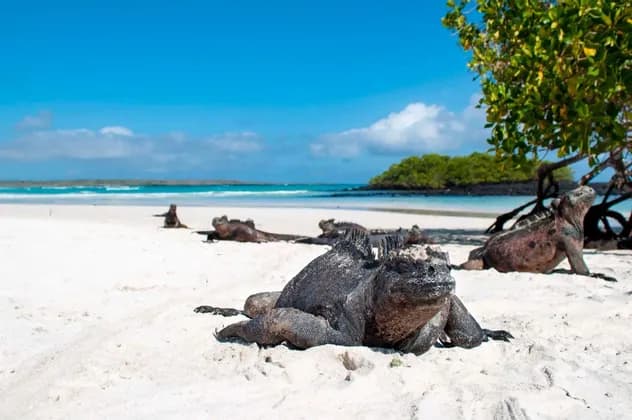
Santa Cruz is the most convenient island to start your adventure. In Puerto Ayora, you'll find the Charles Darwin Research Station, where you can get to know giant tortoises and learn about conservation projects. Head up to the highlands to see tortoises roaming free, and make sure to walk to Tortuga Bay—a stunning white beach where you can spot marine iguanas.

San Cristóbal
San Cristóbal is the island of sea lions: in Puerto Baquerizo Moreno, they share the promenade with us, and you can go snorkeling just minutes from the center. It’s the perfect base for a trip between wildlife and the sea, with beaches and viewpoints nearby.

Isabela
Isabela is the largest of the Galapagos Islands and definitely the most volcanic. Its shape even looks like a seahorse! Get ready to hike volcanoes like Sierra Negra. At Los Túneles, you can snorkel through lava tunnels and spot seahorses, while Galapagos penguins hang out along the coast. It’s the perfect spot for a nature and volcanic trekking adventure.

Smaller islands and day trips
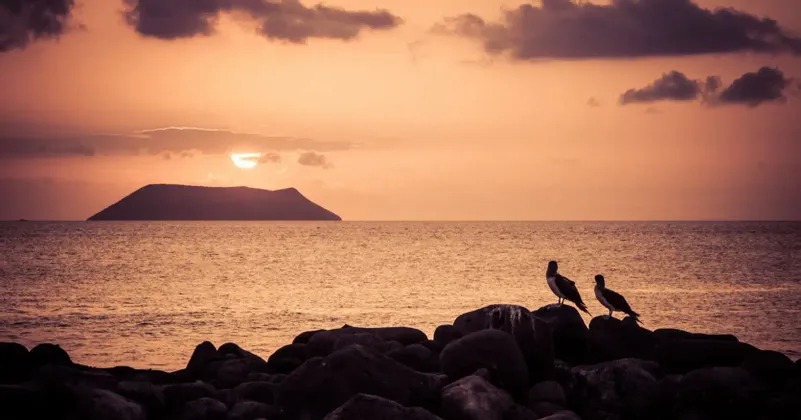
From Santa Cruz, you’ll head out on trips to Bartolomé, with its iconic Pinnacle Rock and panoramic views of the volcanic coast, and to North Seymour, home to blue-footed boobies and frigatebirds. It’s the perfect recipe for a trip filled with wildlife and lunar landscapes, one boat excursion at a time.
When to visit the Galapagos
You can visit the Galapagos year-round, and the wildlife is always putting on a show.
From December to May, things heat up: warmer air, warmer water, and calmer seas. It’s the sweet spot for snorkeling, even with a bit of rain.
From June to November, the climate is cooler and drier. The water is colder but teeming with marine life, and the sky is often covered in a light mist.
What to see in the Galápagos
In the Galapagos, nature is the main attraction: you'll find giant tortoises in Santa Cruz, sea lions in San Cristóbal, marine iguanas and penguins in Isabela, and blue-footed boobies in North Seymour. And that’s not all—there’s the Charles Darwin Station, the lava tunnels at Los Túneles, and white sand beaches like Tortuga Bay. It’s no wonder the archipelago has been a UNESCO World Heritage site since 1978.
In the Santa Cruz highlands you'll also find Los Gemelos, two huge sunken craters in the middle of the scalesia forest, and the lava tunnels of the El Chato reserve. On Isabela you can snorkel in Concha de Perla bay, spot flamingos in the lagoons near Puerto Villamil and walk out to the Wall of Tears, built by inmates of the penal colony that operated on the island until 1959. On San Cristóbal, the Interpretation Centre tells the natural and human history of the archipelago.
From the WeRoad blog


The Galápagos lie about 1,000 km off the coast of Ecuador and you fly in from Quito or Guayaquil, landing on Baltra or San Cristóbal. On arrival you pay the National Park entry fee, which is US$200 for foreign adults, on top of the transit control card bought at the airport in mainland Ecuador, and your luggage goes through a biosecurity check: fruit, seeds, and fresh food stay behind. Between the inhabited islands you travel by speedboat, around two hours at sea that you'll certainly feel when the water is choppy.
Here the rules are part of the trip: you stay at least two meters from the animals, no flash, and many areas can only be visited with an official park naturalist guide. That's partly why the animals don't run away, and why the archipelago has been one of the most studied natural laboratories in the world since Charles Darwin arrived in 1835. In the water, snorkeling at Kicker Rock, off San Cristóbal, and in Las Grietas on Santa Cruz is worth the flight on its own.
Food is all about fish and Ecuadorian cooking: ceviche, encocado, fish cooked in coconut milk, and, in season, local lobster. To round things off, a coffee grown in the San Cristóbal highlands. An organized trip takes care of permits, guides, and crossings, which are the trickiest part to piece together here.
FAQs

How does WeRoad work?
Choose your trip based on departure dates, destinations, and travel mood and... book it! Once you get the email confirming your trip, book your round-trip flights to and from the destination – nope, they aren't included in the package, we love flexibility! 15 days before departure, your Travel Coordinator will set up a WhatsApp group so you can start getting to know your future travel buddies. You're all set: enjoy your WeRoad trip! You’ll share incredible experiences, discover local culture, and live every minute to the max – you’ll probably shed a tear when it’s time to say goodbye, but that’s totally normal! (Want to know more? Read about How it works here!)

Are there any age limits?
Yes, we do have age limits. We organize groups by age group, so you always travel with people at a similar stage of life. Finding the perfect WeRoad for you will be a breeze!

Is the flight included?
Flights are not included—we love flexibility! This gives you total freedom to choose your departure airport, airline, number of layovers, and even extend your trip with a few extra days at the destination if you feel like it. Of course, we’re here to help you choose (click here for flight booking support), plus we’ve got plenty of discounts you can use with some major airlines.

When’s the best time to head to the Galapagos?
The Galapagos are a year-round destination. From December to May, you’ll find warmer water and calmer seas, while from June to November, the climate is cooler and drier.

How much does a week-long trip to the Galapagos run you?
The price varies depending on your travel dates and the type of itinerary. For the Galapagos, keep in mind there are extra costs, like the National Park entrance fee, which are paid on-site. Your price always includes your Travel Coordinator, accommodation, and group activities. Check the specific itinerary page for the most up-to-date pricing.

Where exactly are the Galápagos?
The Galapagos are an Ecuadorian archipelago in the Pacific Ocean, located about 1,000 kilometers off the coast. From the US, you'll fly into Quito or Guayaquil first, then catch a connecting flight of about 2 hours to reach the islands.

Which Galapagos island takes the crown as the most beautiful?
There’s no single answer—it really depends on what you’re looking for. Santa Cruz is all about giant tortoises and research centers, San Cristóbal is the place for sea lions, and Isabela is where you’ll find volcanoes and penguins.
What to get up to in the Galapagos on a group trip?
Snorkel with sea lions and turtles, hike volcanic trails, visit the Charles Darwin Research Station, spot blue-footed boobies, and take boat trips between the islands.

Do I need a passport for the Galapagos?
Yes: Ecuador requires a passport, and it must be valid for at least 6 months from your arrival date. Plus, keep in mind there's an entrance fee for the Galapagos National Park.