In a nutshell
- Chicago combines major landmarks and easy logistics: downtown attractions, the lakefront, and public transit make it simple to build an itinerary that includes architecture, museums, food, and nightlife without wasting too much time moving around.
- The city’s most rewarding highlights include the architecture river cruise, Millennium Park, the Riverwalk, and a skyline observation deck: these experiences offer a strong introduction to Chicago’s identity, history, and urban design.
- Free attractions are a real strength, not an afterthought: the Chicago Cultural Center, Lincoln Park Zoo, Lakefront Trail, Buckingham Fountain, and public art installations allow visitors to explore a lot of the city without adding constant ticket costs.
- Two or three days are ideal for a balanced visit: one day covers the essentials, two days add museums and music, and three days make room for neighborhoods such as West Loop or Wicker Park, plus a more relaxed pace.
- Live blues and local food complete the experience: beyond the skyline and museums, Chicago is best understood through evening music venues, deep-dish pizza, hot dogs, Italian beef, and the atmosphere of its streets after dark.
Chicago is one of those cities that makes a strong first impression and then keeps showing off. One minute you’re staring up at historic skyscrapers, the next you’re listening to live blues, eating a deep-dish pizza that feels more like a life choice, and wandering through lakefront parks that cost absolutely nothing to enjoy.
If you’re planning a visit and want a guide that balances iconic landmarks with local flavor, this city delivers in a big way. From the Chicago River to neighborhood music venues, there’s plenty to fill one day, a weekend, or a longer stay without turning your itinerary into a military operation.
Why Chicago is worth more than a quick stop
Chicago stands out for its combination of world-class architecture, excellent museums, live music, and accessible public spaces. Many of its major highlights are concentrated around downtown and the lakefront, making it easier to explore efficiently while still leaving room for neighborhood discoveries, food stops, and spontaneous detours.
The city is large, yes, but it’s also surprisingly manageable for visitors. You can walk a lot of the central sights, use the CTA when needed, and mix paid attractions with excellent free experiences. That means your trip can be as packed or as relaxed as you want.
And unlike some cities that ask you to choose between culture and fun, Chicago politely says: why not both? You can admire a masterpiece at the Art Institute of Chicago, then end the night in a blues club with a drink in hand and absolutely no intention of going to bed early.
The must-see Chicago attractions
For a first visit, focus on the city’s signature landmarks and experiences. These include the architecture cruise, Millennium Park, the riverfront, major museums, and at least one skyline viewpoint. Together, they provide a strong introduction to Chicago’s history, design, and energy without forcing you to rush from one side of the city to the other.
Take an architecture river cruise
An architecture cruise is often the best first activity in Chicago because it explains the city while showing it. You’ll see landmark buildings from the water, understand how the skyline developed, and get a visual overview that makes the rest of your stay easier to navigate.
If you only book one tour, make it this one. Chicago is famous for modern architecture and early skyscraper innovation, and the view from the river is hard to beat. It’s informative without being dry, scenic without trying too hard, and ideal for first-time visitors.
See Millennium Park and Cloud Gate
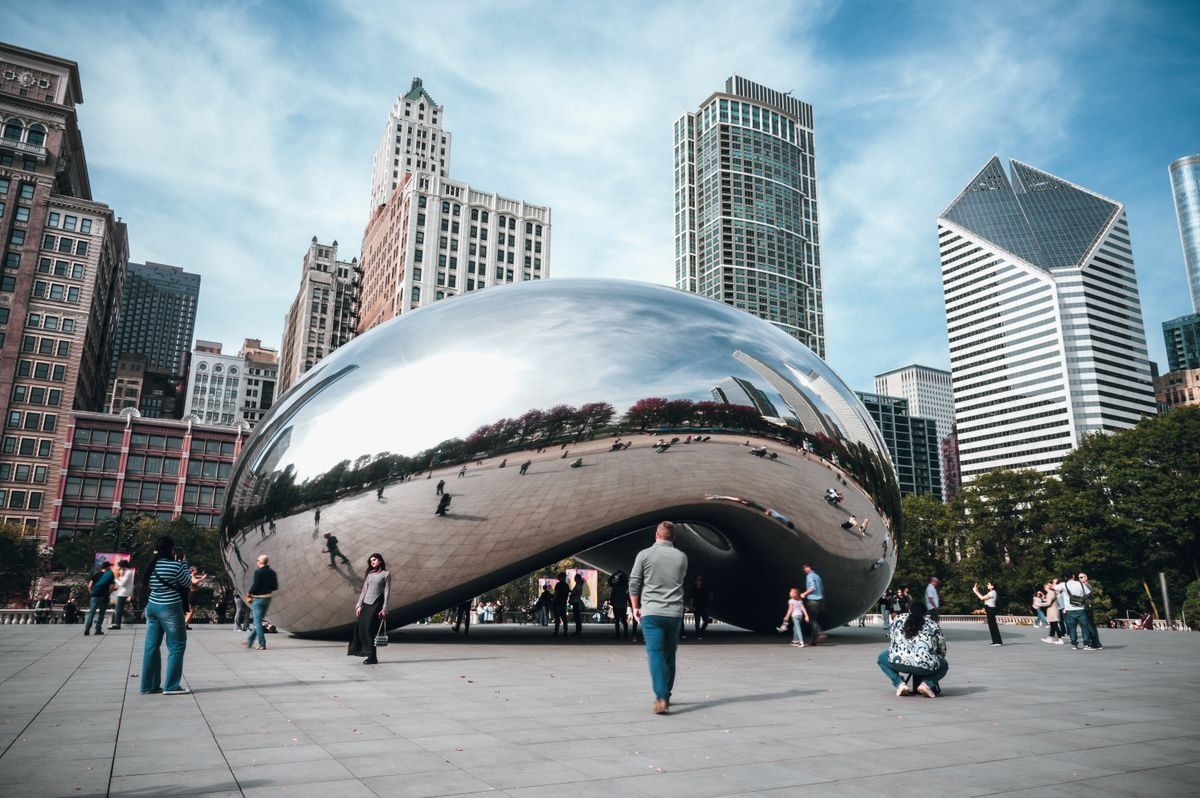
Millennium Park is one of the city’s most recognizable public spaces and an easy stop in any itinerary. It combines art, architecture, and open space in a central location. Cloud Gate, better known as The Bean, remains one of the most photographed spots in the city for good reason.
Go early if you want fewer crowds. While you’re there, walk over to Crown Fountain and the Jay Pritzker Pavilion. This area is free, lively, and close to other downtown highlights, so it works well as a starting point.
Walk the Chicago Riverwalk
The Riverwalk offers one of the most pleasant urban walks in the city. It follows the Chicago River through downtown and connects river views with cafes, public seating, and easy access to nearby neighborhoods and bridges. It is especially enjoyable in warmer months and around sunset.
This is where Chicago feels polished but still relaxed. Grab a coffee, sit for a while, or simply walk the full stretch and watch boats glide by while the skyline does its usual “look at me” routine.
Choose your view: Skydeck or 360 Chicago
Both observation decks deliver panoramic city views, but they offer slightly different experiences. Skydeck Chicago at Willis Tower is known for The Ledge, while 360 Chicago provides strong lake views from the former John Hancock Center area.
| Observation deck | Best for | Main highlight | Location feel |
|---|---|---|---|
| Skydeck Chicago | Classic first-time visit | The Ledge glass boxes | Loop / central downtown |
| 360 Chicago | Lake and skyline views | Views over Lake Michigan | Near Magnificent Mile |
If you hate heights, this may be your moment to discover hidden courage. Or at least hidden sweating.
Free attractions in Chicago that are genuinely worth it
Chicago has several free experiences that feel substantial rather than secondary. Parks, cultural buildings, public art, neighborhood walks, and the lakefront offer a strong sense of place without requiring a ticket. These stops are useful for budget travelers and for anyone who wants to balance museum time with open-air exploration.
Chicago Cultural Center
The Chicago Cultural Center is one of the city’s best free indoor attractions. Known for its stunning interiors and impressive Tiffany dome, it also hosts exhibitions and events throughout the year. It is centrally located and easy to combine with Millennium Park and the Loop.
This is the kind of place people walk into “for ten minutes” and leave much later, slightly humbled by the ceiling.
Lincoln Park Zoo
Lincoln Park Zoo is one of the few major zoos in the United States with free admission. It’s a good option for families, casual sightseeing, or pairing with a walk through Lincoln Park and the nearby lakefront.
The surrounding area is just as appealing as the zoo itself. If the weather is good, spend time in the park, walk toward the waterfront, and enjoy one of the city’s prettiest zones.
The Lakefront Trail and beaches
The Lakefront Trail gives visitors direct access to one of Chicago’s strongest assets: Lake Michigan. The trail stretches for miles and works well for walking, biking, or simply pausing to enjoy the skyline from a different angle.
In warmer months, beaches like Oak Street Beach and spots near the Museum Campus add a summery side to the city. Yes, Chicago really does have beaches. No, your brain may not immediately accept that.
Public art and downtown landmarks
Downtown Chicago is full of public art, historic facades, and walkable landmarks. The Wrigley Building, the Chicago Theatre sign, and stretches of Michigan Avenue are all easy to see without spending anything.
- Cloud Gate in Millennium Park
- Crown Fountain and surrounding plaza
- Chicago Theatre exterior
- Wrigley Building and river bridges
- Buckingham Fountain in Grant Park
Chicago blues, nightlife and food
Chicago’s identity is closely tied to live music and comfort food. Blues clubs, neighborhood bars, and classic local dishes help visitors experience the city beyond monuments and museums. Even a short trip should leave room for one live performance and one unapologetically heavy meal.
Where to hear live blues
Chicago remains one of the best places in the country to hear blues in a meaningful setting. Historic venues and smaller clubs keep the genre connected to the city’s cultural history, especially in the evening when the atmosphere shifts from sightseeing to sound.
Buddy Guy’s Legends is one of the best-known options, but it’s not the only one. Check local listings during your stay, because live music calendars change often and that perfect show may be waiting for you two blocks away.
Try the food Chicago is known for
Chicago’s classic dishes are part of the travel experience. Deep-dish pizza gets most of the attention, but it’s only one part of a broader food scene that includes hot dogs, Italian beef, steakhouses, and neighborhood restaurants across the city.
- Try a deep-dish pizza at least once
- Order a Chicago-style hot dog
- Look for an Italian beef sandwich if you want something more local and less obvious
- Balance the heavy classics with a meal in a neighborhood restaurant
One practical note: deep-dish is delicious, but it is not a quick snack. It arrives with the energy of a full commitment.
How to spend 1, 2 or 3 days in Chicago
The city can be enjoyed in one day, but two or three days allow for a more complete visit. Prioritizing downtown, the river, and a few signature cultural stops works best on short stays. Additional days make it easier to add museums, neighborhoods, music venues, and slower lakefront time.
One day in Chicago
With one day, focus on the central icons and keep travel time minimal. You can still see major highlights if you stay around the Loop, the river, and nearby lakefront areas.
- Start with Millennium Park and The Bean
- Walk to the Chicago Cultural Center
- Take an architecture river cruise
- Stroll the Riverwalk
- End with a skyline view from Skydeck or 360 Chicago
Is 2 days enough?
Two days are enough to enjoy Chicago’s essentials at a satisfying pace. You can combine landmarks with a museum, a lakefront walk, and an evening activity, giving you a more rounded impression of the city than a rushed day trip would allow.
A good two-day plan might look like this:
- Day 1: Millennium Park, architecture cruise, Riverwalk, observation deck
- Day 2: Art Institute or Museum Campus, Lincoln Park or Magnificent Mile, blues club at night
What to do for 3 days in the city
Three days give you enough time to see the classics and add personality to your trip. This is the ideal length for balancing top attractions with neighborhood exploration, food, and music without feeling like you are speed-running an urban vacation.
- Day 1: Loop highlights, Riverwalk, architecture cruise
- Day 2: Art Institute, Museum Campus or Lincoln Park, lakefront sunset
- Day 3: Wicker Park, West Loop, Chinatown or another neighborhood, plus live blues
Practical tips for visiting Chicago
Chicago is easiest to enjoy when you group attractions by area and leave room for weather changes. The downtown core is highly walkable, but public transportation helps when moving between neighborhoods. Booking key attractions in advance can save time, especially in peak season.
- Use the CTA for affordable transport from airports and around the city
- Book popular attractions like observation decks and cruises ahead of time
- Wear comfortable shoes because the city is best explored on foot
- Check the weather closely, especially near the lake
- Leave one evening open for live music rather than overplanning every hour
A city that rewards curiosity
Chicago works beautifully whether you want a classic first-timer itinerary or a more layered city break. Its architecture, free attractions, food scene, and music culture make it easy to shape a trip around your own pace and interests, while still feeling like you’ve seen something truly distinctive.
Come for the skyline, stay for the blues, and accept that you may leave with strong opinions about pizza. If you want to experience the city with like-minded travelers, take a look at WeRoad group trips and discover Chicago as part of a shared adventure.
FAQ
- What is the number one tourist attraction in Chicago?
-
Many visitors consider the Chicago Architecture River Cruise the top attraction because it combines skyline views, local history, and an understanding of the city’s design in one experience. Millennium Park and The Bean are also among the most iconic sights.
- Is two days in Chicago enough for a first trip?
-
Yes, two days are enough to see the main highlights. You can cover downtown landmarks, take an architecture cruise, visit one major museum, enjoy the lakefront, and still have time for a blues club or a classic Chicago meal.
- What are the best free things to do in Chicago?
-
Top free experiences include Millennium Park, the Chicago Cultural Center, Lincoln Park Zoo, the Riverwalk, the Lakefront Trail, and public landmarks like Buckingham Fountain and the Chicago Theatre sign.
- What should I do in Chicago if I only have one day?
-
Focus on the Loop and nearby areas. A smart one-day plan includes Millennium Park, the Chicago Cultural Center, an architecture cruise, a Riverwalk stroll, and one observation deck for city views before dinner.
- When is the best time to visit Chicago?
-
Late spring through early fall is generally the best period for weather, river cruises, lakefront walks, and outdoor events. Summer is the liveliest season, while spring and early autumn can be more comfortable for sightseeing.