Group tours to the Azores
Join fellow travelers for crater lakes, thermal pools, and whale watching: the Azores are Europe's wild Atlantic playground.

Book with confidence
Book with $ 0
Lock in your spot and only pay once it's confirmed
Free changes
Switch dates or destination within 31 days, at no extra cost
Maximum Flexibility
With Flexible Cancellation, cancel up to 8 days before
Pay in installments
Spread the cost over time, interest-free
Which Azores island should you pick?

São Miguel
São Miguel is the largest island and the best place to start: it packs the most variety into a few days. Think Sete Cidades with its twin crater lakes, Furnas with its thermal pools and geothermal fields, and the tea plantations of Gorreana. It’s the perfect pick for a trip mixing volcanic landscapes and hot-spring dips.

Pico
Pico is the island for hikers and wine lovers. The climb to Mount Pico, the highest peak in the Azores at 2,351 m (7,713 ft), takes 4 to 6 hours, while the walled vineyards are UNESCO-listed. Whale-watching boats leave from here too. It’s the perfect spot for a trip of big climbs and bigger views.

Faial and Terceira
On Faial, you’ll find the sailors’ port of Horta and the Capelinhos volcano, site of the last eruption in the Azores. Terceira is home to Angra do Heroísmo, a UNESCO World Heritage town, and to Algar do Carvão, a volcanic chimney you can descend up to 100 m (330 ft). Perfect for a trip that blends volcanoes and local culture.

São Jorge and Flores
São Jorge is a long, narrow island made for hiking, with fajãs (low coastal plains) tucked beneath steep cliffs. Flores, in the far west, is all azalea plateaus, waterfalls and the basalt columns of Rocha dos Bordões. These are the wild corners for those who want nature at its rawest.
When’s the best time to visit the Azores?
The sweet spot is from May to October, when days are longer and it's easier to plan trails and boat trips.
In June, hydrangeas are in bloom, while July to mid-August is usually the driest stretch, with temperatures around 25°C (77°F).
The islands stay lush and green all year, which also means rain can show up at any time: pack a light waterproof jacket.
What to see in the Azores
In the Azores, nature does the talking: the twin lakes of Sete Cidades, the thermal pools of Furnas, Mount Pico, the Capelinhos volcano, and whales cruising offshore.
And then there’s the table: cozido das Furnas, cheese from São Jorge, and wine from Pico.
On Pico you can head into the Gruta das Torres, the longest lava tube in Portugal, and on Faial you walk along the rim of the Caldeira, a crater about two kilometers wide and 400 meters deep. On São Jorge, the Fajã da Caldeira de Santo Cristo can only be reached on foot or by motorcycle and is known for the clams from its lagoon, while on São Miguel, Caldeira Velha has a waterfall of warm water surrounded by ferns. In Ponta Delgada, the Portas da Cidade open onto the historic center, built in black and white stone.
From the WeRoad blog


The Azores are nine islands in three groups: the eastern group with São Miguel and Santa Maria, the central group with Terceira, Pico, Faial, São Jorge and Graciosa, and the western group with Flores and Corvo. Inter-island flights of 20-40 minutes link one group to the next, while in the central group ferries connect Pico, Faial and São Jorge in a short hop, which is why itineraries pick just a few islands and explore them at an easy pace. Santa Maria, the southernmost island, has pale sandy beaches and the driest climate in the archipelago.
The islands were uninhabited until the Portuguese arrived in the 15th century, and for centuries they were a port of call for ships sailing between Europe and the Americas. On São Miguel, the greenhouses around Ponta Delgada still grow the Azorean pineapple, and in Horta harbor sailors crossing the Atlantic leave a painting on the quay.
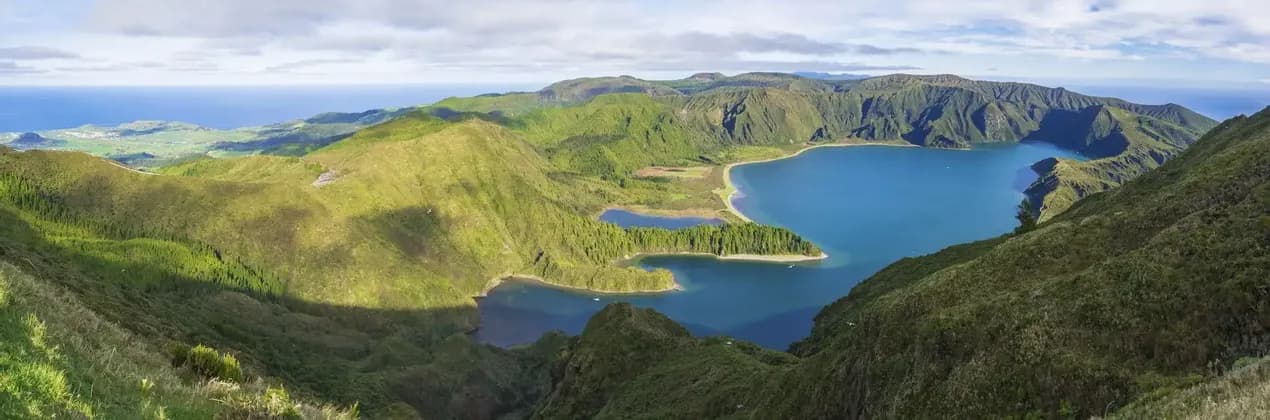
Beyond hiking, the islands are made for canyoning through waterfalls and gorges, swimming in natural lava-rock pools and surfing off São Miguel's black-sand beaches. At Lagoa do Fogo, in the middle of São Miguel, a trail leads down from the viewpoint to the lakeshore. An organized trip fits flights, ferries and excursions together without wasting time.
FAQs

How does WeRoad work?
Choose your trip based on departure dates, destinations, and travel mood and... book it! Once you get the email confirming your trip, book your round-trip flights to and from the destination – nope, they aren't included in the package, we love flexibility! 15 days before departure, your Group Leader will set up a WhatsApp group so you can start getting to know your future travel buddies. You're all set: enjoy your WeRoad trip! You’ll share incredible experiences, discover local culture, and live every minute to the max – you’ll probably shed a tear when it’s time to say goodbye, but that’s totally normal! (Want to know more? Read about How it works here!)

Are there any age limits?
Yes, we do have age limits. We organize groups by age group, so you always travel with people at a similar stage of life. Finding the perfect WeRoad for you will be a breeze!

Is the flight included?
Flights are not included—we love flexibility! This gives you total freedom to choose your departure airport, airline, number of layovers, and even extend your trip with a few extra days at the destination if you feel like it. Of course, we’re here to help you choose (click here for flight booking support), plus we’ve got plenty of discounts you can use with some major airlines.

When is the best time to head to the Azores?

How much does a week-long trip to the Azores set you back?
The price varies depending on the dates and the type of itinerary. The price always includes your Travel Coordinator, accommodation, and group activities. Check the specific itinerary page for the most up-to-date pricing.

Where exactly are the Azores?
The Azores are a nine-island Portuguese archipelago in the middle of the Atlantic Ocean, about 1,800 km from mainland Portugal. They’re within easy reach from the US East Coast: just look for flights to Ponta Delgada, on São Miguel, usually with a connection.

Which Azores island is the best?
There’s no single answer—it all depends on what you’re looking for. São Miguel is the best first island, with the widest range of highlights; Pico is for hikers and wine lovers, and Faial and Terceira mix volcanoes and culture.
What to get up to in the Azores on a group trip?
Hike around the crater lakes, soak in the thermal pools of Furnas, go whale watching, taste the local cheese and wine, and drive between viewpoints over volcanic landscapes.

Do I need a passport to visit the Azores?
Yes, the Azores are part of Portugal, so you’ll need a valid passport to enter. Entry requirements can vary by nationality, so make sure to check the rules for your passport before booking.