Group tours to the Lofoten Islands
Join fellow travelers for epic hikes, red fishing cabins, and nights under the open sky: Lofoten is the Arctic North you've always imagined.

Book with confidence
Book with $ 0
Lock in your spot and only pay once it's confirmed
Free changes
Switch dates or destination within 31 days, at no extra cost
Maximum Flexibility
With Flexible Cancellation, cancel up to 8 days before
Pay in installments
Spread the cost over time, interest-free
Which part of the Lofoten Islands are you choosing?

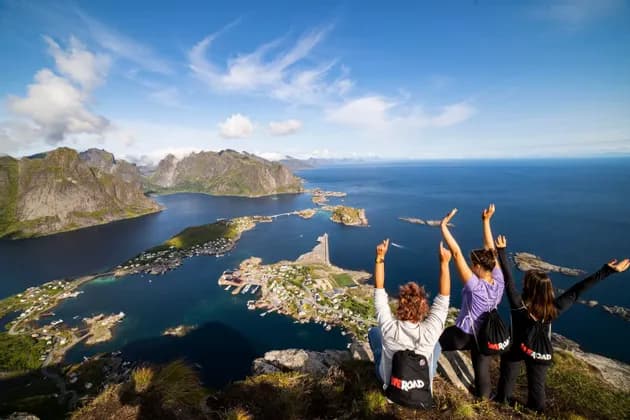
Reine, Hamnøy, and Moskenes
This is the part of the Lofoten that ends up on every postcard: fishing villages nestled at the foot of vertical mountains and the rorbu—those iconic red wooden cabins built right over the water. It’s the perfect spot for a photography and hiking trip, especially with that climb up to the Reinebringen viewpoint.

Henningsvær and Svolvær
Svolvær is the main hub and the perfect base camp for boat trips and hikes. Just a short hop away, you'll find Henningsvær, a fishing village perched on tiny islands—it even has a soccer field overlooking the sea! It’s the perfect spot for a trip that blends village vibes with epic views.

The beaches of Haukland and Uttakleiv
White sand, turquoise water, and mountains in the background, but with northern temperatures. Haukland and Uttakleiv are the spots to hit for a walk on the sand, a break under the midnight sun in summer, or to wait for the aurora in winter. A selection of wild beaches for those seeking some silence.

Nusfjord, Å and Kvalvika
Nusfjord is a well-preserved fishing harbor, while Å is the last village in the chain, home to the cod drying museum. You can reach Kvalvika on foot in a couple of hours—the reward is a hidden beach tucked between the cliffs.
When to visit the Lofoten Islands
It all depends on what you're after. From late May to mid-July, you've got the midnight sun—so yes, you can keep hiking even at night.
July and August are your best bet for the mildest trekking weather.
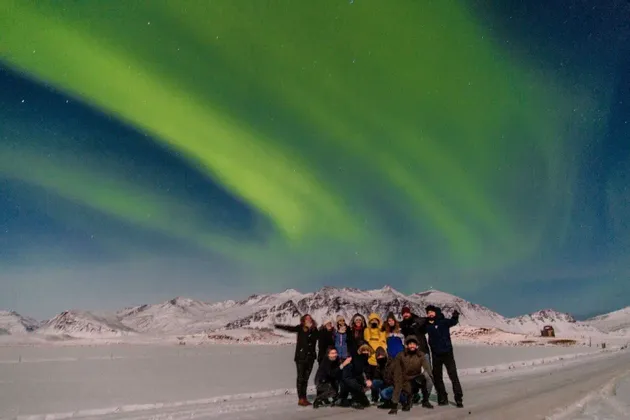
From late September to March, it’s time to hunt for the northern lights. Expect shorter days, but the cold is surprisingly tolerable thanks to the Gulf Stream.
Winter is also the season for cod fishing, which is the secret behind those traditional stockfish.
What to see in the Lofoten Islands
In the Lofoten, every village is a picture-perfect shot: Reine and Hamnøy with their red rorbu, Henningsvær and its soccer field right on the sea, Nusfjord with its historic harbor, and the white beaches of Haukland and Uttakleiv.
And then there are the trails like Reinebringen and Kvalvika, the Gulf Stream keeping winter milder than you’d expect, and the cod hanging out to dry—the true symbol of the archipelago.
Between one village and the next, it's worth stopping at Sakrisøy, with its yellow rorbu, at Ramberg beach and at the red church in Flakstad. In Kabelvåg stands the Lofoten Cathedral, the largest wooden church in northern Norway, and from Svolvær boats head out to the Trollfjord, an arm of the sea barely a hundred meters wide in places, hemmed in by mountains over a thousand meters high. Finally, in Svolvær, the war museum tells the story of the 1941 British raid on the islands.
From the WeRoad blog


The Lofoten islands sit above the Arctic Circle and are linked by bridges and tunnels along the E10, the road that runs the length of the archipelago to the village of Å. You arrive by plane at Svolvær or Leknes, or by ferry from Bodø: the crossing takes about three and a half hours and, in good weather, the approach alone is worth the journey, with granite walls rising straight out of the sea for hundreds of meters.
Before the fishermen came the Vikings: at Borg, the Lofotr museum has reconstructed a Viking chieftain's longhouse, one of the largest ever found. Today the islands are also about the water, with kayaking through the fjords and Arctic surfing at Unstad beach, where you need a thick wetsuit even in summer. Boat trips also head out to look for sea eagles, which nest along the fjords.
Fish comes to the table fresh, from fish soup to the catch of the day, and for a snack there are waffles with brunost, Norway's sweet brown cheese. The weather changes in minutes, so dress in layers, and prices in Norway are high, especially in restaurants. An organized trip ties together ferries, roads and activities, and leaves you more time to look around.
FAQs

How does WeRoad work?
Choose your trip based on departure dates, destinations, and travel mood and... book it! Once you get the email confirming your trip, book your round-trip flights to and from the destination – nope, they aren't included in the package, we love flexibility! 15 days before departure, your Group Leader will set up a WhatsApp group so you can start getting to know your future travel buddies. You're all set: enjoy your WeRoad trip! You’ll share incredible experiences, discover local culture, and live every minute to the max – you’ll probably shed a tear when it’s time to say goodbye, but that’s totally normal! (Want to know more? Read about How it works here!)

Are there any age limits?
Yes, we do have age limits. We organize groups by age group, so you always travel with people at a similar stage of life. Finding the perfect WeRoad for you will be a breeze!

Is the flight included?
Flights are not included—we love flexibility! This gives you total freedom to choose your departure airport, airline, number of layovers, and even extend your trip with a few extra days at the destination if you feel like it. Of course, we’re here to help you choose (click here for flight booking support), plus we’ve got plenty of discounts you can use with some major airlines.

When is the best time to visit the Lofoten Islands?
It all depends on what you’re chasing: from late May to mid-July you’ll get the midnight sun, July and August are the mildest months for trekking, and from late September to March you can catch the northern lights.

How much does a week-long trip to the Lofoten Islands cost?
Costs vary depending on the time of year and the specific itinerary. Norway is a destination with high local prices, so keep that in mind for meals and extras. The price always includes your Travel Coordinator, accommodation, and group activities. Check the specific itinerary page for the most up-to-date pricing.

Where are the Lofoten Islands?
The Lofoten Islands are an archipelago in northern Norway, mostly located above the Arctic Circle in the Norwegian Sea. From the US, you'll need a connecting flight, usually through Oslo.

What’s the most stunning spot in Lofoten?
There’s no one-size-fits-all answer: it depends on what you’re looking for. Reine and Hamnøy are the spots for rorbu and mountains rising straight from the sea, Henningsvær if you’re after that postcard-perfect village vibe, and Haukland and Uttakleiv for the beaches.
What to do in the Lofoten Islands on a group trip?
Hike up to the Reinebringen viewpoint, explore the fjords by boat, walk along the beaches of Haukland and Uttakleiv, taste the local cod, and—if the timing is right—keep your eyes peeled for the Northern Lights.

Do I need a passport to visit the Lofoten Islands?
Yes. Norway isn't part of the EU, but it is part of the Schengen Area, and you need a valid passport to enter. Requirements can vary by nationality, so check the entry rules for your country before booking.