Group tours to the Azores
Join fellow travelers for crater lakes, thermal pools and whale watching: the Azores are Europe's wild Atlantic playground.

Book with confidence
Book with $ 0
Lock in your spot and only pay once it's confirmed
Free changes
Switch dates or destination within 31 days, at no extra cost
Maximum Flexibility
With Flexible Cancellation, cancel up to 8 days before
Pay in installments
Spread the cost over time, interest-free

Group Trips to the Azores
Crater lakes, vineyards and wild cliffs: pick the island that fits your style
São Miguel is the largest island and the best place to start: the twin crater lakes of Sete Cidades, the thermal pools and geothermal fields of Furnas and the Gorreana tea plantations pack the most variety into a few days, with volcanic scenery and hot-spring dips.
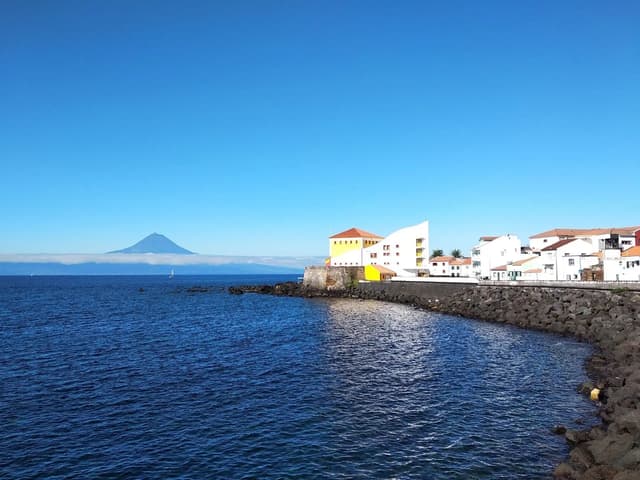
Pico is for hikers and wine lovers, with the 4 to 6 hour climb up Mount Pico (2,351 m / 7,713 ft), UNESCO-listed walled vineyards and whale-watching boats. On Faial you'll find the sailors' port of Horta and the Capelinhos volcano, while Terceira has the UNESCO town of Angra do Heroísmo and Algar do Carvão, a volcanic chimney you can descend up to 100 m (330 ft).
For nature at its rawest, São Jorge is a long, narrow island of hiking trails and fajãs, low coastal plains tucked beneath steep cliffs. Far to the west, Flores has azalea plateaus, waterfalls and the basalt columns of Rocha dos Bordões. Both are wild corners for nature lovers.
From the WeRoad blog


Azores travel guide: tips for your trip
Getting around the nine islands
The Azores are nine islands in three groups: São Miguel and Santa Maria in the east, Terceira, Pico, Faial, São Jorge and Graciosa in the center, Flores and Corvo in the west. Inter-island flights of 20 to 40 minutes link the groups, while short ferry hops connect Pico, Faial and São Jorge, so it pays to choose a few islands and explore them at an easy pace. Santa Maria, the southernmost, has pale sandy beaches and the driest climate.
When to go
The sweet spot runs from May to October, when days are longer and trails and boat trips are easier to plan. Hydrangeas bloom in June, and July to mid-August is usually the driest stretch, at around 25°C (77°F). The islands stay green all year because rain can show up anytime, so pack a light waterproof jacket.
Hidden corners and outdoor adventures
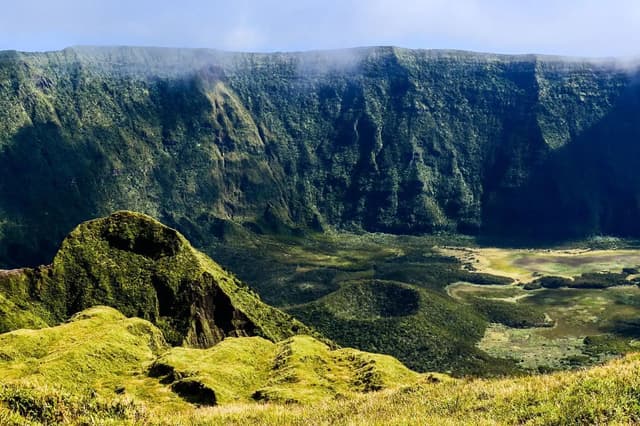
On Pico you can explore the Gruta das Torres, the longest lava tube in Portugal, and on Faial you walk the rim of the Caldeira, a crater about 2 km wide and 400 m deep. On São Jorge, the Fajã da Caldeira de Santo Cristo is reachable only on foot or by motorbike, while on São Miguel you can take the trail down to Lagoa do Fogo and swim under the warm waterfall of Caldeira Velha. Add canyoning, lava-rock pools and surfing off black-sand beaches.
History and Azorean flavors
The islands were uninhabited until the Portuguese arrived in the 15th century, then became a port of call between Europe and the Americas. In Ponta Delgada, the Portas da Cidade open onto a center built in black and white stone, and nearby greenhouses still grow the Azorean pineapple. In Horta harbor, sailors crossing the Atlantic leave a painting on the quay. At the table, try cozido das Furnas, São Jorge cheese and Pico wine.