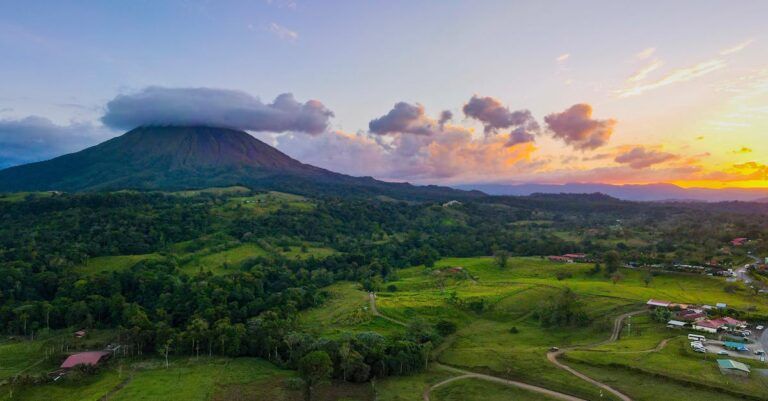
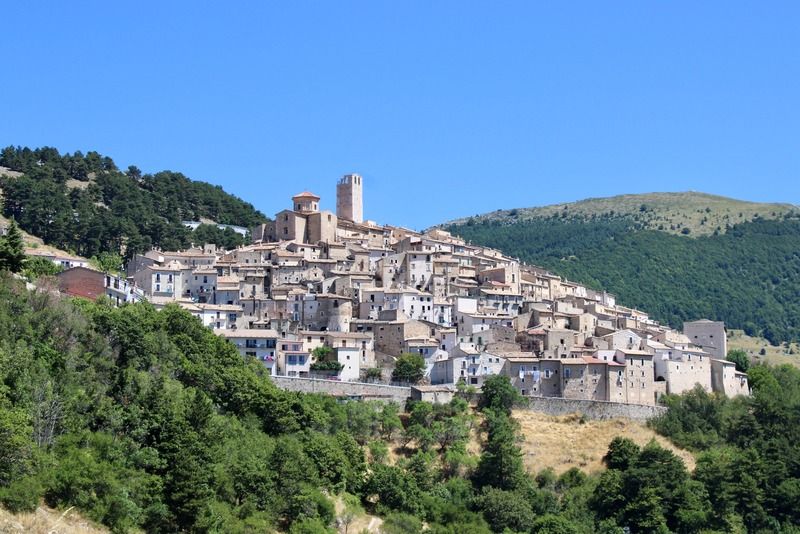
Walking through the ruins of her family’s ancestral village in southern Italy, content creator @marionthemap felt an immediate connection to the place, she says in an Instagram reel about the trip. She could imagine her great-grandfather—who left the small mountain village of Aquilonia to start a new life in America—walking the same roads and looking out at the same picturesque landscape. The experience was made more poignant by the fact that, after he left, the village was destroyed by an earthquake in which his mother lost her life.
“Family history has a way of making travel feel different. It turns a destination into something deeply personal,” she continues “Those who came before you feel less like someone you just read about and more like a piece of you.”
The content creator, who publishes a blog with tips about family travel, including advice on how to plan genealogy vacations, also known as roots travel, is one of countless Americans who are traveling back to Italy to research their family history and discover long-lost ancestors. Research shows that out of roughly three million tourists who took ancestry-inspired trips to Italy in 2024, when Italy’s Ministry of Foreign Affairs ran the Year of Italian Roots Initiative meant to bring people of Italian origin back to their ancestral towns, the vast majority were American.
(Did you know WeRoad offers multi-day organized group trips and customized itineraries to Rome, Florence, Venice, the Amalfi Coast and Sicily? Choose between tours of classic highlights, Tuscan villa vacations and specialty tours—such as taking a photography class while exploring the Dolomites.)
Curiosity, Perseverance and Research
Roots tourism in Italy has seen a surge in popularity in recent years, thanks in part to the widespread use of ancestry-testing services such as AncestryDNA, 23andMe and MyHeritage DNA, which reflect a broader interest in genealogy and reconnecting with the past. At the same time, the rapidly evolving digital tools we have at our disposal means we can track down paperwork such as birth certificates, marriage records, land deeds and other archival documents with the click of a button, even from across the world.
Meanwhile, social media not only makes it easier to connect with distant relatives living thousands of miles away, but it also puts expert advice within easy reach. Whereas genealogical research has historically been a time-consuming, tedious and sometimes lonely endeavor—typically undertaken by that one aunt and uncle who spent years sifting through archival records and puzzling over indecipherable handwriting—it has now become a far more accessible pursuit.
Struggling to find a relative? Just ask the Internet for advice.
“We don’t always know where our ancestors came from in Italy, because it may just say Southern Italy or Sicily, or Italy in general,” Pamela Vittorio of the Italian Genealogical Group recommends during an interview with The Formidable Genealogist on Instagram. “We really have to research each one of our ancestors and look at the collateral family. And look at the friends and neighbors in order to see if there was a chain migration.”
Homecoming and Change
Content creator @oriundi_, who posts often about Italian culture and heritage as well as the Italian diaspora in America, recently visited one of his family’s ancestral towns, Santa Caterina Villarmosa in Sicily’s Caltanissetta province—which he described as a “quiet mountain town.”
“This is the view you get on a Sunday morning,” he says in a YouTube video, panning his camera to show an empty, narrow street with hanging balconies. “It’s a wonderful feeling to be in a city where my family came from, for the first time.”
Yet in a separate video about the visit, he hints at a more complicated story—about a community struggling with population decline. “A lot of the town is aging,” he says, “and there are a lot of empty streets and abandoned properties.”
Approximately 20 million Americans trace their roots back to Italy, with the majority of them hailing from regions such as Sicily, Puglia, Calabria and Abruzzo. Yet as many Italian-Americans return to ancestral villages in search of their history, they are finding, paradoxically, a mostly deserted landscape. After a decades-long economic migration in which young Italians left their communities to find work and never returned, many small towns are left with aging residents, shuttered buildings and quiet streets.
From Finding Roots to Building Community
Dena Fenza, an Italian-American content creator who splits her time between the U.S. and Tuscany, remembers feeling “an instant connection” to Italy the first time she visited, when she was a teenager. It was as though she “was destined to someday live here.” Since buying a 101-year-old farmhouse in Tuscany several years ago, Fenza, who posts under the Instagram handle @miciamammas, has grown even closer to her Italian roots. Not only has she renovated the historic property, but she now makes her own olive oil from olives grown on the property.
“Along the way, we met the most amazing people,” she says on Instagram, describing how the local community supported her family during the renovation—bringing over espresso and cake when there was no electricity. “After some tears and so much work, our home was complete. And I couldn’t be happier with how it turned out.”