In a nutshell
- Vietnam is best explored from north to south, following a route that connects Hanoi, the northern mountains, limestone bays, central heritage cities, Ho Chi Minh City, and the Mekong Delta in a logical and varied itinerary.
- Hanoi, Ninh Binh, and Ha Long Bay offer a strong introduction to the country through street food, historic landmarks, river landscapes, cycling routes, and overnight cruises among iconic karst formations.
- Central Vietnam adds historical and scenic contrast, with Hue’s imperial heritage, the coastal journey over the Hai Van Pass, and Hoi An’s lantern-lit old town, tailor shops, and distinctive local cuisine.
- Ho Chi Minh City and the Cu Chi Tunnels provide insight into modern urban Vietnam and the country’s war history, while also delivering memorable nightlife, rooftop views, and excellent southern street food.
- The Mekong Delta is ideal for slowing down, with floating markets, canal cruises, village cycling, and homestays that reveal a more rural and water-shaped side of life in southern Vietnam.
Vietnam is one of those countries that keeps changing the script just when you think you’ve figured it out. One day you’re sipping egg coffee in Hanoi, the next you’re gliding through limestone peaks, and before long you’re deep in the lush waterways of the Mekong Delta. It’s layered, energetic, scenic, and gloriously delicious.
If you’re planning a trip and don’t know what to see in Vietnam and want a route that connects the country’s biggest highlights with experiences that actually feel memorable, this guide follows a natural north-to-south journey. Expect history, street food, mountain views, lantern-lit evenings, and a healthy amount of scooter-induced chaos.
Where to begin in Vietnam
A first trip to Vietnam usually works best when it follows the country’s long shape from north to south. This makes transport simpler and helps you experience its contrasts gradually, from old capitals and karst landscapes to central coast towns and the tropical south.
Vietnam is not a one-note destination. It’s a place where imperial history, UNESCO sites, rice terraces, night markets, and river life all fit into one itinerary. The trick is choosing experiences that give you a real sense of place rather than just a gallery full of photos and one very sweaty shirt.
| Area | Best for | Suggested stay |
|---|---|---|
| Hanoi and the north | Culture, food, mountains, bays | 4-6 days |
| Central Vietnam | Historic cities, scenic coast, charming towns | 4-5 days |
| Southern Vietnam | Big-city energy, war history, river life | 3-5 days |
Explore Hanoi’s culture, coffee and old streets
Hanoi offers one of the strongest introductions to the country. It combines centuries of history, a fast-paced street scene, and a food culture that rewards curiosity. Spending a few days here helps you understand Vietnam’s rhythm before heading into more rural or coastal areas.
Start in the Old Quarter, where narrow streets, colonial facades, market stalls, and motorbikes compete for every square meter. Visit Hoan Kiem Lake, the Temple of Literature, and if you enjoy museums, add the Hoa Lo Prison or the Vietnam Women’s Museum.
Then there’s the food. Hanoi is where you sit on tiny plastic stools and suddenly accept this as the most logical way to eat on Earth. Try pho, bun cha, and the famous egg coffee, which sounds suspicious until the first sip and then becomes your whole personality for a day.
- Top experiences in Hanoi: street food tour, water puppet show, temple visits, lake walk at sunset
- Best for: first-time visitors, food lovers, history fans
- Time needed: 2 to 3 full days
Head north for mountains and rice terraces
Northern Vietnam reveals a slower and more scenic side of the country. Mountain areas like Sapa and nearby valleys are known for terraced rice fields, village life, and trekking routes that bring travelers closer to Vietnam’s rural landscapes and ethnic communities.
Sapa is the classic choice for trekking, with panoramic trails and homestay experiences. If you want a more nature-focused route with a quieter feel, areas such as Pu Luong also stand out for soft adventure, green valleys, and traditional villages.
This is the part of the trip where your camera roll becomes 80% rice paddies and 20% “look, another buffalo.” Fair enough, honestly. The scenery is ridiculous in the best way.
Sapa and village trekking
Trekking around Sapa is ideal for travelers who want a combination of mountain scenery and cultural encounters. Trails often pass through local villages and rice terraces, with options ranging from easy day walks to longer guided hikes with overnight stays.
A guided trek helps you understand the area beyond the views. You’ll move through working landscapes, not just postcard scenery, and that makes a difference.
Pu Luong for a quieter alternative
Pu Luong Nature Reserve is well suited to those looking for gentler trails and a more relaxed pace. Its valleys, stilt-house villages, and rice fields create a rewarding escape from the busier routes of northern Vietnam.
If your ideal morning involves mist over paddies instead of 47 scooter horns before breakfast, this area may win your heart very quickly.
Cruise through Ha Long Bay or nearby Lan Ha Bay
A boat journey through Vietnam’s limestone bays remains one of the country’s most iconic experiences. The landscape of emerald water and steep karst formations is visually striking, and an overnight cruise allows more time to appreciate it beyond the busiest daytime routes.
Ha Long Bay is the most famous option, while Lan Ha Bay can feel calmer with similar scenery. A good cruise usually includes kayaking, cave visits, seafood meals, and time on deck for sunrise or sunset.
Yes, it’s popular. Yes, you will take far too many photos of rocks in the sea. No, you will not regret it. Some places earn the hype.
Is an overnight cruise worth it?
Spending a night on the water gives you a fuller experience of the bay. You avoid the rushed pace of day trips, enjoy quieter moments early and late in the day, and have more access to activities such as cave exploration or kayaking.
If you can, choose an overnight junk boat rather than a quick return trip from Hanoi. The atmosphere changes dramatically once the day boats start heading back.
Discover Ninh Binh’s river landscapes
Ninh Binh is one of the best stops in northern Vietnam for dramatic scenery on land. The region is known for limestone karsts, river routes through caves, green rice fields, and a more relaxed base than the capital.
Take a boat ride in Trang An or Tam Coc, climb the viewpoint at Mua Cave, and explore the countryside by bike. The combination of easy activity and big scenery makes this area especially rewarding for short stays.
Cycling here is deeply enjoyable. You pedal between paddies and karsts feeling cinematic, right up until a duck crosses the road and humbles you completely.
Experience central Vietnam from Hue to Hoi An
Central Vietnam connects major historic sites with one of the country’s most charming towns. The route between Hue, Da Nang, and Hoi An works particularly well because distances are manageable and each stop has a distinct identity.
In Hue, focus on the Imperial City, royal tombs, and the Perfume River. This former imperial capital adds important historical depth to your itinerary and feels calmer than the bigger cities.
Then comes Hoi An, where yellow buildings, lanterns, riverside cafes, and tailor shops create one of Vietnam’s most atmospheric settings. Wander the old town, eat cao lau, browse local boutiques, and stay after dark when the lanterns glow across the water.
Crossing the Hai Van Pass
The route over the Hai Van Pass is one of the country’s best coastal journeys. Whether done by motorbike, private car, or organized transfer, it offers ocean views, mountain curves, and a memorable link between Hue and Hoi An.
It’s scenic, breezy, and very “main character on a travel montage,” which is exactly what you want from a coastal pass.
See Ho Chi Minh City beyond the headlines
Ho Chi Minh City, still often called Saigon, delivers a more modern, intense, and energetic side of Vietnam. It’s the country’s commercial hub, but it also offers major historical sites, vibrant neighborhoods, and an excellent food scene.
Visit the War Remnants Museum, the Reunification Palace, and local markets such as Ben Thanh. Then shift gears and explore rooftop bars, coffee shops, and side streets packed with casual eateries.
The city can feel relentless at first, but that’s part of its charm. Saigon doesn’t really ask for your permission; it just sweeps you up and says, “Keep up, we’re getting snacks.”
Food and nightlife in Saigon
The southern food scene is broader, sweeter, and often more varied than in the north. Street-food tours by scooter are a particularly effective way to explore the city’s neighborhoods while tasting local dishes in places you might never find alone.
A rooftop skybar at sunset is also worth your time, especially after a day navigating the city’s heat and traffic.
Learn more about the country at the Cu Chi Tunnels
The Cu Chi Tunnels offer historical context that helps many travelers understand modern Vietnam more clearly. Located outside Ho Chi Minh City, this network of underground passages was used during the war and is now one of the country’s most visited historical sites.
Going with a knowledgeable guide adds value, especially for interpreting the site beyond the basic exhibits. It’s not the easiest visit emotionally, but it is often one of the most impactful.
Slow down in the Mekong Delta
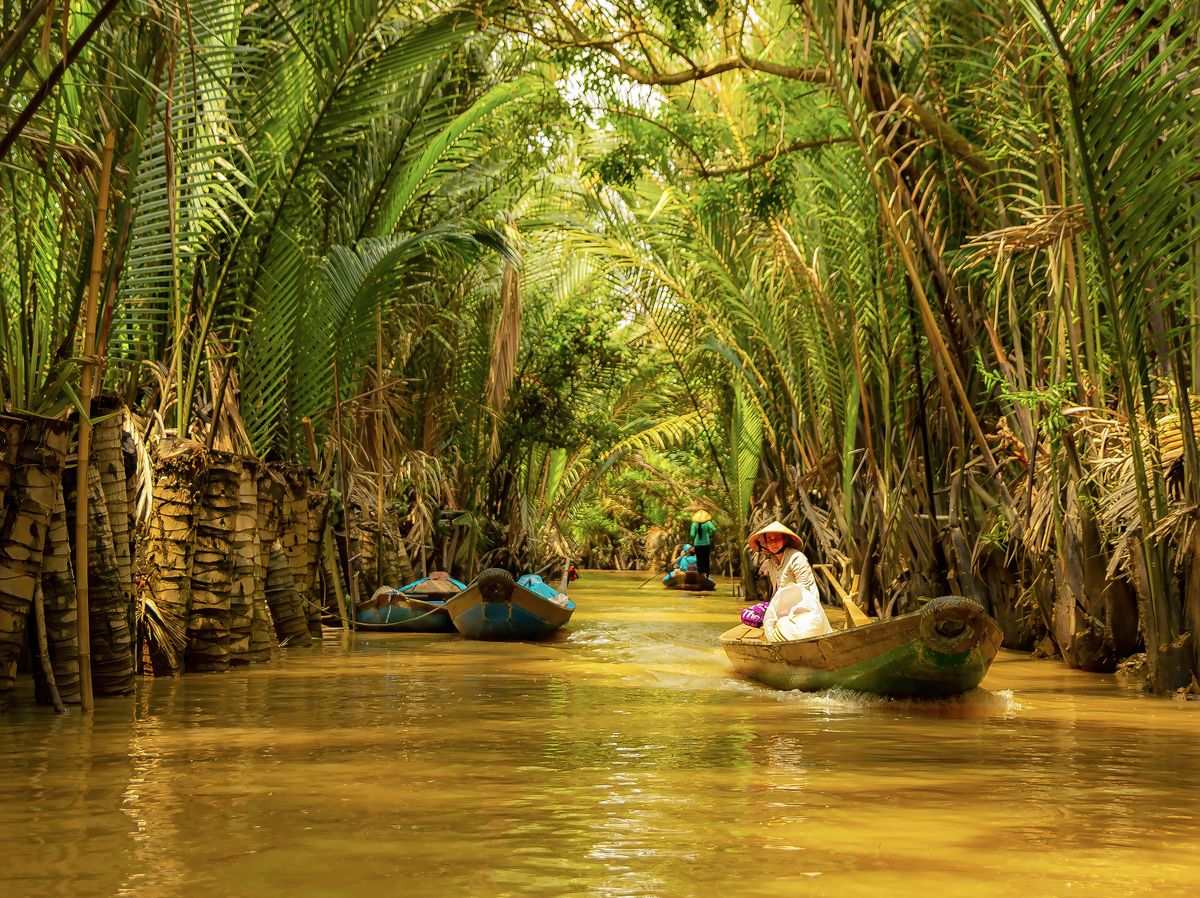
The Mekong Delta introduces a different pace and landscape from the rest of the country. Life here is shaped by water, with canals, orchards, riverside villages, and floating commerce creating a region that feels distinct from both Hanoi and Saigon.
Base yourself in places like Can Tho or choose a multi-day trip that includes boat rides, local homestays, and village visits. Early mornings are best for seeing market activity and daily life along the waterways.
A short visit can work, but the delta is better when you don’t rush it. It’s less about ticking off landmarks and more about settling into the rhythm of boats, riverbanks, and meals that somehow taste better near the water.
- Best activities: canal cruise, floating market visit, cycling through villages, local homestay
- Ideal trip length: 2 days minimum
- Good to know: early departures are essential for the liveliest river scenes
How many days do you need for Vietnam?
A well-paced route through Vietnam usually needs at least 10 to 14 days. This allows time for the main highlights without turning the trip into a heroic but unnecessary competition against airports, train schedules, and your own patience.
If you have two weeks, a strong route could include:
- Hanoi – 2 or 3 days
- Ha Long Bay or Lan Ha Bay – 1 or 2 days
- Ninh Binh – 2 days
- Hue and Hoi An – 3 or 4 days
- Ho Chi Minh City – 2 days
- Mekong Delta – 2 days
If you have longer, add mountain trekking in the north or extra beach and countryside time in central Vietnam.
The WeRoad tip
A route that mixes iconic highlights with more immersive moments
If you want to make a classic Vietnam itinerary feel richer, add experiences that connect the famous places rather than just ticking them off. Around Ninh Binh, for example, cycling between limestone karsts and rice paddies gives you a much stronger sense of the landscape than seeing it only from a transfer van. In Ha Long Bay, an overnight stay on a traditional junk boat is often more rewarding than a rushed day trip, especially if it includes time to explore caves and quieter corners of the bay.
In central Vietnam, crossing the Hai Van Pass is more than just moving from A to B: it’s one of those routes that turns the journey itself into a highlight. Then in the south, skip the most obvious surface-level version of Saigon and try a scooter street-food tour through the back streets before ending the evening with sunset views over the river from a rooftop bar. Finally, give the Mekong Delta enough time to breathe. Cruising past floating villages works best when it feels unhurried, with space to notice daily life instead of just photographing it. That’s the sweet spot: big highlights, but lived properly.
A trip that keeps surprising you
Vietnam stands out for the variety it fits into one journey. You can move from historic capitals to karst bays, from lantern-lit towns to major cities, and from mountain villages to river delta life without the experience ever feeling repetitive.
That’s what makes it so special: every stop adds a different layer. One minute you’re contemplating dynastic history, the next you’re bargaining for a mango, boarding a boat, or wondering how a stool only 20 centimeters high can still be weirdly comfortable.
If you want to experience all this with the right mix of adventure, connection, and zero need to plan every transfer yourself, it’s worth exploring WeRoad group trips to Vietnam.
FAQ
- What are the must-do experiences in Vietnam?
-
The most memorable experiences usually include exploring Hanoi, cruising through Ha Long Bay or Lan Ha Bay, visiting Ninh Binh, wandering Hoi An, discovering Ho Chi Minh City, and taking a boat trip in the Mekong Delta. If you have more time, add trekking in the north.
- Is $1000 enough for 2 weeks in Vietnam?
-
Yes, in many cases $1000 for two weeks can be enough for a budget or mid-budget trip, especially if you use local transport, simple accommodation, and eat at casual restaurants or street-food spots. Cruises, domestic flights, and guided tours will increase costs, so budget planning matters.
- Is $100 a lot of money in Vietnam?
-
$100 can go a long way in Vietnam for daily expenses such as meals, local transport, and budget accommodation. However, in bigger cities or on premium activities like luxury cruises or boutique stays, it can disappear much faster. Its value depends on your travel style.
- Is Vietnam or Bali better for a trip?
-
They offer different experiences. Vietnam is better for travelers looking for variety, long overland routes, history, street food, and contrasting regions. Bali is often better for a slower island stay, surf culture, wellness, and resort time. The right choice depends on the kind of trip you want.
- What is the best time to visit Vietnam?
-
Vietnam’s climate varies by region, so there is no single perfect month for the whole country. In general, spring and autumn often work well for multi-stop itineraries. Always check regional weather before booking, especially if you plan to include mountains, beaches, and the south in one trip.