In a nutshell
- Kyoto’s autumn foliage season usually runs from mid-November to early December, although higher areas such as Takao can color earlier and exact timing changes every year based on weather conditions.
- Kiyomizu-dera, Eikando, and Tofuku-ji are among the city’s standout temple experiences, each offering a different perspective: panoramic views, immersive gardens, and dramatic maple-filled valleys.
- Nanzen-ji, Tenjuan, Daigo-ji, and Jingo-ji are excellent alternatives for travelers who want a more peaceful, spacious, or early-season experience without focusing only on the most crowded landmarks.
- Planning by area is the smartest way to visit temples in autumn, since Kyoto’s sights are spread out and transport gets crowded; grouping nearby temples helps save time and energy.
- Early starts, central accommodation, flexible scheduling, and up-to-date foliage reports make a big difference in enjoying Kyoto’s fall colors with less stress and better views.
Kyoto in autumn feels like the city has turned the saturation all the way up. Wooden temples glow, gardens become red-and-gold postcards, and even an ordinary stroll can suddenly look cinematic. This is the season when Kyoto’s spiritual side and natural beauty meet in the most photogenic way possible.
The real charm is not just in seeing colorful leaves, but in how they frame historic temples, quiet ponds, stone paths, and old wooden gates. Some places are famous for dramatic panoramic views, others for peaceful gardens and reflections. If you want to experience Kyoto at its most atmospheric, autumn is the moment.
When to visit Kyoto for autumn colors
The best period for autumn leaves in Kyoto usually runs from mid-November to early December, with slight variations each year depending on temperatures and rainfall. Lower city areas often peak later than mountain districts, so timing matters if you want that full red-maple drama rather than a polite hint of orange.
In practical terms, you can think of the season in three phases:
- Late October to early November: early color in northern hills and higher elevations such as Takao and Kurama.
- Mid to late November: many famous temple gardens begin looking spectacular.
- Late November to early December: peak color for several of Kyoto’s best-known temples in the city.
Because the foliage changes every year, it’s smart to check the official Kyoto autumn leaves calendar or current foliage reports before your trip. Nature, after all, has never once cared about your spreadsheet.
The most beautiful temples to see in Kyoto during autumn
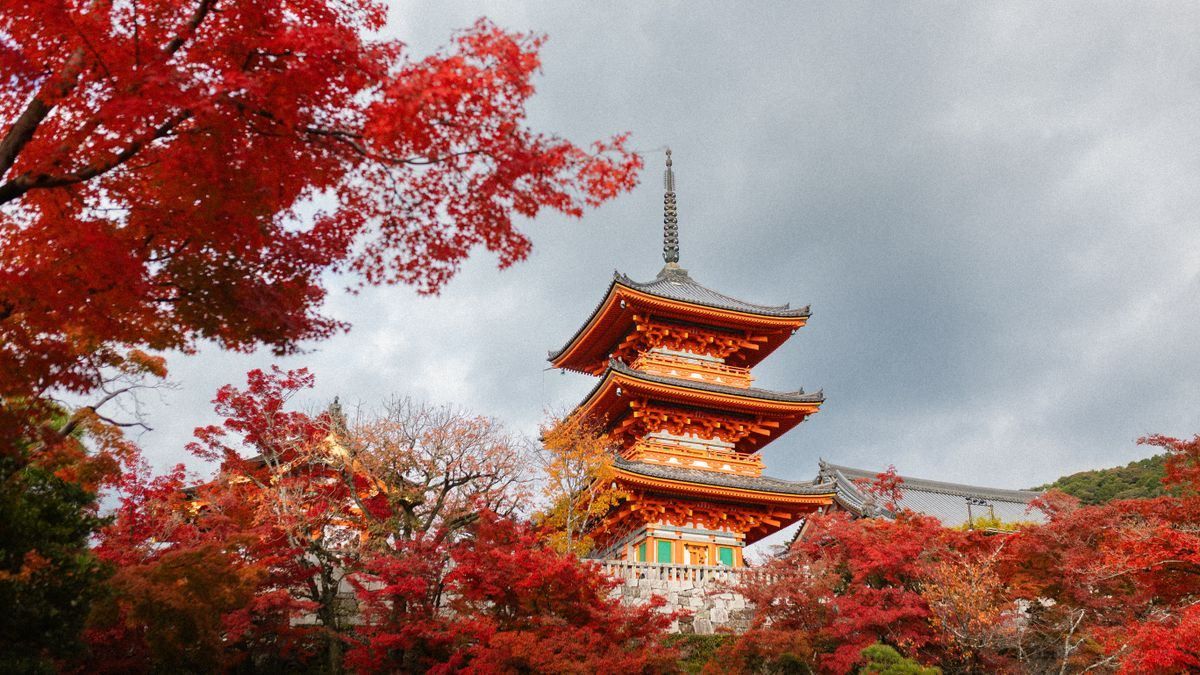
The best temples for autumn in Kyoto combine architecture, gardens, and foliage in a way that feels balanced rather than overcrowded by scenery alone. Some are iconic and busy, some quieter and more contemplative, but all reward an early visit and a little patience.
Kiyomizu-dera
Kiyomizu-dera is one of Kyoto’s classic autumn icons thanks to its elevated wooden stage and sweeping views over a valley filled with maple trees. It is the place to go if you want a grand, instantly recognizable Kyoto scene framed by brilliant seasonal color.
The temple’s hillside location creates that famous layered effect: pagoda, veranda, forest, and city beyond. In late November, the contrast between the crimson leaves and the dark wood of the temple is striking. Arrive early in the morning for softer light and fewer crowds, or visit during evening illuminations if available for a more theatrical atmosphere.
Eikando
Eikando Temple is widely considered one of Kyoto’s finest spots for autumn leaves because the foliage is dense, vivid, and beautifully integrated into the temple grounds. It offers a richer garden experience than many more panoramic viewpoints and feels designed for slow wandering.
Expect reflective ponds, elegant bridges, and maples that seem to have absolutely no chill when it comes to showing off. The pathways lead you through changing perspectives, and the small climb to the pagoda area adds lovely views over the colored canopy.
Tofuku-ji
Tofuku-ji is famous for its dramatic sea of maples surrounding the Tsutenkyo Bridge. It is one of the most celebrated autumn temple experiences in Kyoto and one of the busiest, so timing your visit is essential if you want beauty without feeling like you joined a leaf-themed marathon.
The main attraction is the ravine filled with maple trees, which turns into a deep red tapestry in peak season. It is visually stunning and ideal for photographers, especially in the morning. The temple’s Zen gardens add another layer of interest, giving the visit more depth than a single viewpoint.
Nanzen-ji and Tenjuan
Nanzen-ji offers a spacious temple complex with elegant gates, stone paths, and several sub-temples worth visiting in autumn. Nearby Tenjuan, one of its sub-temples, is especially rewarding for those who prefer intimate gardens and reflective water features over headline-grabbing crowds.
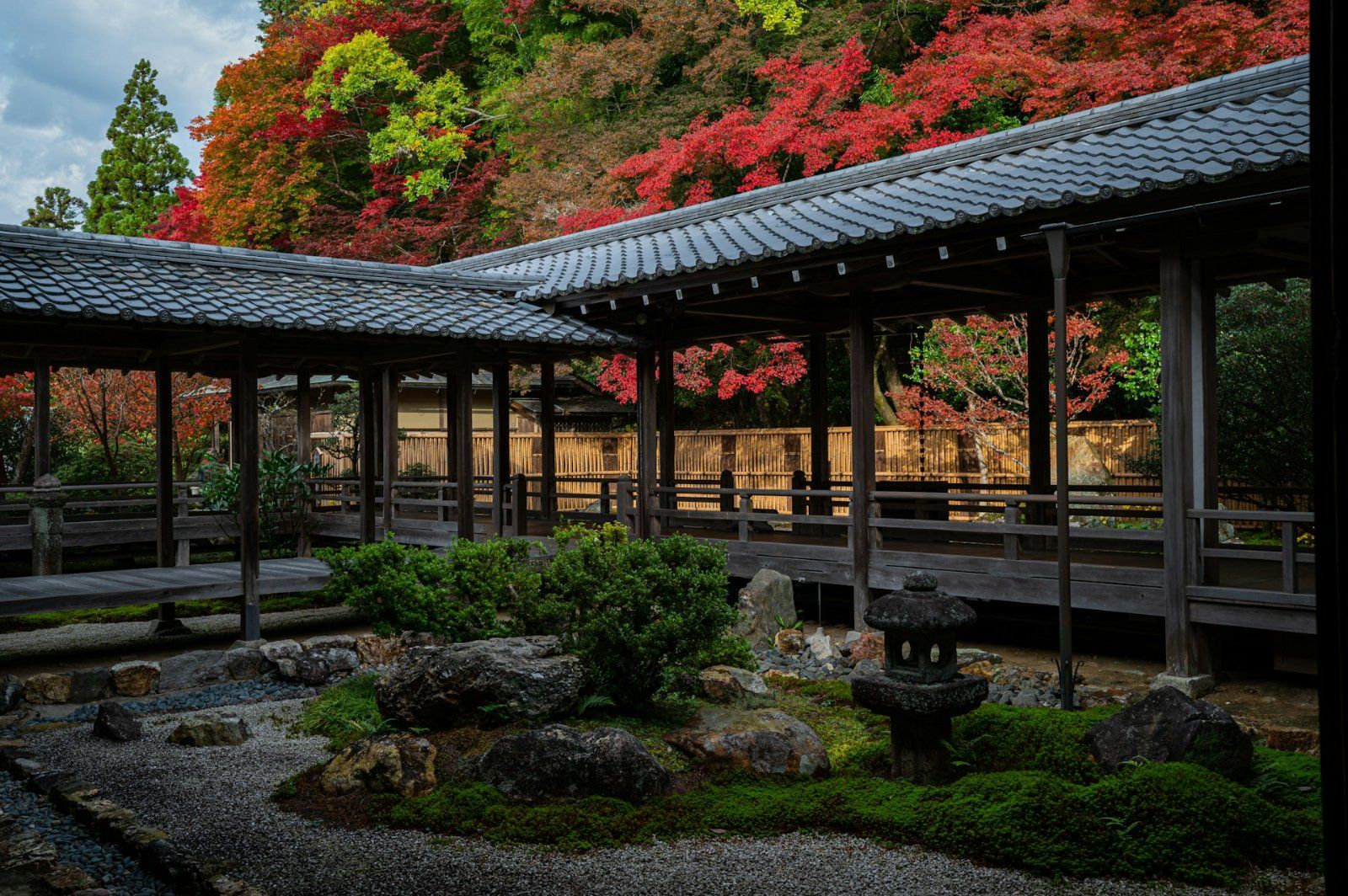
The atmosphere here is calmer than at some of Kyoto’s blockbuster sites. Autumn color appears among mossy grounds, wooden corridors, and tranquil ponds, creating a more meditative experience. It is a strong choice if you want to pair foliage with Kyoto’s quieter, more refined side.
Daigo-ji
Daigo-ji is one of Kyoto’s most scenic temple complexes in fall, known for its spacious grounds, pond views, and elegant five-story pagoda. It works especially well for travelers who want a broader landscape experience rather than a quick stop for one famous angle.
The grounds are large enough to feel less compressed, and the red and orange leaves around bridges and water create postcard-level scenes. During the season, some evening illuminations may also take place, adding a softer, more atmospheric side to the visit.
Jingo-ji
Jingo-ji, in the Takao area, is one of the best temple choices for early autumn color near Kyoto. Its mountain setting gives it an edge when central Kyoto is still waiting for peak leaves, and the approach itself feels like part of the experience.
Stone steps, forested slopes, and temple buildings surrounded by vivid maples make this one feel more immersive and less urban. It requires a little more effort to reach, which is precisely why it can feel so rewarding. Autumn here is less polished postcard, more dramatic woodland masterpiece.
Temple comparison at a glance
Choosing where to go depends on your travel style, timing, and tolerance for crowds. Some temples are best for iconic views, others for gardens or early-season color. This quick comparison helps narrow things down without requiring a spiritual revelation on the bus.
| Temple | Best for | Typical peak period | Crowd level |
|---|---|---|---|
| Kiyomizu-dera | Panoramic views and iconic Kyoto scenery | Late November to early December | Very high |
| Eikando | Immersive gardens and brilliant maple color | Late November to early December | High |
| Tofuku-ji | Bridge views over dense maple valleys | Mid to late November | Very high |
| Nanzen-ji / Tenjuan | Calmer atmosphere and refined gardens | Late November | Medium |
| Daigo-ji | Large scenic grounds and pond reflections | Late November | Medium |
| Jingo-ji | Mountain setting and early color | Early to mid November | Low to medium |
How to plan your temple itinerary in autumn
A good Kyoto autumn itinerary should mix major highlights with quieter stops and allow room for transport time. Temples are spread across the city, and foliage season brings large crowds, especially on weekends. Prioritizing one area per half-day usually works better than rushing all over town.
A simple approach is to group visits by district:
- Southern Higashiyama: Kiyomizu-dera, then stroll the historic lanes nearby.
- Northern Higashiyama: Eikando, Nanzen-ji, and possibly the Philosopher’s Path area.
- Southern Kyoto: Tofuku-ji paired with Fushimi Inari if you start early.
- Outer districts: Jingo-ji or Daigo-ji when you want fewer people and more space.
Try to visit famous temples at opening time on weekdays. Morning light is softer, queues are shorter, and your photos are less likely to feature twelve strangers with matching puffer jackets.
Practical tips for enjoying autumn in Kyoto
Kyoto in fall is beautiful, but it demands a bit of strategy. Book accommodation early, expect public transport to be busy, and build flexibility into your schedule. The more prepared you are, the easier it becomes to enjoy the season rather than wrestling politely with it.
- Stay central: Downtown Kyoto or near Kyoto Station makes moving around easier.
- Wake up early: The difference between 7:00 and 9:00 am can be enormous.
- Check foliage updates: Peak color shifts every year.
- Wear layers: Mornings and evenings can feel cool, especially in temple gardens.
- Allow time to walk: Even with trains and buses, many temples require a final stroll.
It is also worth remembering that not every magical autumn moment happens at a headline temple. Sometimes the best memory is a side street, a quiet sub-temple, or a maple tree casually exploding in color behind a stone lantern as if this were perfectly normal behavior.
A Kyoto autumn route that actually flows
If you want one of those satisfyingly cinematic Kyoto days, build your route around places that naturally connect rather than zigzagging across the city like a confused maple leaf. Start in Higashiyama with Kiyomizu-dera, where the wooden stage opens onto a valley washed in red and gold, then move north toward Eikando, one of the classic foliage stars. From there, stroll the Philosopher’s Path, where the canal and turning leaves do half the emotional work for you, and end at Ginkaku-ji, framed by maples and softened by its moss garden.
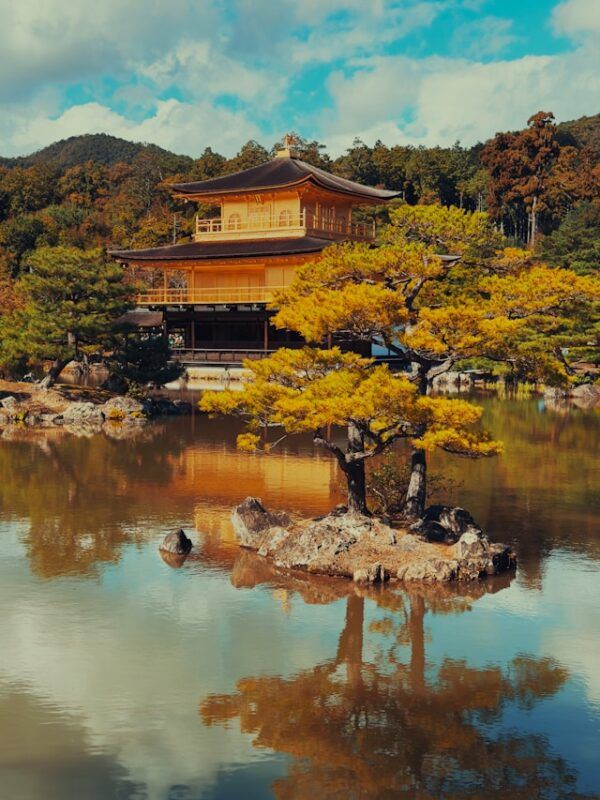
On another day, switch mood completely and head to Arashiyama: visit Tenryu-ji for its garden designed to borrow the autumn colors of the surrounding hills, then continue toward the bamboo grove and the river, where maples add flashes of red at the edges of the landscape. If you still have energy, mix in contrasts with Kinkaku-ji reflected beneath autumn leaves, Ryoan-ji for a quieter zen pause, or Fushimi Inari for torii tunnels winding through wooded slopes touched by fall color. Kyoto in autumn rewards rhythm, not rushing.
Kyoto in autumn, one temple at a time
The beauty of Kyoto in autumn lies in variety: grand viewpoints, Zen gardens, mountain temples, and quiet corners where the leaves seem to glow against old wood and stone. The best experience usually comes from balancing the famous names with slower, less hurried moments.
If you want to see the city at its most atmospheric, plan around the late November to early December window, start early, and choose temples that match your style. And if Japan is calling loudly enough to make you check flight prices at midnight, have a look at the WeRoad group trips to Japan and start plotting your autumn adventure properly.
FAQ
- What is the best month to see autumn leaves in Kyoto?
-
The best month is usually November, especially from the second half of the month onward. In many years, peak color in central Kyoto arrives between late November and early December.
- Which temple in Kyoto is best for autumn colors?
-
Eikando is often praised for the richness of its maple displays, while Kiyomizu-dera is ideal for iconic views and Tofuku-ji for dramatic bridge-and-valley scenery.
- Are Kyoto temples very crowded in autumn?
-
Yes, major temples can be extremely busy during peak foliage season, especially on weekends. Visiting right at opening time on a weekday is the best way to avoid the heaviest crowds.
- How many temples can you visit in one day in Kyoto during autumn?
-
For a relaxed experience, two to four temples is a good target. More than that can feel rushed, especially when transport times, queues, and walking distances are taken into account.
- Is it better to stay in Kyoto or do a day trip for autumn foliage?
-
Staying in Kyoto is usually better during autumn because it lets you start early, avoid long transfers, and experience the temples at quieter times of day.