In a nutshell
- The best time to see autumn colors in Italy usually falls between late September and early November, with the last two weeks of October often being the most reliable overall window.
- The Dolomites and South Tyrol are ideal for dramatic mountain foliage, golden larches, alpine lakes like Lago di Braies, and panoramic hikes around valleys such as Val di Funes and Val Venegia.
- Piedmont stands out for a softer but equally memorable autumn atmosphere, with Langhe vineyards, hilltop villages, truffle season, and the scenic Foliage Train between Domodossola and Locarno.
- Tuscany offers both forest color and postcard landscapes, especially in the Casentinesi Forests, while areas like Val d’Orcia and Chianti add vineyards, cypress roads, seasonal food, and medieval towns.
- October is generally better than September for travelers whose main goal is foliage, while September suits those who prefer warmer temperatures, harvest season, and the earliest changes at higher elevations.
Italy in fall has a different rhythm. The summer crowds thin out, the air turns crisp, and entire landscapes shift into shades of gold, amber, copper, and deep red. From Alpine valleys to vineyard-covered hills, this is one of the most rewarding times to explore the country.
Fall leaves in Italy are not limited to one single region. You can find spectacular color in the Dolomites, along the Tuscan forests, across the Langhe hills, and even in city parks. The best part? You can pair scenic walks with wine, chestnuts, medieval villages, and the kind of views that make your camera work overtime.
When to see fall colors in Italy
The best period usually runs from late September to early November, but timing changes with altitude and weather. Higher mountain areas turn first, often in early to mid-October, while lower hills and forests tend to peak from late October into early November.
In practical terms, the last two weeks of October are often the safest choice for a trip focused on foliage. Mountain larches in the north may glow earlier, while beech and oak forests in central Italy often hold their best colors slightly longer. Nature, of course, enjoys being dramatic, so exact timing can shift from year to year.
| Area | Best time | What turns color | Best for |
|---|---|---|---|
| Dolomites and Alps | Early to late October | Larch, beech | Hikes, lakes, photography |
| Piedmont hills | Mid-October to early November | Vineyards, woods | Wine trips, scenic drives |
| Tuscany forests | Late October to mid-November | Beech, oak, chestnut | Forest walks, villages, food |
| Southern parks | Late October to November | Beech, maple, oak | Quiet nature escapes |
The best regions for fall landscapes in Italy
The most memorable foliage spots are spread across northern and central Italy, with a few excellent southern surprises. If you want the broadest choice of forests, lakes, mountain drives, and vineyard scenery, start with the Alps, Piedmont, and Tuscany.
The Dolomites and South Tyrol
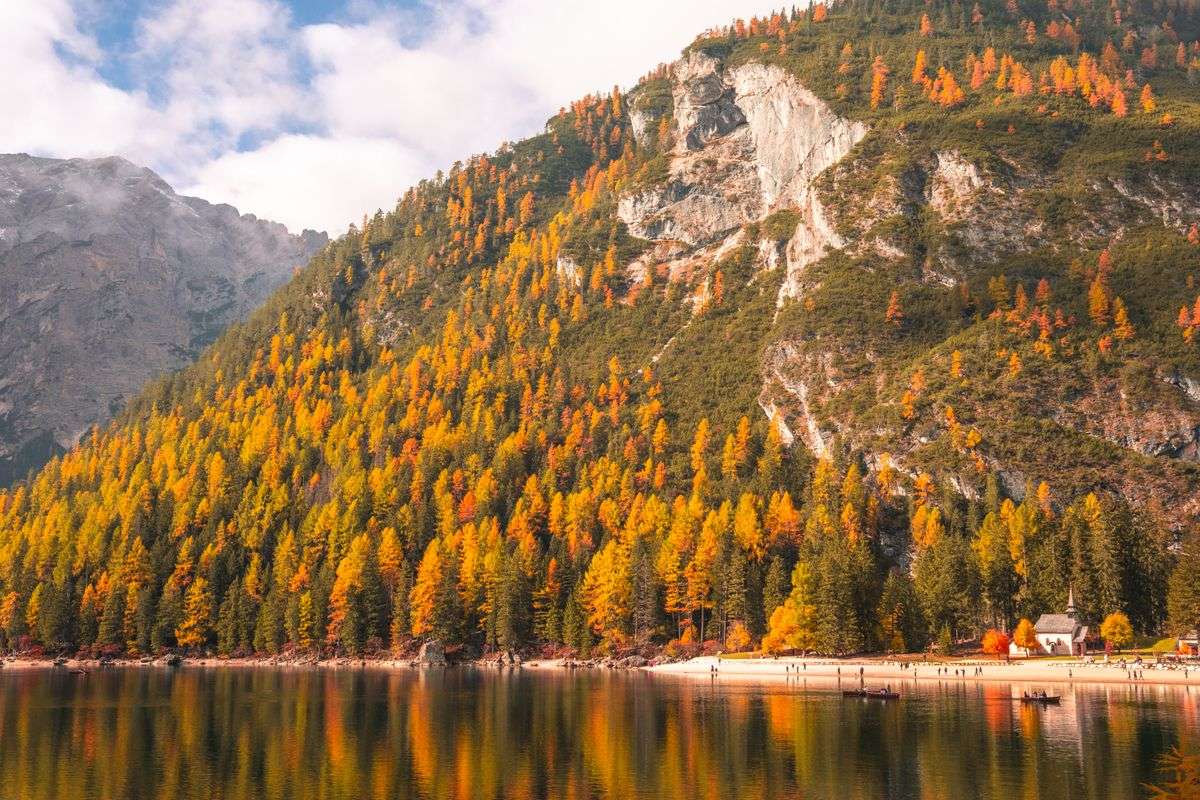
The Dolomites offer some of the most striking fall scenery in Europe. Golden larches light up valleys and lakeshores, while pale rock peaks create dramatic contrast. This area is ideal for travelers who want crisp air, panoramic roads, and accessible mountain walks.
Places like Val di Funes, Alpe di Siusi, Passo Gardena, and Lago di Braies are especially photogenic in October. Around the lakes, the reflections are absurdly pretty, the kind that make you whisper “wow” and then immediately take 47 nearly identical photos.
If you enjoy hiking, valleys such as Val Venegia and trails around Lago Federa are excellent in mid to late October. For easier access, roadside viewpoints and short lake walks still deliver huge visual rewards without requiring mountain-goat energy.
Piedmont: Langhe, Monferrato, and the Foliage Train
Piedmont combines rolling hills, vineyard colors, misty mornings, and food-and-wine culture. It is one of the best places to visit in Italy in October if you want scenic views with fewer physical demands and more edible rewards.
The Langhe are famous for wine, but in fall they become a patchwork of bronze, red, purple, and gold. Villages such as Alba, Barolo, and Serralunga d’Alba make ideal bases for a weekend of slow drives, tastings, and countryside walks.
Another standout is the Vigezzina-Centovalli Railway, often called the Foliage Train. The route between Domodossola and Locarno passes through forests and valleys at exactly the right speed for dramatic staring out of windows. It is both scenic and low-effort, which is a beautiful combination.
Tuscany: forests, hills, and medieval villages
Tuscany in fall is not just about vineyards. Its forests, especially in the Apennines, are among the richest and most colorful in the country. The region is ideal for travelers who want nature, villages, local food, and scenic roads in one trip.
The star location is the Casentinesi Forest National Park, especially around Monte Penna, Camaldoli, and La Verna. Here, beech, maple, oak, and fir create layered colors that usually peak from late October into early November.
Beyond the forests, Val d’Orcia and Chianti deliver softer fall scenery: golden vineyards, cypress-lined roads, morning mist, and villages that look suspiciously like movie sets. Add chestnuts, mushrooms, and new olive oil, and suddenly your scenic trip becomes a culinary mission.
Trentino and Veneto beyond the Dolomites
Outside the best-known Dolomite icons, Trentino and Veneto hide excellent foliage areas with fewer crowds. These regions work well for travelers who want forest trails, unusual rock formations, and a mix of mountains and cultural stops.
In Trentino, Arte Sella blends open-air art with woodland colors, while valleys dotted with larch and beech provide easy hikes. In Veneto, Lessinia Regional Park and the Valley of the Sphinxes offer beech forests and curious limestone formations that make the whole place feel slightly mythical.
Liguria, Lombardy, and quieter alternatives
Several underrated regions offer beautiful color without the fame of the Dolomites or Tuscany. They are excellent options for repeat visitors or travelers looking for less obvious routes.
In Liguria, the Aveto Regional Park offers chestnut and beech woods with peaceful trails. In Lombardy, Val Masino and Bagni di Masino Forest are great for forest immersion, while Milan itself surprises with elegant urban foliage in parks like Parco Sempione and the Indro Montanelli Gardens.
Which part of Italy is best to visit in October?
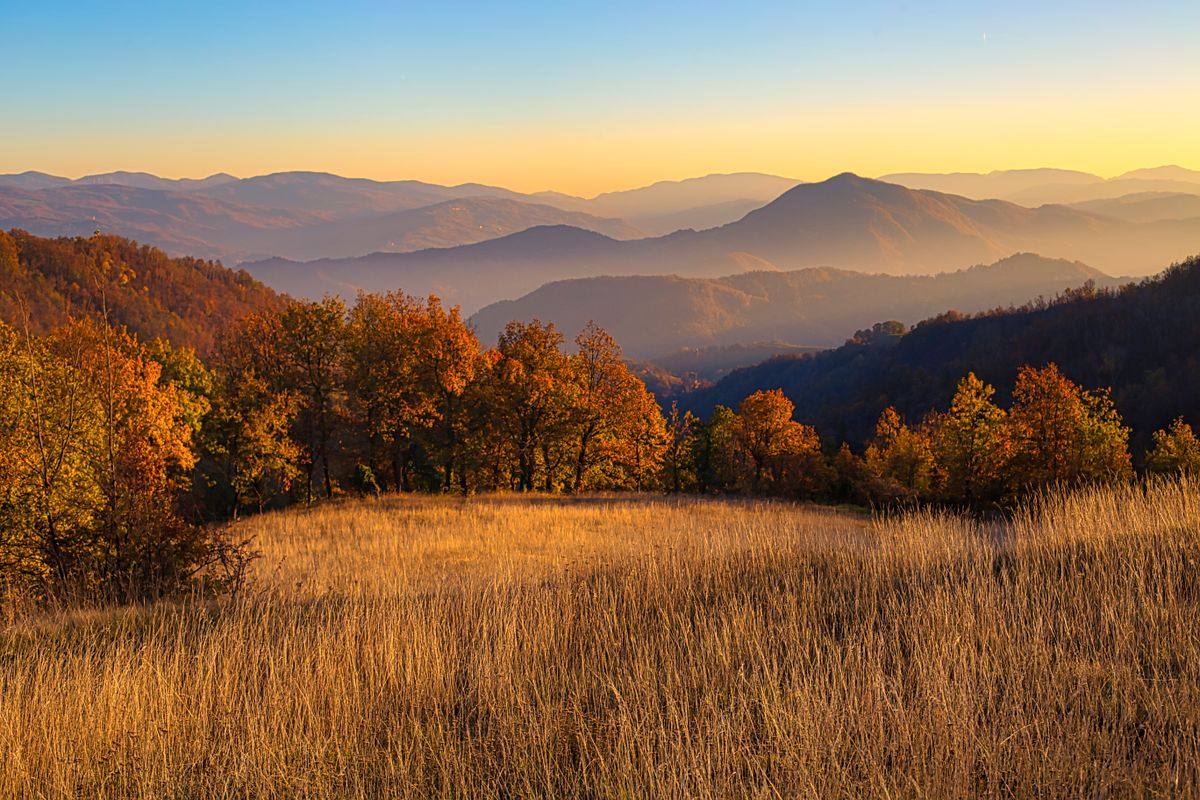
Northern and central Italy are generally the strongest choices in October. They offer the widest mix of foliage, comfortable temperatures, harvest season experiences, and good travel infrastructure for road trips, hiking, and rail journeys.
If your priority is mountain scenery, choose the Dolomites or South Tyrol. If you prefer wine regions and gentle landscapes, head to Piedmont or Tuscany. For a broader trip with city breaks included, October is also excellent for combining Verona, Turin, Florence, or Bologna with nearby countryside escapes.
September or October: which is better for a fall trip to Italy?
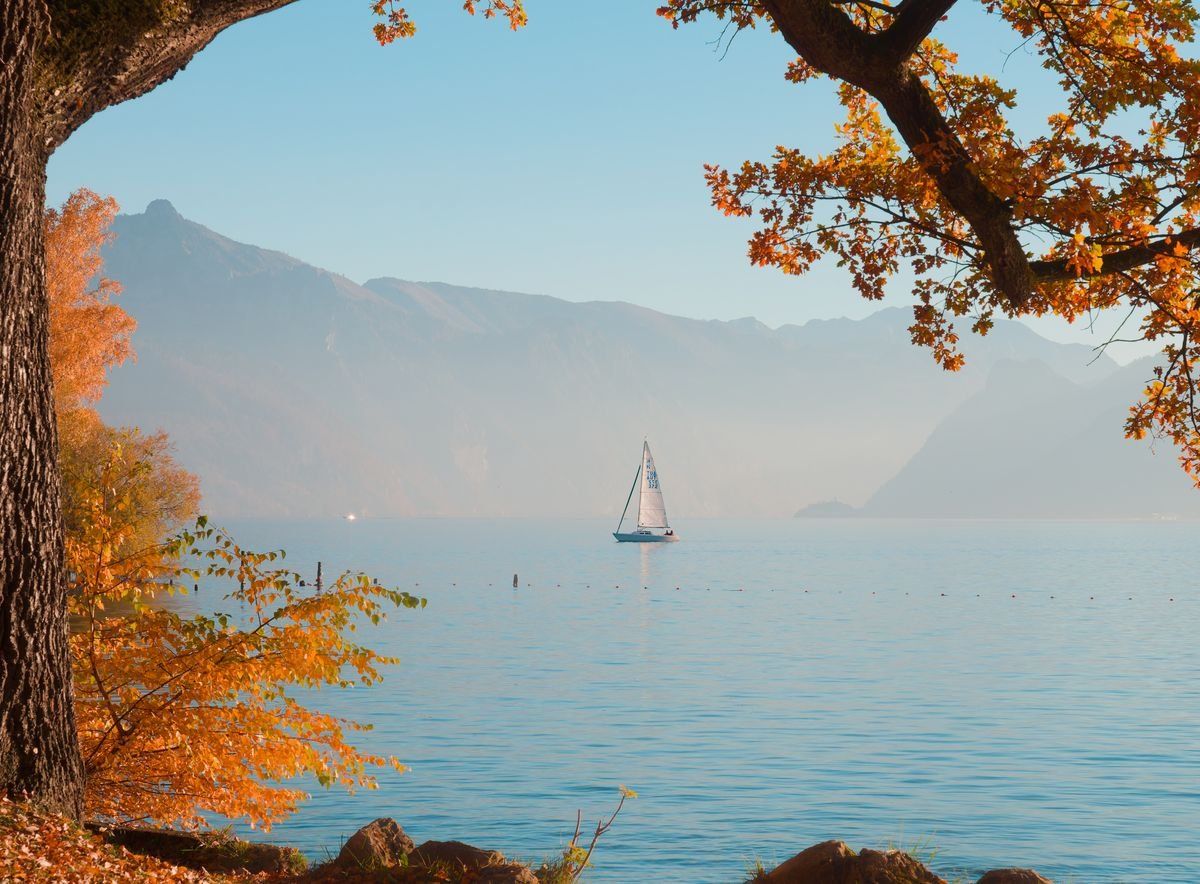
October is usually the better month for true fall color, especially if foliage is the main reason for your trip. September can still feel late-summer in many parts of Italy, though it is excellent for harvest season and mild hiking conditions.
Choose September if you want warmer weather, grape harvest energy, and the earliest color at high altitude. Choose October if you want richer forest tones, fewer crowds, and a more unmistakable autumn atmosphere. In short: September is the opening act, October is the full concert.
How to plan a foliage trip in Italy
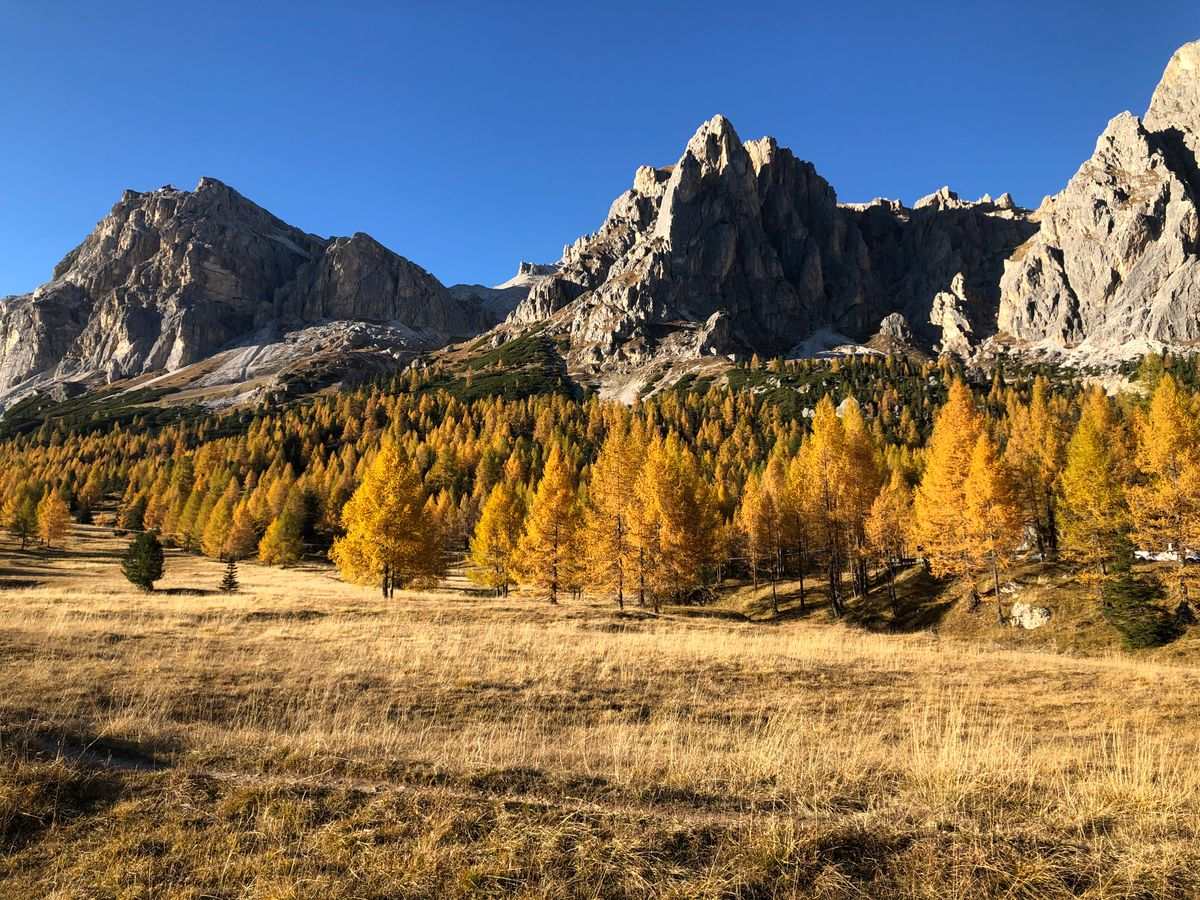
A good autumn itinerary in Italy should follow altitude, regional climate, and your travel style. The best trips balance scenic drives or walks with local experiences, because color is wonderful, but color plus wine and polenta is stronger.
- Check elevation: higher areas peak earlier than lowlands.
- Aim for flexibility: if possible, keep one or two days adjustable for weather.
- Travel midweek: popular lakes and mountain roads are quieter.
- Pack layers: mornings can be cold even when afternoons are sunny.
- Book mountain stays early: autumn weekends are popular, especially in the north.
For photographers, sunrise and early morning fog can add magic in vineyards and valleys. For walkers, leaf-covered trails are beautiful but can be slippery, so sturdy shoes help. For everyone else, the main technical requirement is a healthy appreciation for long lunches.
The WeRoad tip
A foliage trip that mixes iconic views with local flavor
If you want an autumn route that feels varied without becoming a logistical circus, focus on a short northern Italy itinerary with a couple of strong contrasts. Start in the Dolomites with a walk around Lake Braies, where the conifer forests and mountain reflections create that classic alpine atmosphere people try very hard to recreate as laptop wallpapers. Then move south into Veneto for a completely different mood: rolling hills, vine rows, and slow tastings in the Valdobbiadene area. An e-bike ride through the vineyards works especially well in autumn, when the landscape looks textured, golden, and just slightly smug about how photogenic it is.
To tie the experience together, add a cultural stop at Castelbrando in Cison di Valmarino. The castle sits among the Prealps and gives the whole journey a storybook finish, somewhere between a wine escape and a medieval daydream. This combination is distinctive because it lets you experience two very different versions of Italian autumn in one trip: high-altitude drama and softer vineyard scenery, both easy to enjoy even if you are not planning back-to-back hardcore hikes.
Where autumn in Italy feels most unforgettable
The most rewarding places are those that combine strong natural color with a sense of place. In Italy, that often means forests near abbeys, lakes under jagged peaks, or vineyard hills crowned by stone villages and castles.
If you want the biggest visual drama, go for the Dolomites. If you want a balanced mix of landscapes, flavors, and culture, choose Tuscany or Piedmont. And if you like the idea of a slower, quieter trip, look at Liguria, Lessinia, or the lesser-known valleys of Trentino. There is no single winner, only different versions of autumn showing off.
And if you want to experience Italy’s autumn colors with the right mix of adventure, scenery, and good company, take a look at WeRoad group trips for Italy and start planning your next seasonal escape.
FAQ
- What week of October is best for autumn colors in Italy?
-
Usually the third and fourth weeks of October are the safest bet, especially for a trip that includes both mountain and hill regions. In high-altitude areas, peak color can arrive a little earlier.
- Where can I see the best autumn foliage in northern Italy?
-
The top choices are the Dolomites, South Tyrol, Langhe, Val Masino, and parts of Trentino and Veneto. These areas combine forests, lakes, scenic roads, and excellent food.
- Is Tuscany good in autumn for nature lovers?
-
Yes, especially the Casentinesi Forests, Val d’Orcia, and Chianti. Tuscany is perfect if you want woodland walks, vineyard landscapes, seasonal food, and historic villages in one itinerary.
- Can I enjoy autumn colors in Italy without hiking?
-
Absolutely. Scenic train routes, lake walks, vineyard drives, and panoramic roads make it easy to enjoy the season without long hikes. Piedmont and Tuscany are particularly good for this style of trip.
- Which European country is best for autumn leaves
-
is Italy a good choice? Italy is definitely a strong choice because it combines varied landscapes with food, wine, villages, and relatively mild weather. Countries like Austria or Germany also offer beautiful foliage, but Italy adds a unique cultural layer to the experience.