
In a nutshell
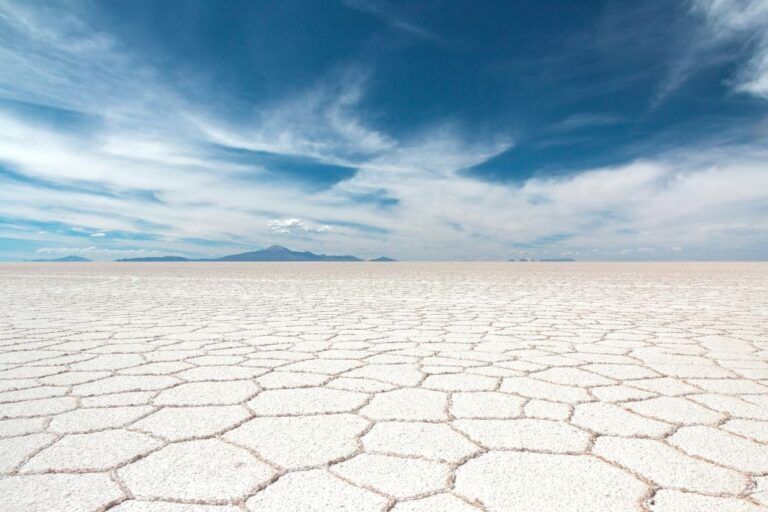
- Salar de Uyuni is the world’s largest salt flat, spanning over 10,000 km² at 3,656m altitude in Bolivia’s Andes, formed by ancient dried-up lakes.
- During the rainy season (December–April), a thin water layer transforms the flats into a giant mirror, creating stunning reflective photography opportunities.
- The dry season (May–November) is ideal for 4×4 exploration, optical illusion photos, visiting Isla Incahuasi’s ancient cacti, and hiking Tunupa Volcano.
- The surrounding area hosts diverse wildlife — pink flamingos, llamas, and Andean foxes — alongside vivid coloured lagoons like Laguna Colorada and Laguna Verde.
- Key travel tips: prepare for altitude sickness, pack sunscreen and sunglasses, carry cash in bolivianos, and always travel with an experienced local guide.
Bolivia’s high-altitude southwest looks like someone borrowed a landscape from another planet and forgot to return it. In this wild corner of the Altiplano, salt stretches to the horizon, lakes glow in impossible colors, and volcanoes keep watch over roads that are more suggestion than asphalt.
The Uyuni salt flats are the star of the show, of course, but the experience is much bigger than one iconic photo. From cactus-covered islands to flamingo-filled lagoons, this is one of those places that feels almost too surreal to be real. Almost.
What makes the Uyuni salt flats so special
The salt flat near Uyuni is special because it combines scale, silence, and visual drama in a way few places on Earth can. It is the largest salt flat in the world, sitting at more than 3,600 meters above sea level, with landscapes that change dramatically between dry and rainy seasons.
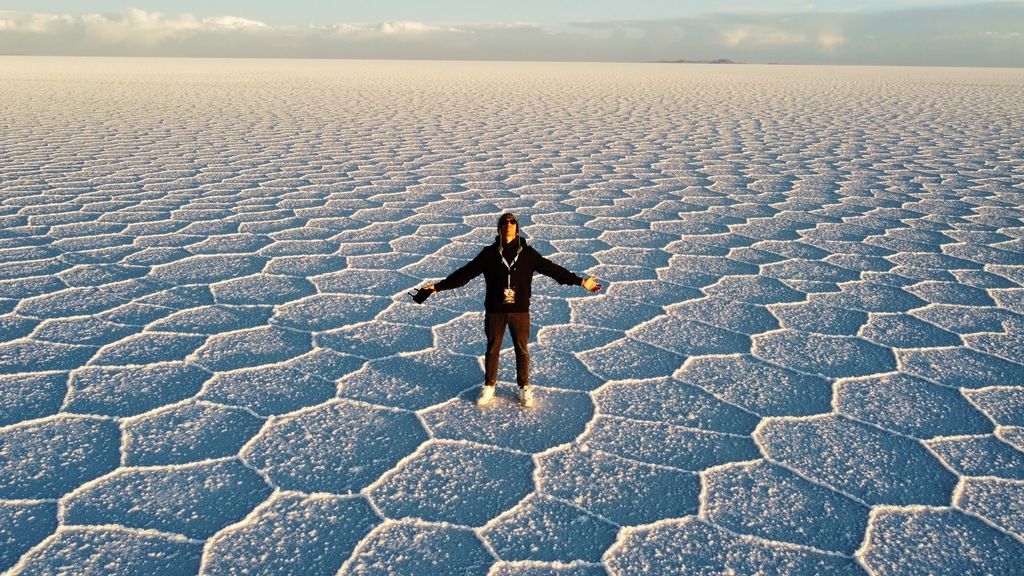
In the dry months, the ground hardens into dazzling white crusts marked by geometric salt patterns. In the wet season, a thin layer of water transforms the surface into a giant mirror, reflecting clouds, sunsets, and your best “look, I’m floating in the sky” pose.
It is not just beautiful, either. This immense plain was formed from prehistoric lakes and contains huge mineral reserves, including lithium. It is also so flat and reflective that scientists have used it to calibrate satellites. Casual.
When to visit for mirror effect or classic salt patterns
The best time depends on the kind of scenery you want. For the famous mirror effect, visit during the rainy season, usually from December to April. For easier driving conditions, crisp horizons, and hexagonal salt patterns, the dry season from May to November is more reliable.
Neither season is objectively better. They simply offer different versions of the same wonder.
Rainy season: the giant mirror
From roughly December to April, shallow water can cover parts of the flat and create the mirror-like reflection that made the destination famous. This is the dream for photographers and romantics, which is convenient because many travelers are both for at least 20 minutes.

Keep in mind that heavy rain can affect routes and make some areas inaccessible, including parts of the interior.
Dry season: access and wide-open views
Between May and November, the salt crust is firm and easier to cross by 4×4. This is often the best choice if you want to combine the main salt flat with a longer overland route through the Eduardo Avaroa Reserve, lagoons, geysers, and desert landscapes.
Nights are colder, but skies are often beautifully clear.
What to see beyond the white expanse
The salt flat itself is unforgettable, but the surrounding region gives the trip depth and variety. The best itineraries combine the main salar with unusual stops that show the geological and cultural character of southwest Bolivia.
Isla Incahuasi
Isla Incahuasi is one of the most famous landmarks in the salt flat. Rising from the white surface like a ship in a frozen sea, this ancient island is covered with giant cacti, some of them centuries old.

A short walk to the top reveals panoramic views over the endless salt crust. It is one of the few places where you can admire scale properly, and where your camera suddenly feels emotionally overwhelmed.
Ojos de Sal and salt extraction areas
The Ojos de Sal, or “eyes of salt,” are small bubbling openings where underground water pushes up through the crust. They are a curious stop and a useful reminder that this apparently solid landscape is more alive than it seems.
In nearby extraction areas, you may also see salt piles and learn how local communities process and sell salt.
Train Cemetery
Just outside Uyuni town, the Train Cemetery is filled with rusting locomotives from the late 19th and early 20th centuries. It is atmospheric, photogenic, and slightly post-apocalyptic in the best possible way.

The site reflects the region’s mining history and works well as a first or final stop before heading into the remote landscapes beyond town.
How to visit the area: day trip or multi-day tour
Most travelers visit with an organized tour, and that is generally the best option. Distances are long, navigation is difficult, and conditions can be harsh, so a guided 4×4 tour is the standard and safest way to explore the region.

Tours usually start from Uyuni in Bolivia, but some longer itineraries also begin in San Pedro de Atacama in Chile or Tupiza in southern Bolivia.
| Tour type | Best for | Duration | What you see |
|---|---|---|---|
| Day tour from Uyuni | Short itineraries | 1 day | Main salt flat, Incahuasi, Train Cemetery, photo stops |
| Classic overland tour | First-time visitors | 3 days / 2 nights | Salt flat plus lagoons, geysers, deserts, hot springs |
| Extended route from Tupiza or Chile | Slow travel and full landscapes | 4 days or more | Broader Altiplano route with more remote scenery |
If you have the time, a 3-day tour is usually the sweet spot. It gives you the classic salt-flat experience while adding some of Bolivia’s most memorable high-altitude scenery.
Top highlights on a multi-day Uyuni itinerary
A longer journey through southwest Bolivia includes far more than the salt flat. The route south of Uyuni features colorful lakes, geothermal fields, hot springs, and stone deserts that make the whole trip feel cinematic from start to finish.
Laguna Colorada
Laguna Colorada is one of the most striking stops in the region. Its reddish water, tinted by algae and minerals, contrasts with white borax patches and the pink tones of Andean flamingos.
It is windy, remote, and completely worth it.
Sol de Mañana geysers
The Sol de Mañana geothermal area sits at high altitude and looks properly dramatic, with steaming vents, bubbling mud, and a raw volcanic feel. Mornings are usually the best time to visit, when the steam is most visible in the cold air.
This is not a place for elegant hair, but it is excellent for memorable landscapes.
Polques hot springs
After dusty roads and chilly dawn starts, the Polques hot springs can feel like a reward arranged by the travel gods. Soaking in warm mineral water at around 4,000 meters, with mountains and open sky around you, is one of the most satisfying breaks on the route.

Salvador Dalí Desert and Laguna Verde
The Salvador Dalí Desert is named for scenery so surreal it seems painted rather than formed. Nearby, Laguna Verde glows green under the right conditions, with the Licancabur volcano rising behind it.
This area is close to the Chilean border and often appears in longer overland tours.
How to get to Uyuni
Uyuni is the main gateway to the salt flats and can be reached by plane, bus, or overland transfer. The easiest access is from La Paz, though some travelers arrive from Chile or combine Bolivia with a wider South America itinerary.
- From La Paz by plane: the fastest option, with flights taking about one hour
- From La Paz by overnight bus: a common budget-friendly option, usually 10 to 12 hours
- From San Pedro de Atacama: possible on multi-day cross-border tours
- From Tupiza: a scenic option if arriving from southern Bolivia or northern Argentina
Uyuni town itself is functional rather than glamorous. Think “gateway base” more than “romantic city break.” You are here for what lies beyond.
Practical tips before you go
Preparation matters because this is a high-altitude, remote environment. Days can be intensely sunny, nights can be freezing, and tour quality varies. A little planning makes the journey safer, more comfortable, and much more enjoyable.
- Acclimatize first: the region sits above 3,600 meters, and some stops are much higher.
- Pack for extremes: bring layers, gloves, a hat, sunglasses, and strong sunscreen.
- Choose a reputable operator: safe vehicles and experienced drivers are essential.
- Bring cash: card payments are not always available in Uyuni or on the road.
- Carry water and snacks: distances are long and services limited.
If you are prone to altitude sickness, speak with your doctor before the trip and take the first day slowly. Your lungs may briefly object to the itinerary, even if your heart is thrilled.
Wildlife and landscapes you might not expect
The region is not empty, even if it looks stark at first glance. Wildlife is adapted to the harsh conditions, and some of the most memorable sightings happen around lakes and islands rather than on the salt crust itself.
On longer tours, you may spot:
- Flamingos, especially near high-altitude lagoons
- Vicuñas grazing on the Altiplano
- Viscachas, rabbit-like rodents often seen in rocky areas
- Andean foxes in more remote zones
Meanwhile, giant cacti on islands like Incahuasi add a surprising vertical element to a landscape that otherwise seems determined to stay as flat as possible.
Why it is worth the trip
The journey to Uyuni takes effort, but the payoff is extraordinary. Few places combine geological scale, visual impact, and a genuine sense of remoteness like this corner of Bolivia. It is not always comfortable, and that is part of what makes it memorable.

You come for the white horizon, but you remember the silence, the cold dawns, the improbable colors, and the sensation of being somewhere truly unlike anywhere else. And if that sounds like your kind of adventure, it might be time to discover WeRoad group trips in Bolivia and experience the Altiplano with fellow travelers who also don’t mind a little dust in exchange for a lot of wonder.