In a nutshell
- Osaka is more than a stopover: the city combines major sights, easy transport, lively districts and one of Japan’s strongest food identities, making it ideal for a short but varied itinerary.
- Dotonbori, Namba and Kuromon Market are the best starting points for first-time visitors who want iconic scenery, classic street food and walkable central areas full of energy.
- Osaka Castle and Shinsekai add contrast to the trip, offering historical context, skyline views, nostalgic streets and signature dishes such as kushikatsu.
- Nara is the most rewarding nearby day trip for travellers based in Osaka, thanks to Nara Park, Todai-ji’s giant Buddha and a calmer cultural atmosphere within easy reach by train.
- Two to three days works well for most visitors, while spring and autumn offer the best balance of weather, walkability and overall comfort for exploring the city.
Osaka is the kind of city that seduces you with neon lights, then fully wins you over with a sizzling plate of okonomiyaki. It’s energetic, a little chaotic, gloriously delicious, and perfect for travellers who like their itineraries seasoned with street food, history and easy day trips.
If you’re planning your list of what to do in Osaka, the good news is that the city works beautifully for first-timers: you can wander iconic districts, eat absurdly well, climb up to skyline views, and hop on a train to Nara without turning your holiday into a logistics exam. A true gift.
Why Osaka is worth more than a quick stop
Osaka deserves at least two full days because it offers a distinct mix of food culture, lively neighbourhoods and accessible landmarks. It is less formal than Kyoto, more immediate than Tokyo, and easier to enjoy without overplanning every hour. That balance makes it one of Japan’s most rewarding city breaks.
Many travellers treat Osaka like a base for Kyoto or Nara, but that undersells the city. This is Japan’s kitchen, where casual meals can become trip highlights and entire evenings disappear between canal walks, lantern-lit alleys and “just one more snack” decisions that nobody regrets.
What makes Osaka especially fun is the contrast between experiences:
- Dotonbori for bright lights, crowd energy and iconic food signs
- Kuromon Market for quick tastings and local produce
- Osaka Castle for history and city views
- Shinsekai for retro atmosphere and kushikatsu
- Nara for temples, deer and a calmer day-trip pace
Start in Dotonbori and Namba
Dotonbori and Namba are the heart of Osaka’s food and nightlife scene. They are ideal for a first introduction because they combine major landmarks, easy walking routes and some of the city’s most iconic dishes. If time is short, begin here and come back again after dark.
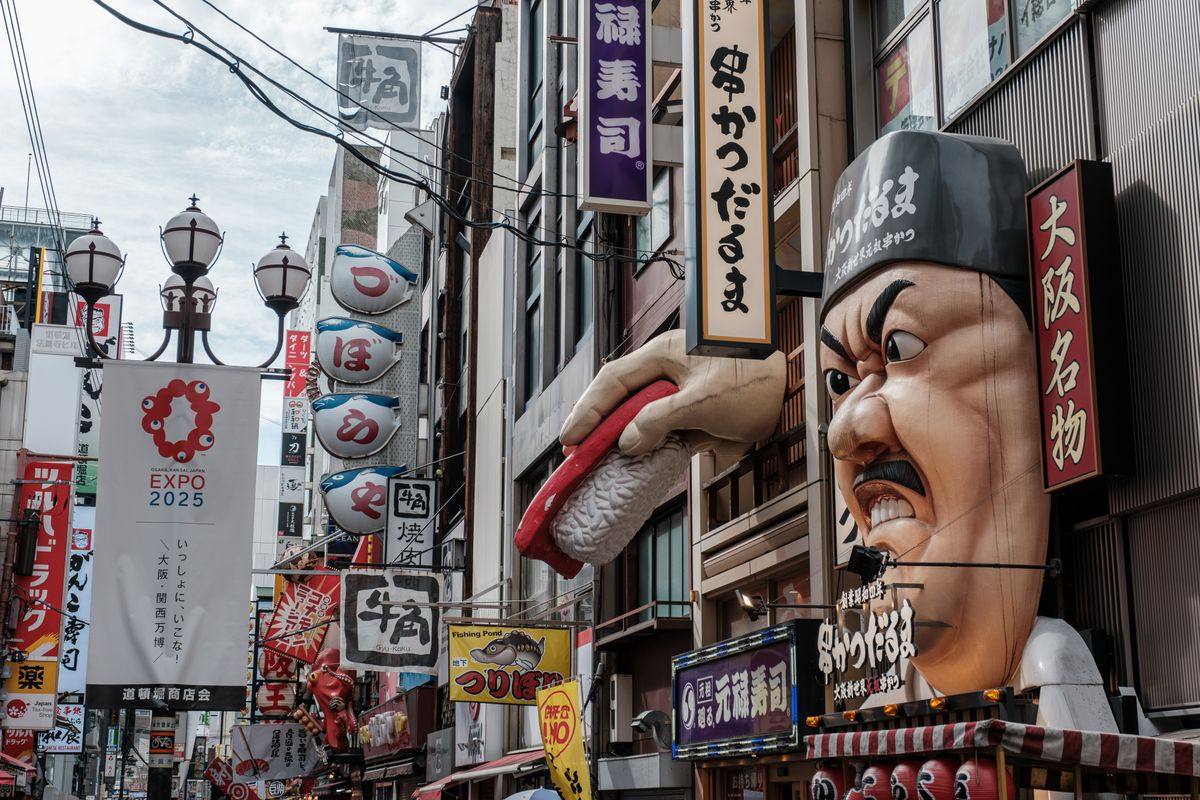
Dotonbori is not subtle, and thankfully it has no intention of becoming subtle. Giant crabs hang over restaurants, the canal reflects neon signs, and the famous Glico sign keeps smiling at the chaos like it has seen your snack budget and approves.
Walk across Ebisu Bridge, follow the canal, then duck into the smaller lanes around Hozenji Yokocho for a more atmospheric side of the area. Nearby, Namba keeps the energy going with shopping arcades, bars, game centres and endless places to eat.
What to eat in this area
The best way to experience central Osaka is by grazing your way through it. Focus on a few local classics rather than one oversized meal, especially if you want to try more than one neighbourhood in the same day.
- Takoyaki – octopus-filled batter balls, usually molten enough to challenge your patience
- Okonomiyaki – a savoury pancake layered with sauces, cabbage and fillings
- Kushikatsu – skewered and fried bites, especially popular in retro districts
- Ramen and udon – ideal when you need something warm and restorative
For a richer experience, a guided food walk can be worth it in this part of the city. It helps you move beyond the obvious stalls and understand the dishes rather than simply pointing at delicious mysteries and hoping for the best.
Visit Kuromon Market without overcomplicating it
Kuromon Market is one of Osaka’s best-known food stops and works well as a short morning visit. It offers a concentrated look at the city’s culinary culture, with seafood, meat skewers, fruit and ready-to-eat snacks in a compact, central setting.
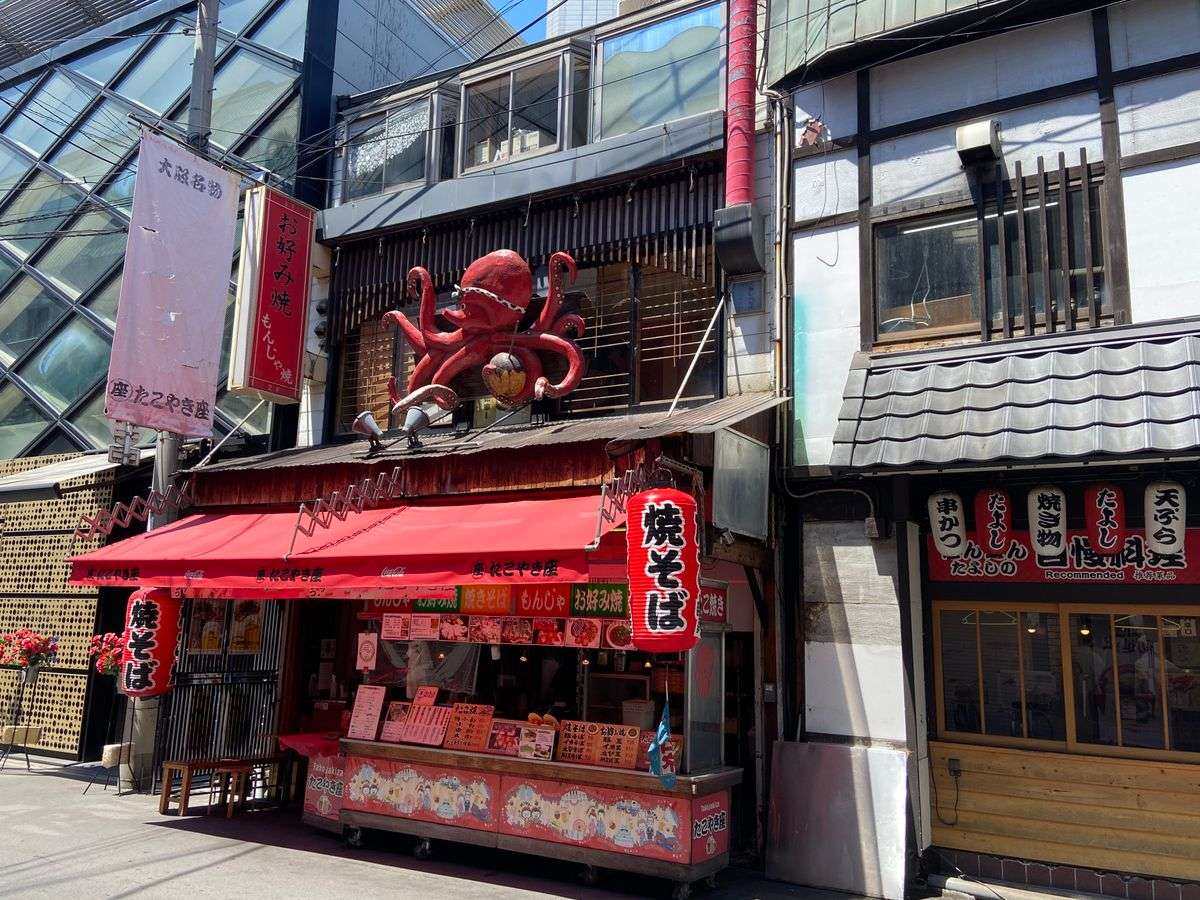
Known as Osaka’s kitchen, Kuromon Market is lively, easy to explore and ideal if you want to sample a little of everything. It can be more expensive than neighbourhood spots, but for many visitors the atmosphere is part of the appeal.
Go earlier in the day for a calmer visit and fewer shoulder-to-shoulder moments. A simple approach works best:
- Walk the market once before buying anything
- Pick two or three standout tastings instead of a full meal
- Save your sit-down lunch for another district
That way, you enjoy the market without turning it into an accidental financial commitment to shellfish.
Osaka Castle for history and skyline views
Osaka Castle is one of the city’s most recognisable landmarks and deserves a place on most first itineraries. The castle grounds, wide moats and elevated views add historical context to a trip otherwise dominated by food districts and modern cityscapes.
The current structure is a reconstruction, but the site still carries real significance in Japanese history, especially linked to Toyotomi Hideyoshi. Even if you are not usually a “museum first, snack second” traveller, the castle area is worth the detour.
The surrounding park is particularly pleasant in cherry blossom season, but it also works year-round for a slower walk. From the top, you get broad views over the city skyline, which helps put Osaka’s scale into perspective. It is the perfect reminder that yes, you have in fact walked a lot, and yes, there is still more food ahead.
Head to Shinsekai for retro Osaka and kushikatsu
Shinsekai offers a different atmosphere from Dotonbori, with a more nostalgic and slightly rough-edged character. It is one of the best areas to explore if you want old-school energy, casual bites and a sense of Osaka beyond its most photographed canal scenes.
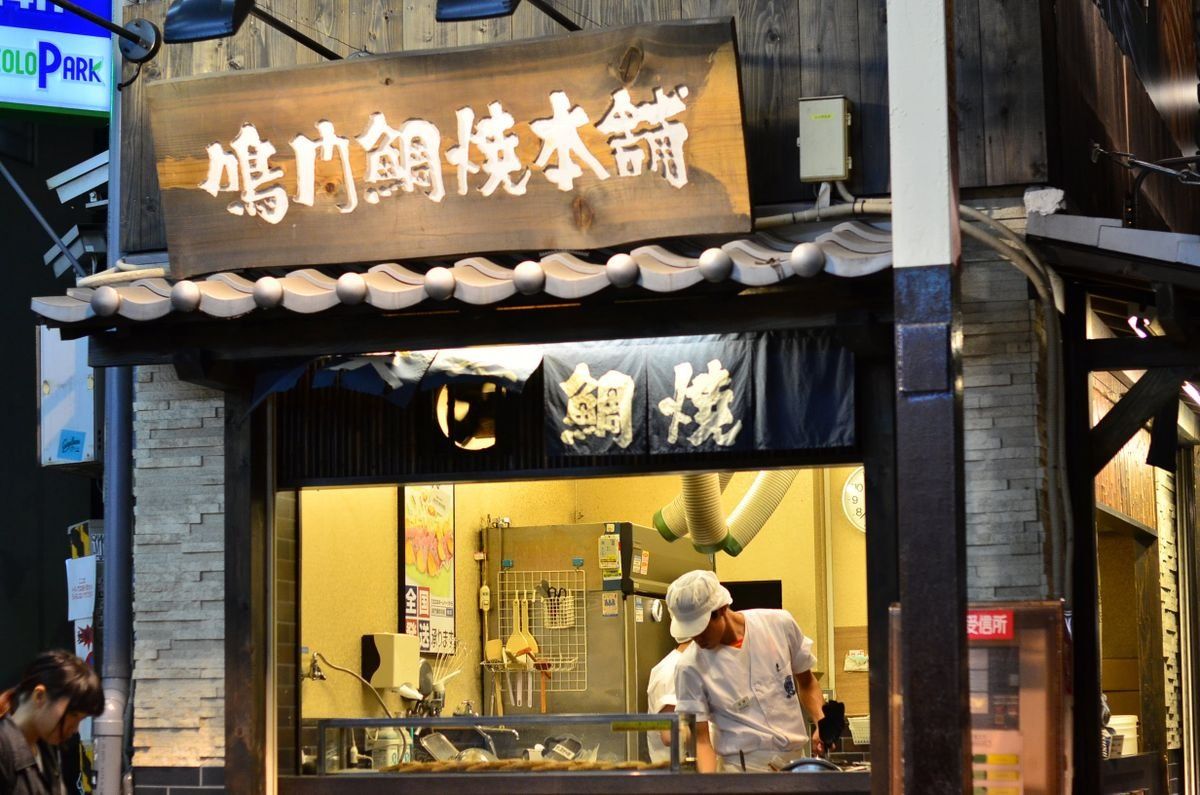
Built as a futuristic district in the early 20th century, Shinsekai now feels retro in the best possible way. Neon signs, old arcades and the presence of Tsutenkaku Tower give it a playful, local feel that contrasts well with polished shopping areas.
This is the right place to try kushikatsu, the city’s beloved fried skewers. The rule in some traditional spots is legendary: no double dipping in the communal sauce. Honestly, it is nice when travel etiquette is both culturally useful and deeply snack-specific.
Best viewpoints and where to go for city panoramas
Osaka has several great observation points, and choosing one depends on the kind of view you prefer. Some travellers want dramatic architecture, others want a higher overall skyline. Either way, an elevated stop adds variety to a food-heavy city itinerary.
The two classic options are Umeda Sky Building and Abeno Harukas. Both give excellent views, but the experience is different enough that your choice matters.
| Viewpoint | Best for | Atmosphere | Good to know |
|---|---|---|---|
| Umeda Sky Building | Sunset, open-air views, architecture lovers | Striking and photogenic | Great if you enjoy urban photography |
| Abeno Harukas | Higher panoramic city views | Modern and expansive | Good option in mixed weather |
If you only choose one, Umeda Sky Building often feels more memorable thanks to its design and open-air deck. If the weather looks moody or you simply want the tallest perspective, Abeno Harukas is an excellent alternative.
A day trip to Nara that balances all the street food
Nara is one of the easiest and most rewarding day trips from Osaka. In under an hour, you can swap neon signs for temple paths, parks and major cultural landmarks. It is a smart addition for travellers who want history, nature and a change of pace.
The main draw is Nara Park, home to more than 1,200 free-roaming deer traditionally seen as messengers of the gods. They are charming, photogenic and occasionally more assertive than expected, especially if they suspect you are carrying deer crackers. Which, to be fair, is often the case.
Beyond the deer, Nara has some of Japan’s most important historic sites:
- Todai-ji, with its giant bronze Buddha inside the world’s largest wooden hall
- Kasuga Taisha, Nara’s celebrated Shinto sanctuary
- Wooded walking paths that make the day feel calmer than a city itinerary
If you have more time and a deep interest in early Japanese history, nearby sites such as Horyu-ji can enrich the day further. For most first visits, though, Todai-ji, the park and Kasuga Taisha are enough for a satisfying route.
How many days to spend in Osaka
Two days are enough to see Osaka’s highlights, while three to four days allow for a more relaxed pace and a day trip. The right length depends on whether you want to focus on food and neighbourhoods only, or add castles, viewpoints and nearby cities.
For a practical first visit, this rhythm works well:
- Day 1: Dotonbori, Namba, Kuromon Market, evening food crawl
- Day 2: Osaka Castle, Shinsekai, one skyline viewpoint
- Day 3: Day trip to Nara
If you have just one day, stay central and keep it simple. Focus on Namba, Dotonbori, one food stop, and a landmark such as Osaka Castle or a city viewpoint. Trying to do absolutely everything in one day is the fastest route to seeing Osaka through the lens of mild exhaustion.
When to go and what to avoid
Spring and autumn are generally the best seasons for Osaka thanks to mild temperatures and comfortable walking conditions. Summer can be hot and humid, while major holiday periods bring heavier crowds and higher accommodation prices.
If you dislike heat and sticky air that makes your clothes negotiate independence, August is usually the month to avoid. Rainy periods and peak blossom weeks can also be crowded, though they remain popular for good reason.
For many travellers, the sweet spot is:
- March to April for cherry blossom season and lively city energy
- October to November for clearer weather and autumn colours
- January to February for fewer crowds, if you do not mind cooler temperatures
The WeRoad tip
Follow Osaka’s flavours by day, then let Nara slow the pace
One of the smartest ways to experience Osaka is to give the city two different rhythms. Start with a three-hour food walk through Dotonbori or another classic neighbourhood with an English-speaking guide, so you can taste okonomiyaki and other local specialties without wasting time wondering where to stop first. Osaka’s food scene is playful, generous and a little gloriously over-the-top, so having someone decode the dishes adds real value beyond the first delicious bite.
Then, after the neon and snack-fuelled energy of the city, shift gears with a day trip to Nara. Walk through Nara Park among the free-roaming deer, visit Todai-ji to see the giant bronze Buddha inside the immense wooden hall, and continue to Kasuga Taisha for a quieter spiritual atmosphere. It is a great contrast: one day you are navigating signs, sizzling grills and arcade noise in Namba, the next you are moving between temples and ancient trees. That balance is where the trip really clicks.
Your Osaka plan, plated nicely
Osaka is at its best when you mix major sights with spontaneous food stops and one well-chosen day trip. That combination gives you the city’s full personality: bold, welcoming, flavour-packed and always ready to tempt you with one more detour.
From the canal lights of Dotonbori to the deer paths of Nara, this is a destination that rewards curiosity more than perfection. Leave room in your itinerary, and in your stomach, for the unexpected.
If you want to experience Japan with other curious travellers, take a look at the WeRoad group trips to Japan and discover Osaka in great company.
FAQ
- Is 2 days enough to visit Osaka?
-
Yes, two days are enough to cover Osaka’s main highlights, including Dotonbori, Namba, Kuromon Market, Osaka Castle and one viewpoint. If you also want a day trip to Nara or a slower pace, add at least one more day.
- What should I do in Osaka in one day?
-
For one day, focus on central Osaka: start in Kuromon Market, walk through Namba and Dotonbori, visit Osaka Castle or a skyline viewpoint, and finish with dinner in Dotonbori or Shinsekai.
- Which month should I avoid in Osaka?
-
August is often the least comfortable month because of the heat and humidity. If you prefer cooler weather and easier walking, aim for spring or autumn instead.
- Is 5000 dollars enough for 2 weeks in Japan?
-
For many travellers, yes. A budget of $5,000 can be enough for two weeks in Japan if you choose mid-range hotels, use public transport carefully and mix casual meals with a few special experiences. Your total cost will depend on flights, shopping and how many long-distance trains you take.
- Is Nara worth visiting from Osaka?
-
Absolutely. Nara is one of the easiest day trips from Osaka and offers a strong contrast to the city, with historic temples, forested paths and the famous deer of Nara Park.